When it comes to gaming, individuals are often confronted with a decision: PC or console? The debate regarding which option is superior is a topic that usually sparks lively discussions on message boards. Users frequently argue over factors such as cost-effectiveness, visual quality, and competitiveness in multiplayer mode.
When deciding between PC gaming and console gaming, it is important to carefully consider the various aspects of this debate to determine which option is most suitable for your needs and preferences.
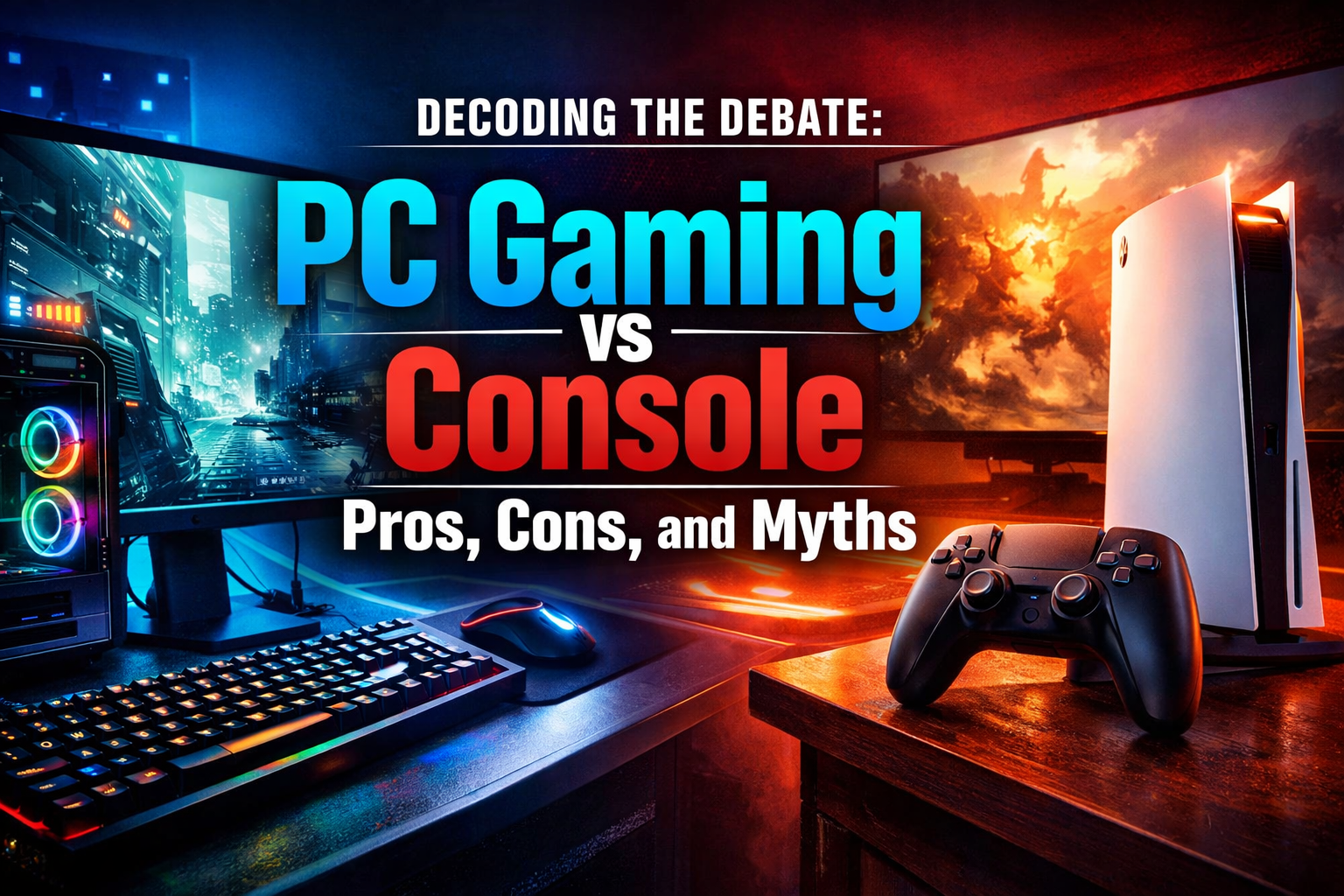
Decoding the Debate: PC Gaming vs Console – Pros, Cons, and Myths
The digital age has brought forth an unprecedented era of interactive entertainment, with video games standing at the forefront. For enthusiasts and newcomers alike, a perennial question looms large: Which platform reigns supreme? The PC Gaming vs Console debate is a multifaceted discussion, often fueled by passion, technical specifications, and personal preference. In 2026, as technology continues its relentless march forward, understanding the nuances of each platform is more crucial than ever.
Whether you lean towards a console or a PC, the ultimate goal is to immerse yourself in the joy of gaming. As you make your decision, consider factors such as budget, technical skills, and the potential for future upgrades, all of which can enhance your gaming experience. Let’s debunk the myths and evaluate the pros and cons of both console and PC gaming. This article aims to provide you with accurate and reliable information to help you make an informed decision.
Another angle worth exploring here is Computer Run for a closer gaming-focused comparison.
Key Takeaways
Performance & Customization: PCs generally offer superior raw power, graphical fidelity, and unparalleled customization options, allowing for modular upgrades and diverse usage beyond gaming.
Cost & Accessibility: Consoles typically provide a more affordable entry point into gaming, boasting a plug-and-play simplicity that appeals to casual gamers and families.
Exclusives & Simplicity: Consoles often feature exclusive game titles not available on PC, offering unique experiences with minimal setup hassle.
Technical Demands: While PC gaming has a reputation for technical complexity, pre-built systems and user-friendly software have made it more accessible than ever.
Upgrade Cadence: The myth of constant PC upgrades is debunked; a well-built PC can last years without significant overhauls, and many games are optimized for a wide range of hardware.
Pros of PC Gaming
The Power of PCs
Personal computers possess significantly greater computational capabilities than gaming consoles. When their functionalities are simplified, gaming consoles can be considered miniature computers with similar capabilities. However, certain sacrifices must be made to fit a computer into a compact gaming console. Typically, PCs are not considered to be ‘mini’ in size, and some extremely large gaming PCs are available in the market. In conclusion, a computer possesses significantly greater processing capabilities than any gaming console. Consequently, it can enhance game performance, leading to smoother gameplay and faster load times.
This raw processing power translates directly into a superior gaming experience. Modern PC processors, often featuring multiple cores and high clock speeds, can handle complex game physics, intricate AI, and vast open worlds with ease. This allows developers to push the boundaries of game design, creating more immersive and dynamic environments that might be bottlenecked by lesser hardware. Furthermore, the robust architecture of a gaming PC supports advanced technologies like ray tracing and AI-powered upscaling (e.g., DLSS), which require substantial computational resources to operate effectively. These technologies deliver hyper-realistic lighting, shadows, and textures, blurring the lines between virtual and reality.
Graphical Dominance
A PC’s power enables users to enjoy games with optimal performance. The same principle can be applied to graphics. PCs have high-performance graphics cards designed to enhance visual quality and fidelity. The aforementioned technological marvels can generate graphics with a maximum resolution of 8K. Gaming PCs consistently achieve a frame rate of over 100 frames per second (FPS), with many high-end setups pushing well past 144 FPS, especially in competitive titles. The device can showcase images in resolutions as high as 8K while ensuring a satisfactory frame rate. This value exceeds the capabilities of certain gaming consoles by more than two times, offering a visual feast that is simply unmatched.
The advantage of higher frame rates extends beyond mere aesthetics. In fast-paced games, a higher FPS means less input lag, smoother animations, and a more responsive feel, which can provide a competitive edge. Paired with high-refresh-rate monitors (120Hz, 144Hz, 240Hz, or even higher), PC gamers experience fluidity that is visually breathtaking and functionally superior. Moreover, PC graphics settings often offer granular control over textures, shadows, anti-aliasing, and view distance, allowing players to fine-tune their experience to prioritize either visual splendor or peak performance, depending on their preference and hardware. This level of control is a core tenet of the PC Gaming vs Console debate.
The Customization Factor
A notable advantage of personal computers (PCs) is their modular nature. The components are acquired as separate units and then individually connected to the motherboard. This feature allows for the replacement of individual parts without the need to replace the entire machine. For example, if you believe that your PC’s graphics card would benefit from an upgrade, you have the option to purchase a new one and replace the existing card while maintaining the integrity of the rest of your machine. This technology provides a significantly greater degree of flexibility and autonomy compared to what can be achieved with a traditional console.
This modularity is a game-changer for longevity and future-proofing. Instead of buying an entirely new system every few years, PC gamers can strategically upgrade specific components as their needs evolve or as new, more powerful hardware becomes available. This includes not just the GPU, but also the CPU, RAM, storage (SSDs), and even the cooling system. This also allows for personalization, from aesthetic choices like RGB lighting and custom cases to functional enhancements like specialized keyboards, mice, and ultrawide monitors. The ability to tailor every aspect of the gaming environment makes PC gaming a truly bespoke experience.
It’s More Than Gaming
A gaming PC is simply a device that has been outfitted with the necessary processing capacity to perform the most demanding games. That does not imply that it is exclusively appropriate for that particular purpose. A PC can be utilised for virtually anything in the digital domain. PCs are not just for gaming. They can be used for a myriad of tasks, such as browsing the internet, playing at online gaming sites for UK players, streaming movies, producing films, creating artwork and illustrations, and even developing your own video games. The versatility of a gaming PC extends far beyond gaming, offering a wide range of digital possibilities.
This multi-functionality adds significant value. A single investment can serve as a powerful workstation for creative professionals, a robust platform for students, a home entertainment hub, and, of course, a top-tier gaming machine. This eliminates the need for multiple devices, streamlining one’s digital life. Furthermore, the open ecosystem of PC software means access to a vast library of applications for productivity, education, communication, and entertainment, many of which are not available or are less optimized on consoles. This broad utility often justifies the initial investment for many users.
Cons of PC Gaming
The Cost (Sometimes)
Investing in a high-performance gaming PC, whether built or purchased, is a substantial financial commitment. PC gaming can be more costly than consoles due to the potential high costs associated with the latest hardware and peripherals. While entry-level gaming PCs can be comparable to or slightly more expensive than consoles, the pursuit of cutting-edge performance (e.g., 4K gaming at high frame rates) often leads to prices significantly exceeding those of even the most premium console bundles. The cost of individual components like top-tier graphics cards can sometimes rival the price of an entire console system.
Beyond the initial build or purchase, there are also ongoing costs associated with PC gaming. While games themselves can often be found at lower prices through frequent sales on digital storefronts like Steam, Epic Games Store, and GOG, the cost of peripherals can quickly add up. High-refresh-rate monitors, mechanical keyboards, precision gaming mice, and quality headsets are often considered essential for the optimal PC gaming experience, adding hundreds, if not thousands, to the total investment. This upfront and potential ongoing expense is a significant point of contention in the PC Gaming vs Console comparison for budget-conscious gamers.
Technical Knowledge & Hardware Issues
Customisation is a notable advantage, but it can pose difficulties for individuals with limited technical expertise. Beginners may find it intimidating to comprehend hardware specifications and troubleshoot issues. Building a PC from scratch requires understanding compatibility between components, proper installation techniques, and basic BIOS/UEFI configuration. Even with pre-built systems, diagnosing software glitches, driver conflicts, or performance bottlenecks can be a daunting task for those unfamiliar with PC architecture.
Hardware fragmentation refers to the challenge developers face in optimising games for various PC hardware configurations due to the rapid evolution of hardware. This can result in occasional compatibility issues, performance inconsistencies, or bugs that are specific to certain graphics cards, processors, or operating system versions. While robust online communities and resources exist to help troubleshoot, it still requires a level of patience and willingness to learn that some gamers might not possess or desire. This potential for technical hurdles makes the plug-and-play simplicity of consoles very appealing to many.
Pros of Console Gaming
Affordable for Most Households
Consoles generally provide a more affordable way to get started with gaming. Their cost is typically lower than that of a gaming PC, making them an appealing choice for casual gamers and families. A console system, including a controller and often a bundled game, can cost significantly less than an equivalent PC capable of running modern titles at similar (though not necessarily identical) performance levels. This lower barrier to entry means more people can access the latest gaming experiences without a prohibitive financial outlay.
The all-in-one nature of consoles also contributes to their affordability. There’s no need to research and purchase individual components or worry about compatibility. You buy the box, plug it in, and you’re ready to play. This straightforward approach simplifies the buying decision and reduces the overall cost footprint, as peripherals are often included or are less expensive than their PC counterparts. This accessibility is a major reason why consoles remain incredibly popular globally, particularly for those who prioritize ease of use and budget.
Exclusive Games
Several console manufacturers regularly release exclusive games to attract gamers by offering distinctive experiences that can only be accessed on their platforms…
Explore Key Gaming Concepts
Frequently Asked Questions (FAQ) about PC Gaming vs Console
Is PC gaming truly more powerful than console gaming in 2026?
Yes, high-end gaming PCs generally possess significantly greater raw processing power and graphics capabilities compared to even the most powerful consoles available in 2026. This translates to higher resolutions, superior frame rates, and more advanced graphical settings.
Are console games always cheaper than PC games?
Not necessarily. While new console games might have a standard price, PC games frequently go on deep discounts through various digital storefronts, and PC also offers a vast library of free-to-play titles and value-packed subscription services like PC Game Pass.
Do I need to be a tech expert to enjoy PC gaming?
No, not anymore. While building a PC requires some technical knowledge, readily available pre-built gaming PCs are plug-and-play, and digital storefronts have simplified game installation and management to a few clicks, making PC gaming very accessible.
How to Choose Between PC Gaming and Console Gaming
Step 1: Define Your Gaming Objectives
Consider what you value most in a gaming experience. Do you prioritize cutting-edge graphics and performance, or ease of use and exclusive titles?
Step 2: Evaluate Your Budget
Determine how much you are willing to spend initially and over time on hardware, games, and peripherals. Consoles typically have lower upfront costs.
Step 3: Assess Your Technical Comfort Level
Are you comfortable with troubleshooting, upgrading components, and managing drivers (PC), or do you prefer a seamless plug-and-play experience (Console)?
Common Questions & Answers
What are the main advantages of PC customization?
PC customization allows users to upgrade individual components like the graphics card or RAM, extending the life of the system and tailoring performance to specific needs. It also enables personalization of aesthetics and peripherals.
Why are console exclusives often a deciding factor?
Exclusive games are often highly anticipated flagship titles that showcase the unique capabilities of a console platform. If a gamer is deeply invested in a particular franchise or style of game only available on one console, it strongly influences their purchase decision.
Key Definitions in Gaming
Frame Rate (FPS)
The frequency (rate) at which consecutive images (frames) are displayed on a screen. Higher FPS results in smoother, more fluid visuals and reduced input lag.
Hardware Fragmentation
The challenge faced by developers in optimizing games for the vast array of different PC hardware configurations, which can lead to compatibility issues or performance inconsistencies across systems.
Ray Tracing
An advanced rendering technique that simulates the physical behavior of light, producing highly realistic lighting, reflections, and shadows in video games.
Popular Gaming Platforms (Software)
Steam
A widely used digital distribution platform by Valve Corporation for PC games, offering a vast library, community features, and frequent sales.
PlayStation Network (PSN)
Sony’s digital media entertainment service for PlayStation consoles, providing access to digital games, media, and online multiplayer.
Xbox Game Pass
Microsoft’s video game subscription service for Xbox consoles and PC, offering a rotating catalog of games for a single monthly price.
Marcin Wieclaw, the founder and administrator of PC Site since 2019, is a dedicated technology writer and enthusiast. With a passion for the latest developments in the tech world, Marcin has crafted PC Site into a trusted resource for technology insights. His expertise and commitment to demystifying complex technology topics have made the website a favored destination for both tech aficionados and professionals seeking to stay informed.