
Table of Contents
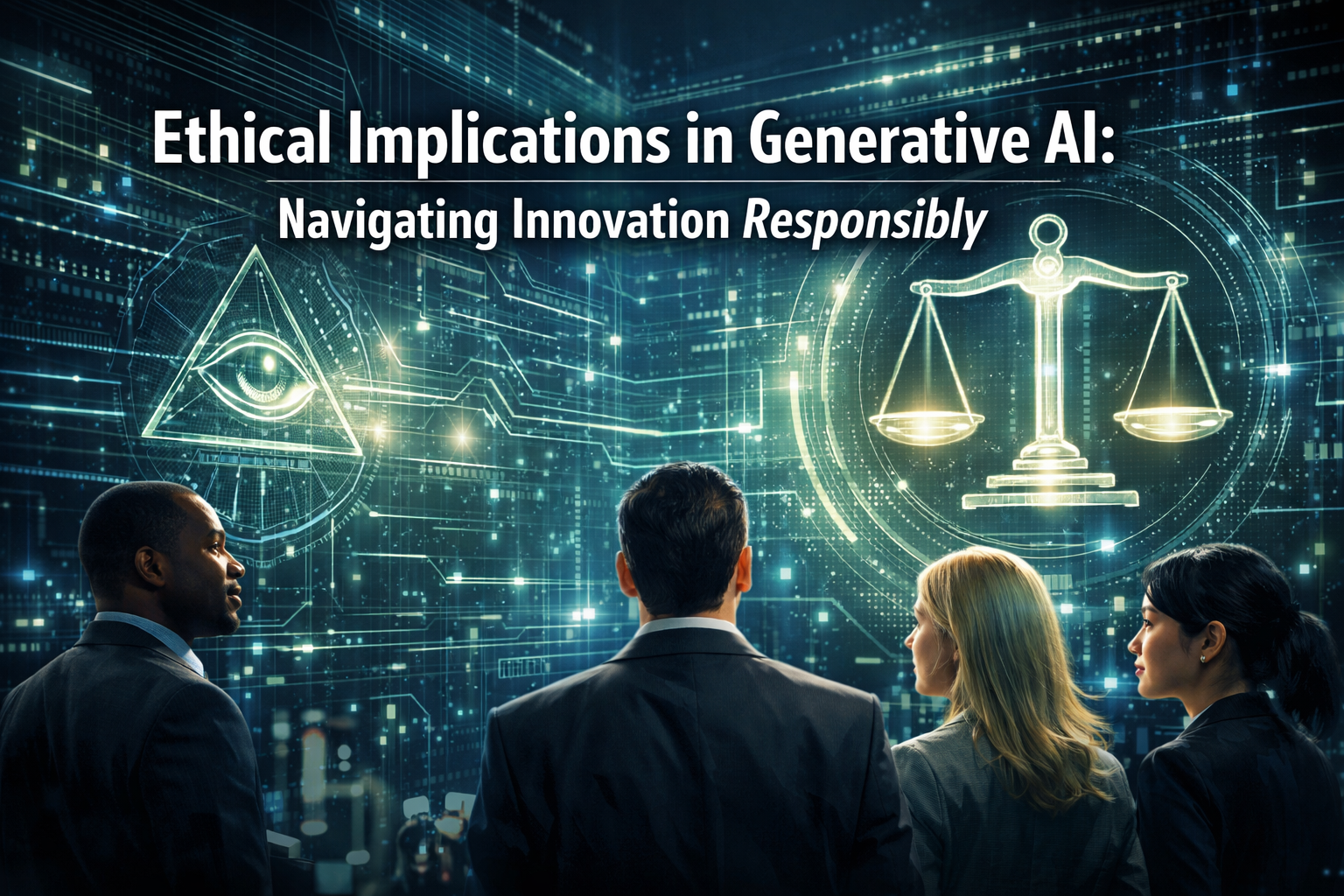
Ethical Implications in Generative AI: Navigating the Complexities
Generative AI, a powerful subset of artificial intelligence, has burst onto the scene in 2026, revolutionizing industries with its unprecedented ability to create new content. From crafting photorealistic
It also helps to compare this with Most Accurate if you want the hardware side explained more clearly.
images and immersive videos to composing symphonies and authoring compelling articles, the applications of generative AI are not just vast—they are truly transformative. However, as this technology continues its rapid ascent, a crucial question emerges: how do we ensure that innovation is tempered with responsibility? This delicate balance between fostering groundbreaking advancements and upholding robust ethical standards is precisely where the critical discussion around ethical considerations in generative AI begins. Addressing these challenges is paramount, and it’s a domain where generative AI consulting plays a pivotal role, guiding businesses to leverage AI’s potential both effectively and ethically.
Key Takeaways
- Generative AI, or GenAI, creates new content like text, images, and video by learning from vast datasets.
- Ethical considerations in generative AI are critical, encompassing privacy, bias, intellectual property, and transparency.
- Key challenges include potential job displacement, the spread of misinformation (deepfakes), and determining ownership of AI-generated content.
- Balancing innovation with responsibility requires robust ethical frameworks, best practices for developers, and proactive regulation.
- Generative AI consultants are essential for organizations to navigate these complexities, ensuring ethical development and deployment.
Understanding Generative AI: The Engine of Creation
Generative AI, often abbreviated as GenAI, is a revolutionary branch of artificial intelligence designed to create new, original data. Unlike traditional AI that primarily analyzes or categorizes existing information, GenAI possesses the remarkable capability to produce novel content—be it compelling text, stunning images, original music compositions, or even dynamic video sequences. These sophisticated algorithms achieve this feat by learning intricate patterns, styles, and structures from massive datasets. Once trained, they can then generate outputs that are often so authentic they become indistinguishable from content created by human beings.
So, how does this cutting-edge generative AI model actually work? At its core, the process involves training. These models are exposed to gargantuan amounts of data, sometimes encompassing nearly all accessible text and images across the internet. This intensive training process allows the model to absorb and understand the underlying patterns, statistical relationships, and structural characteristics of real-world information. With this acquired knowledge, the model can then creatively synthesize new material. Imagine an AI capable of writing a sonnet in the distinctive style of Shakespeare, or perhaps rendering a photorealistic image of a cat sporting a whimsical hat – these are the types of creative tasks GenAI excels at.
Diverse Applications of Generative AI
The versatility of GenAI means it is being rapidly adopted across an astonishing array of industries and use cases. Its ability to create bespoke content makes it an invaluable tool for innovation and efficiency. Here are some common examples of its transformative applications.
- Creative Industries
- Film and Animation: Assists in scriptwriting by suggesting plot twists or character dialogues, and can even generate entire animation sequences, significantly speeding up production.
- Game Development: Dynamically creates game levels, non-player characters (NPCs) with unique backstories, and environmental assets, leading to more diverse and engaging gaming experiences.
- Photography and Visual Arts: Enhances existing photographs, generates entirely new visual concepts, and can even create art in specific styles.
- Marketing and Advertising: Generates ad copy, creates visuals, and designs campaign assets that resonate with target audiences.
- Architectural Design: Offers multiple design proposals, explores material combinations, and generates detailed 3D models from basic inputs, accelerating the design process.
- Marketing and Advertising: Generative AI helps businesses create highly engaging materials and tailor content to specific audience segments with remarkable precision. This might involve generating personalized ad creatives, crafting engaging social media posts, or writing blog articles that resonate deeply with target audiences.
- Product Design: GenAI technology is revolutionizing how products are conceived and refined. It empowers designers to brainstorm new product ideas, refine existing designs by generating countless variations, and create highly detailed 3D models for rapid prototyping and visualization.
- Scientific Research: Generative AI is significantly accelerating scientific discovery and innovation across multiple disciplines. It enhances data analysis capabilities and enables the creation of new hypotheses and models.
- Drug Discovery: Designs novel molecular structures with desired properties and accurately predicts their interactions with biological systems, accelerating the development of new therapeutics.
- Material Science: Creates innovative materials with specific mechanical, electrical, or chemical properties, and accurately predicts their behavior under various conditions.
- Healthcare: Enhances the resolution and diagnostic capabilities of medical imaging, and supports the development of personalized medicines tailored to an individual’s genetic makeup and disease profile.
Ethical Implications of Generative AI
While generative AI offers numerous benefits, it also raises several ethical concerns, not only regarding data privacy and security but also regarding bias and misinformation. Effectively addressing these ethical implications is not merely a matter of compliance but a cornerstone for ensuring the responsible and sustainable integration of GenAI into society. Ignoring these ethical considerations in generative AI would be a dereliction of our collective duty to shape technology for good.
Privacy Concerns
Data Collection and Usage – As previously noted, Generative AI models thrive on enormous quantities of data. This raises profound questions about the consent provided for using this data, the scope of its usage, and ultimately, data ownership. Training datasets often include personal information, and if this data is not handled with the utmost care and strict protocols, it can regrettably lead to serious privacy violations and a breach of trust.
Anonymity and Data Security – A critical imperative is to ensure that any data utilized in training GenAI models is rigorously anonymized, making it impossible to link back to individuals. Furthermore, robust data security measures are absolutely essential to protect these datasets from unauthorized access, breaches, or misuse, safeguarding sensitive information from falling into the wrong hands.
Bias and Fairness
Biases in Training Data – AI models are not inherently neutral; they learn from the data they are fed. If the training data itself contains historical, societal, or systemic biases—reflecting existing inequalities or stereotypes—the AI model will inevitably perpetuate, and sometimes even amplify, these biases in its outputs. This can lead to unfair, discriminatory, or exclusionary outcomes, impacting everything from loan applications to hiring decisions.
Mitigation Strategies – Actively identifying and diligently mitigating biases in both the training data and the subsequent model outputs is paramount. This requires a multi-pronged approach: collecting and curating training data that is genuinely diverse and accurately representative of all demographic groups, employing advanced algorithmic fairness techniques, and implementing continuous auditing and evaluation of AI outputs to detect and correct emerging biases.
Intellectual Property and Ownership
AI-Generated Content Ownership – Determining who holds the rights to content meticulously crafted by an AI is a highly complex legal and ethical quandary. Is it the developer who designed the AI, the user who prompted its creation, or could the AI itself (a controversial concept) be considered a creator? Clear legal precedents are still largely undefined.
Copyright Issues – GenAI models learn by processing vast amounts of existing content, some of which is copyrighted. This raises significant questions when the AI generates content that bears a striking resemblance to, or is directly inspired by, existing copyrighted works. Issues of infringement, fair use, and attribution become highly contentious. There is an urgent need for clear, globally recognized guidelines on how to handle intellectual property rights in the rapidly evolving context of AI-generated content.
Accountability and Transparency
Decision-Making Processes – For true accountability, it is crucial to understand the “how” behind an AI model’s outputs. The prevalence of “black-box” models, where the internal decision-making process is opaque and incomprehensible to humans, presents a significant ethical challenge. Without transparency, verifying fairness, safety, or adherence to ethical principles becomes exceedingly difficult.
Related Posts:





Explainability of AI Models – Making AI models interpretable and transparent is essential for building public trust and ensuring ethical use. Users must be afforded the ability to understand why an AI system made a particular decision or generated a specific output, and critically, they should have the capacity to challenge those decisions if they appear flawed or unfair. This explainability fosters confidence and allows for necessary oversight.
Social and Economic Impact
Job Displacement and Economic Inequality – The automation capabilities of generative AI could lead to significant job displacement in various sectors, particularly those involving creative or routine cognitive tasks. Without proactive measures, this could exacerbate economic inequalities, creating a divide between those who can leverage AI and those whose livelihoods are disrupted. It is imperative to proactively consider the social impact of AI and implement strategies—such as retraining programs, universal basic income discussions, or new economic models—to mitigate these negative consequences.
Ethical Use in Media and Entertainment – Ensuring that AI-generated content is used responsibly, accurately, and without malicious intent is a critical ethical challenge. The escalating potential for “deepfakes” (highly realistic but fabricated images, audio, or video) and other sophisticated forms of misinformation generated by AI poses severe risks to public trust, democratic processes, and individual reputations. The societal consequences of unchecked deepfake proliferation can be profound and destabilizing.
Balancing Innovation and Responsibility: Ethical Considerations in Generative AI
Striking the optimal balance between fostering rapid technological innovation and upholding unwavering ethical responsibility in the realm of generative AI is not merely a goal; it is a critical and inherently complex task. This endeavor necessitates a comprehensive, multi-faceted approach that actively involves a diverse spectrum of stakeholders, including pioneering researchers, skilled developers, insightful policymakers, and the informed public. Navigating these ethical considerations in generative AI demands collaboration and foresight.
Ethical Frameworks and Guidelines
Organizations like the IEEE and the European Union have established comprehensive guidelines to foster ethical AI development. These robust guidelines serve as a crucial foundation for responsible AI practices, ensuring that AI technologies are not only developed but also deployed in ways that profoundly respect fundamental human rights, actively promote fairness, and effectively mitigate potential harms. By diligently adhering to these established ethical standards, developers and organizations alike can navigate the intricate landscape of AI with a clear, principled framework that consistently prioritizes ethical considerations.
However, the breathtakingly rapid advancement of generative AI necessitates the development of new, specifically tailored ethical frameworks to address its truly unique challenges. Generative AI presents a distinct set of ethical issues that often differ significantly from those encountered in other, more traditional AI applications. Developing specialized ethical guidelines specifically for generative AI empowers all stakeholders to effectively address these nuanced challenges, thereby ensuring that this powerful technology is used responsibly and ethically, particularly in contexts involving sophisticated content generation and creative output.
Best Practices for Developers
Incorporating ethics into the AI development lifecycle ensures that ethical considerations are not an afterthought but a fundamental aspect of the entire process. Developers should conduct thorough ethical impact assessments from the initial design phase to deployment to identify potential risks and address them proactively. Involving diverse stakeholders in the development process brings a variety of perspectives and expertise to the table, helping to create more inclusive and fair AI systems.
Regular audits and assessments will maintain the ethical integrity of AI systems over time. Continuous monitoring and evaluation can help identify emerging ethical issues and ensure AI systems comply with established ethical standards. This ongoing vigilance is necessary to adapt to new challenges and evolving ethical considerations so AI systems can continue to operate ethically, transparently, and accountable.
Role of Policymakers and Regulators
Laws and regulations should be enacted to ensure ethical AI development and use. Policymakers should work with industry experts to create regulations that promote innovation while protecting public interests.
By adhering to established industry standards, companies can create a unified approach to ethical AI practices that transcend national boundaries and regulatory differences. These standards provide a benchmark for best practices, helping organizations align their AI systems with ethical principles and societal expectations. Companies should take proactive steps to ensure their AI systems are ethical and responsible.
Public Awareness and Education
It’s necessary to increase public understanding of AI technologies and their implications. Both governments and organizations should provide accessible information about how AI works and its potential impact on society.
Also, encouraging ethical use of AI-generated content can help mitigate negative impacts. Users should be aware of the ethical considerations and potential risks associated with generative AI.
The Role of Generative AI Consultants in Ensuring Ethical Implications
Generative AI consultants play a crucial role in this process. Their expertise in ethical AI practices, risk assessment, and regulatory compliance helps organizations navigate the complex ethical landscape of generative AI.
They are well-versed in fairness, accountability, transparency, and privacy – the core principles of ethical AI. They can advise on mitigating bias in training data, ensure transparency in how generative AI models arrive at their outputs, and protect user privacy throughout the development and deployment process.
By engaging these professionals, organizations can enhance trust, mitigate risks, and innovate responsibly, ensuring that generative AI technologies are developed and deployed to align with ethical standards and societal values.
Final Thoughts
Generative AI, especially in 2026, undeniably holds monumental potential to drive innovation, unlock unprecedented creativity, and fundamentally transform industries across the globe. However, this immense power comes with an equally significant responsibility. It is not enough to simply marvel at its capabilities; we must proactively and consciously balance this relentless innovation with a profound commitment to ethical stewardship.
By diligently adhering to thoughtfully constructed ethical frameworks, rigorously implementing best practices throughout the development lifecycle, and fostering a well-informed and aware public, we can collectively ensure that generative AI is not just a technological marvel, but a force for good. Our shared goal must be to develop and deploy these technologies in ways that benefit society as a whole, mitigate risks, and build a future where AI serves humanity ethically and responsibly. The journey is complex, but with concerted effort and a focus on ethical considerations in generative AI, we can harness its full potential while safeguarding our collective values.
Actionable Next Steps: Embracing Ethical AI in 2026
For individuals and organizations looking to navigate the ethical landscape of generative AI in 2026, here are concrete steps to consider:
- Educate Yourself and Your Team: Stay current with the latest developments in ethical AI research, guidelines, and regulations. Encourage continuous learning within your organization about the ethical implications of AI technologies.
- Conduct Ethical Impact Assessments (EIAs): Before deploying any generative AI application, perform thorough EIAs. Identify potential biases, privacy risks, and societal impacts. Integrate these assessments into your project planning from the outset.
- Prioritize Diverse Data Sources: Actively seek out and utilize diverse, representative datasets for training AI models. Implement strategies to identify and mitigate biases within your data and model outputs.
- Promote Transparency and Explainability: Advocate for and implement systems that provide greater transparency into AI’s decision-making processes. Strive to create models that are explainable, allowing users to understand and trust their outputs.
- Develop Internal Ethical Guidelines: Create clear, internal ethical guidelines and policies specifically for the development, deployment, and use of generative AI within your organization.
- Engage with Experts: Consider engaging with ethical AI consultants or specialized legal counsel to help navigate complex intellectual property issues, regulatory compliance, and risk mitigation strategies specific to generative AI.
- Foster a Culture of Responsibility: Encourage open discussion and critical thinking about ethical dilemmas related to AI within your teams. Make ethical considerations an integral part of your organizational culture.
- Support Policy Development: Contribute to or stay informed about ongoing discussions around AI regulation and policy at local, national, and international levels. Your informed perspective can help shape future ethical AI frameworks.
By taking these proactive steps, we can collectively ensure that the powerful capabilities of generative AI are harnessed responsibly, contributing positively to society in 2026 and beyond.
Frequently Asked Questions about Ethical AI
How to Ensure Ethical Generative AI Development
Q&A on Generative AI Ethics
Key Terms in Ethical Generative AI
Examples of Generative AI Applications (Conceptual for Ethics)