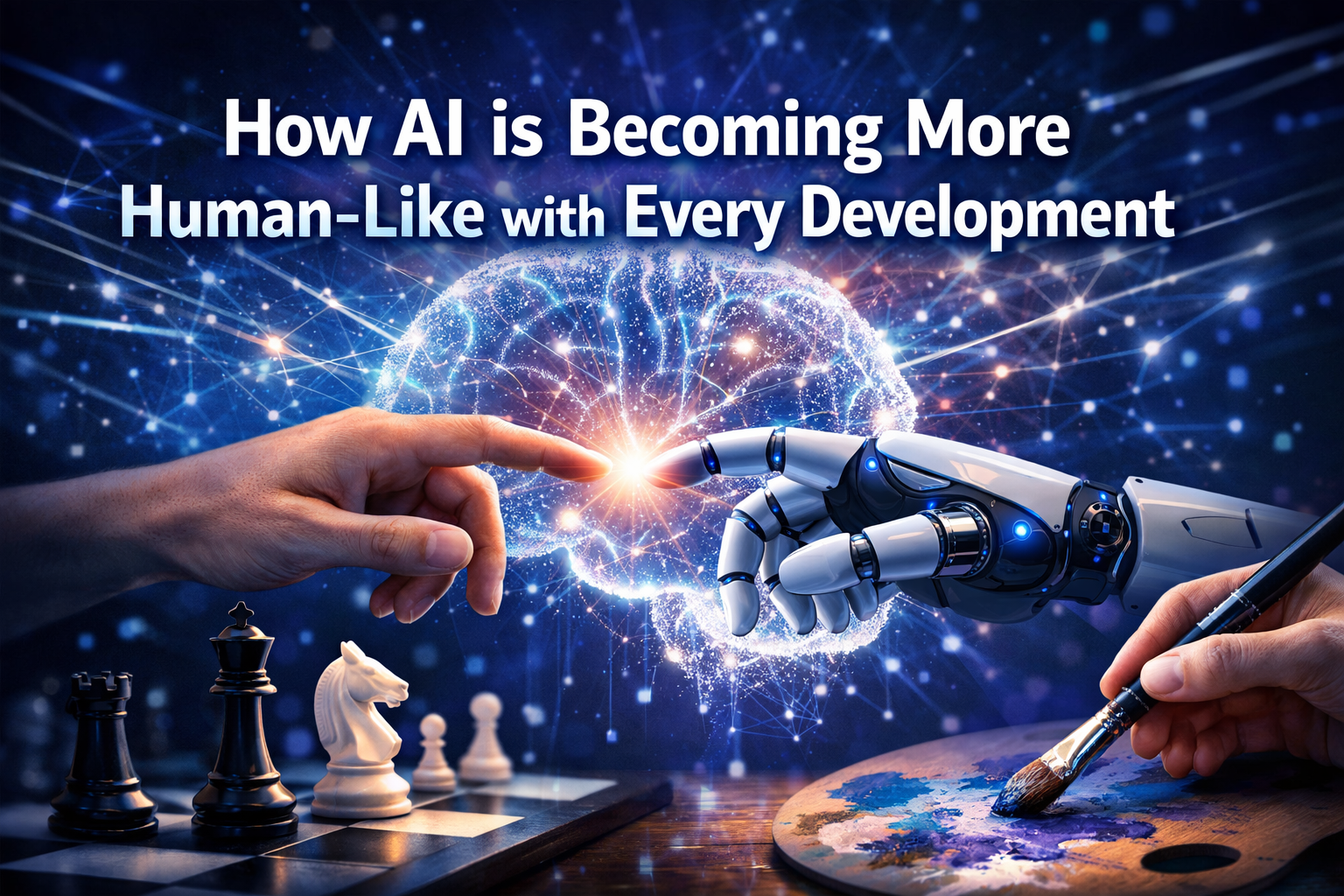
The notion of artificial intelligence mimicking human thought and interaction has long been a staple of science fiction, but in 2026, this concept is rapidly transitioning from fantasy to tangible reality. With each new breakthrough, AI systems are demonstrating an astonishing capacity for understanding, creativity, and nuanced communication that mirrors human capabilities more closely than ever before. This article delves into the profound advancements that are propelling AI towards increasingly human-like behavior, exploring the intricate technologies and vast implications of How AI is Becoming More Human-Like with Every Development.
From sophisticated language models capable of generating highly contextual and empathetic responses to AI-driven virtual characters exhibiting complex personalities, the journey towards truly human-like AI is accelerating. These developments are not just technical marvels; they are reshaping industries, enhancing user experiences, and prompting us to reconsider the very definition of intelligence. Join us as we explore the cutting-edge innovations that are driving this transformative evolution.
Key Takeaways
Advanced Neural Architectures: New AI models, such as ChatGPT-5, employ sophisticated multi-network architectures for efficient and robust data processing, handling extremely long information sequences.
Enhanced Versatility and Efficiency: AI platforms are becoming significantly more versatile, offering features that reduce training time and cost while adapting to a wide range of tasks, including dynamic gaming experiences.
Superior Natural Language Understanding: Modern AI excels in comprehending and generating natural language, making interactions more fluid and enabling sophisticated applications in content creation, translation, and dialogue.
Personalized Interactions Across Industries: As AI becomes more human-like, its potential for delivering highly personalized experiences in sectors like entertainment, gaming, and customer service is rapidly expanding.
Paving the Way for Natural Interaction: Ongoing developments in AI are fostering more natural, intuitive interactions between humans and technology, promising a future where AI acts as a seamless and intelligent assistant.
The Transformative Leap: ChatGPT-5 and Its Sophisticated Architecture
The arrival of advanced AI models represents a monumental stride in artificial intelligence, showcasing precisely how AI is becoming more human-like with every development. At the forefront of this evolution is ChatGPT-5, a system that exemplifies a huge breakthrough in the field of AI. Its architecture is incredibly sophisticated, employing multiple interconnected networks designed to ensure data is processed not only accurately but also with remarkable efficiency. This robust design enables the program to analyze exceptionally long sequences of information, a critical capability for understanding complex contexts and generating coherent, extended responses that mimic human conversational flow.
Beyond its processing prowess, ChatGPT-5 incorporates several advanced learning techniques. These techniques allow the model to continuously refine its understanding and generation capabilities, much like a human brain learns and adapts over time. Furthermore, the model is trained on colossal datasets, which are meticulously curated from a multitude of sources. This data universe includes vast repositories of social media interactions, rigorous academic articles, and the expansive content of the entire web.
The sheer volume and diversity of this training data are paramount. By exposing the AI to such a broad spectrum of human language, culture, and information, it develops a more comprehensive and nuanced understanding of the world. This extensive training is a fundamental reason why AI is advancing so rapidly, allowing models like ChatGPT-5 to perceive and interact with complex information in ways that were once unimaginable. When we break down the intricacies of this data processing and learning, it becomes clear how these advancements could profoundly benefit several industries, from enhancing research to revolutionizing customer service and creative content generation. The ability to draw from such rich and varied sources allows the AI to develop a more ‘worldly’ perspective, a characteristic often associated with human intelligence.
How ChatGPT-5 is More Versatile, Redefining Human-AI Interaction
The leap in versatility exhibited by ChatGPT-5 compared to its predecessors is truly remarkable, clearly illustrating how AI is becoming more human-like with every development. This latest iteration introduces numerous extra features, all meticulously designed to significantly reduce both the time and cost associated with training such an advanced model. This efficiency translates into substantial savings, making sophisticated AI more accessible and adaptable for various applications.
One fascinating area where ChatGPT-5’s versatility shines is in its application for optimised gaming platforms. Imagine a scenario where a gamer, unsure of what game to play next, can simply ask ChatGPT for a recommendation tailored to their preferences and mood. The AI’s understanding of vast game libraries and player psychology allows for personalized suggestions, elevating the gaming experience.
A particularly impactful advancement within gaming lies in the significant improvements seen in non-playable characters (NPCs). In the past, NPCs were often characterized by predictable dialogue and repetitive actions, leading to a somewhat static gaming environment. Now, however, these AI-driven characters are capable of generating a wide variety of responses that dynamically adapt to the player’s in-game actions and behavior. This means NPCs are much less predictable than they once were, creating more immersive and engaging interactions. For example, an NPC might react differently if the player consistently makes altruistic choices versus aggressive ones, leading to unique story branches and character relationships.
This dynamic interaction makes games more interactive and, crucially, more realistic. The possibilities are boundless; game developers are increasingly embracing AI to create living, breathing virtual worlds. From procedurally generated quests to adaptive difficulty levels and emotionally responsive characters, platforms like ChatGPT are showcasing immense versatility. This capacity for nuanced, context-aware interaction is a prime example of AI’s journey towards more human-like engagement, transforming passive entertainment into deeply personal and responsive experiences.
The Growing Role of AI in Gaming
Aspect of Gaming
Traditional Approach
AI-Enhanced Approach
Impact on Player Experience
NPC Behavior
Scripted, repetitive
Dynamic, context-aware
More immersive, unpredictable, realistic interactions
Understanding More Natural Language: A Key to Human-Like AI
A fundamental characteristic defining how AI is becoming more human-like with every development is its vastly improved ability to understand natural language. Compared to previous models, current AI systems, particularly platforms like ChatGPT-5, exhibit an unprecedented capacity to adapt effortlessly to a myriad of linguistic tasks. This encompasses everything from sophisticated content writing and nuanced translation and dialogue to intricate summarization and detailed query responses. This inherent flexibility allows AI to quickly adapt to diverse user needs, a monumental development, particularly when considering its impact on sectors like gaming and customer service.
When one breaks down these advanced capabilities, it is easy to foresee how current models could surpass their predecessors. For instance, ChatGPT-4 already operates with an impressive 175 billion parameters – a staggering number that contributes to its profound linguistic understanding. While the specific details regarding the newest release, ChatGPT-5, are still emerging, projections strongly suggest an even higher parameter count. This anticipated increase is expected to deliver a substantial boost in the model’s ability to both produce and analyze language with even greater fidelity and human-like nuance.
This enhanced linguistic prowess is not merely about generating grammatically correct sentences; it’s about understanding context, inferring intent, and responding in a way that feels natural and intuitive to a human user. This development also translates into tangible operational benefits: it can significantly save on the time and costs typically required to train such advanced models from scratch for specific applications. By having a foundation that is already highly proficient in natural language, deployment and customization become much more efficient.
As these developments continue to unfold, it is clear that AI platforms represent a huge leap forward for artificial intelligence. They have made notable improvements in processing power and general intelligence, paving the way for significantly more natural interactions. The design of these new versions ensures they excel across virtually any task they undertake, facilitating fluid approaches to problem-solving and communication. In sectors where AI serves as an invaluable assistance tool—whether by helping individuals decide what games to play or by aiding companies in identifying optimal keywords for their websites—these advancements promise to be transformative.
The future potential is immense. Every new development released is a clear indication of the ever-expanding possibilities we can expect moving forward. As AI systems become more complex and increasingly human-like, their impact on various sectors, especially entertainment, could be profound. Historically, entertainment has been a predominantly human-centric service, relying on human creativity and interaction. However, with the ongoing evolution of AI, it would not be surprising to see these technologies utilized more extensively to offer hyper-personalized experiences across diverse settings, from live shows and theatrical performances to interactive museum exhibits and virtual reality adventures. The ability of AI to understand individual preferences and adapt content dynamically is revolutionizing how we engage with digital and physical experiences alike.
The Broad Impact of Human-Like AI Across Industries
The continuous journey of how AI is becoming more human-like with every development extends its profound influence far beyond individual user experiences, permeating and reshaping numerous industries. This evolution is not just about mimicry; it’s about enhancing functionality, personalizing interactions, and unlocking unprecedented efficiencies.
Revolutionizing Customer Service and Support
One of the most immediate and impactful areas is customer service. Traditional chatbots, often limited by rigid scripts, are rapidly being replaced by AI agents powered by advanced natural language processing. These new AI systems can understand complex queries, handle emotional nuances in customer communication, and provide empathetic, personalized responses. This means less frustration for customers and more efficient resolution of issues. For instance, an AI customer service agent can analyze a customer’s tone, identify underlying sentiment, and tailor its language and recommendations accordingly, making the interaction feel genuinely helpful and less robotic. This capacity for emotional intelligence, albeit simulated, significantly elevates the customer experience.
Advancing Healthcare and Diagnostics
In healthcare, human-like AI is proving invaluable. Diagnostic tools are becoming more sophisticated, capable of analyzing medical images (like X-rays and MRIs) with incredible accuracy, often surpassing human capabilities in detecting subtle anomalies. Beyond diagnostics, AI is assisting in patient care by personalizing treatment plans, monitoring vital signs, and even engaging patients in therapeutic conversations, ensuring adherence to medication schedules or providing mental health support. The ability of AI to process vast amounts of medical data and learn from patient outcomes allows for highly individualized care, leading to better health outcomes and a more human-centered approach to medicine.
Transforming Education and Learning
Education is another sector benefiting immensely. AI tutors can adapt to individual learning styles, identify knowledge gaps, and provide personalized feedback and exercises. This creates a highly customized learning path for each student, allowing them to progress at their own pace and focus on areas where they need the most support. Furthermore, AI can generate dynamic learning content, translate complex texts into simpler language, and even facilitate interactive, conversational learning experiences that feel much like a one-on-one session with a human tutor. This makes education more accessible, engaging, and effective.
Enhancing Creative and Content Generation
The creative industries are experiencing a renaissance driven by human-like AI. AI models can now generate sophisticated prose, compose original music, design intricate visual art, and even assist in screenwriting. While human creativity remains paramount, AI acts as a powerful co-creator, accelerating workflows, exploring new artistic avenues, and providing fresh perspectives. For authors, AI can help with brainstorming plot points or character dialogues; for musicians, it can suggest melodic variations or generate backing tracks. This collaboration between human ingenuity and AI efficiency is unlocking new frontiers in creative expression, blurring the lines between machine-generated and human-created art.
The Future of Human-AI Collaboration
As AI continues to become more human-like, the emphasis will shift from mere automation to true collaboration. AI will evolve into intelligent assistants capable of understanding complex human intentions, anticipating needs, and offering proactive support. This collaboration will lead to new levels of productivity and innovation across all sectors. Imagine architects using AI to generate hundreds of design iterations based on complex functional and aesthetic criteria, or scientists leveraging AI to sift through mountains of research data to identify novel hypotheses. The ability of AI to process, learn, and adapt in a human-like manner makes it an indispensable partner in navigating the complexities of the 21st century.
This synergistic relationship underscores a critical point: even though AI will never fully replace certain inherently human processes—such as deep emotional empathy, ethical reasoning, or subjective artistic judgment—it is clear that more and more is being done to refine the process and to provide a robust foundation for its growth. As AI becomes increasingly complex and human-like, its impact on sectors like entertainment, which has always been predominantly human-centric, will only grow. It wouldn’t be surprising to see AI used more and more to offer highly personalized experiences across several different settings, from live shows and theatrical performances to virtual reality and interactive media, allowing individuals to engage with content in ways that are uniquely tailored to their preferences.
Conclusion: The Path Forward for Human-Like AI
The journey of how AI is becoming more human-like with every development is an ongoing testament to human ingenuity and technological advancement. We stand in 2026 at a pivotal moment where AI systems are not merely tools but increasingly sophisticated entities capable of understanding, creating, and interacting in ways that mirror human intelligence. From the architectural marvels of ChatGPT-5 that process vast datasets with unprecedented efficiency to its versatile applications in gaming, natural language understanding, and personalized experiences across various industries, AI’s evolution is profound and far-reaching.
The key to this transformation lies in the relentless pursuit of more natural interaction. By refining AI’s ability to comprehend context, nuance, and intent in human language, developers are paving the way for systems that feel less like machines and more like intuitive partners. This isn’t about replacing human capabilities entirely but about augmenting them, providing intelligent assistance that frees up human potential for creativity, complex problem-solving, and empathetic engagement.
Looking ahead, the implications are immense. We can anticipate even more personalized services, more immersive entertainment, and more efficient, intelligent assistance in every aspect of our lives. The synergy between human and artificial intelligence will continue to deepen, leading to innovations that are currently beyond our imagination.
Actionable Next Steps
1
Stay Informed
Continuously monitor the latest AI research and developments. Subscribing to AI news, attending webinars, and reading academic publications will provide critical insights.
2
Experiment and Adopt
Explore incorporating current AI tools into your workflows or daily life. Hands-on experience with platforms like ChatGPT can reveal practical applications and benefits.
3
Invest in Training
For businesses, invest in training employees on how to effectively collaborate with AI tools. Understanding AI’s capabilities and limitations is key to maximizing its potential.
4
Prioritize Ethical Considerations
As AI becomes more human-like, ethical discussions around data privacy, bias, and responsible AI deployment become paramount. Engage with these discussions and advocate for ethical AI practices.
5
Foster Creativity and Critical Thinking
While AI handles routine tasks, humans must hone their unique skills—creativity, critical thinking, emotional intelligence, and ethical reasoning—to thrive in an AI-augmented world.
The evolution of human-like AI is not just a technological phenomenon; it’s a societal one. Embracing its potential while responsibly addressing its challenges will define our progress in the years to come, shaping a future where humans and intelligent machines collaborate to achieve unprecedented levels of innovation and understanding.
Frequently Asked Questions about Human-Like AI
What is ChatGPT-5 and how does it contribute to human-like AI?
ChatGPT-5 is an advanced AI model featuring sophisticated multi-network architecture and advanced learning techniques. It processes vast datasets from diverse sources, enabling it to understand context and generate coherent, extended responses that mimic human conversational flow, making AI more human-like.
How is ChatGPT-5 more versatile than its predecessors?
ChatGPT-5 offers numerous extra features that reduce training time and cost. Its versatility is demonstrated in applications like optimized gaming platforms, where it can personalize game recommendations and create dynamic, unpredictable non-playable characters (NPCs) that adapt to player actions, enhancing realism and interaction.
How has natural language understanding improved in AI?
Modern AI models like ChatGPT-5 exhibit a vastly improved capacity to understand natural language, adapting effortlessly to tasks like content writing, translation, and dialogue. This means they can understand context, infer intent, and respond in ways that feel natural and intuitive, significantly enhancing human-AI interaction.
What impact does human-like AI have on industries?
Human-like AI is revolutionizing customer service by providing empathetic responses, advancing healthcare with sophisticated diagnostics and personalized treatment, transforming education through adaptive learning, and enhancing creative industries by acting as a co-creator for content generation. It promotes more personalized services and efficient operations.
Key AI Terminology for Human-Like Development
ChatGPT-5
An advanced AI model utilizing sophisticated multi-network architecture and vast datasets to achieve highly efficient data processing and human-like natural language understanding and generation.
Natural Language Understanding (NLU)
A subfield of AI that focuses on enabling computers to understand, interpret, and generate human language in a way that is meaningful and contextually appropriate.
Non-Playable Characters (NPCs)
Characters in a video game that are not controlled by a human player but are instead controlled by the game’s AI, often exhibiting dynamic behaviors and responses in modern games.
Parameters
The internal variables of an AI model that are learned during training from the data. A higher number of parameters generally indicates a more complex and capable model, especially in large language models.
Neural Networks
A series of algorithms that mimic the operations of a human brain to recognize relationships between vast amounts of data. They are fundamental to modern AI systems like ChatGPT-5.
Marcin Wieclaw, the founder and administrator of PC Site since 2019, is a dedicated technology writer and enthusiast. With a passion for the latest developments in the tech world, Marcin has crafted PC Site into a trusted resource for technology insights. His expertise and commitment to demystifying complex technology topics have made the website a favored destination for both tech aficionados and professionals seeking to stay informed.