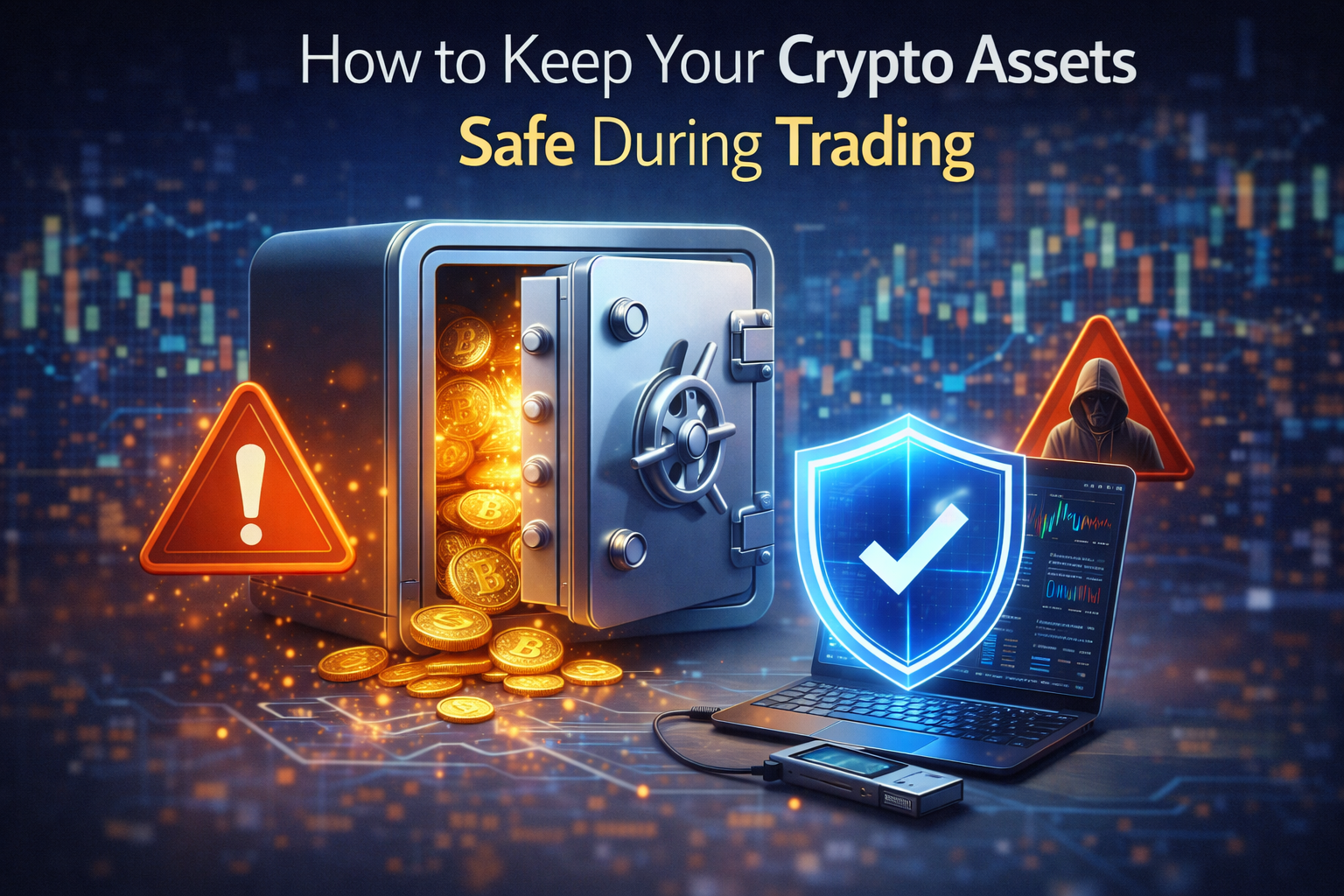
How to Keep Your Crypto Assets Safe During Trading: A Comprehensive Guide for 2026
In the exhilarating world of digital assets, where fortunes can be made and lost in a blink, the paramount concern for any investor is security. As cryptocurrency remains in its growth phase, so do the risks relating to it. Trading in digital assets may be very rewarding, but at the same time, this exposes one to security breaches and other forms of fraud/cybercrime. Whether you are a novice or experienced trader, it pays well to take good care of your crypto assets. With cyber threats constantly evolving, understanding how to keep your crypto assets safe during trading is not just recommended, it’s absolutely essential for protecting your investments in 2026 and beyond.
🔑 Key Takeaways for Crypto Security
Choose Reputable Platforms: Always opt for exchanges and services with a strong security track record and transparent practices.
Enable 2FA Everywhere: Two-Factor Authentication is your first line of defense against unauthorized access; use it on all crypto and related accounts.
Utilize Hardware Wallets: For long-term holdings, store your private keys offline on a hardware wallet to minimize online attack vectors.
Stay Updated & Vigilant: Keep all software, devices, and antivirus programs updated, and remain highly suspicious of phishing attempts.
Prioritize Privacy with Non-Custodial Solutions: Platforms like Exolix offer enhanced privacy and control by allowing swaps without account registration or holding your funds.
Having onboard the best security practices will save you from falling into the hands of a hacker or other types of malware activities. Further, we are going to look at a number of recommendations on how to protect your means better while trading cryptocurrency. If you want to swap USDT to BTC, using the secure platform Exolix will make that process safer because it provides speedy and anonymous crypto swaps without registration.
Choose a Reliable and Safe Exchange
The very foundation of safe cryptocurrency trading is to choose a reliable exchange. Not all of them equally provide security, and that’s why it’s so important to pick out one with a solid reputation and sound security protocols in place. You are going to want to find an exchange that genuinely cares about the safety of its users’ funds and has a good history within the industry.
Here’s what you need to take into consideration when deciding how to keep your crypto assets safe during trading by selecting the right platform:
Reputation: Check for user reviews and look into the history of the exchange. Most exchanges that have existed long usually tend to have good feedback. Be wary of new or unknown platforms promising unrealistic returns.
Security Features: Check if the platform supports 2FA, encryption, and cold storage. Cold storage refers to keeping cryptocurrencies offline, making them inaccessible to online threats. This is a critical feature for exchanges holding large amounts of user funds.
Non-Custodial Platforms: Non-custodial exchanges like Exolix provide greater custody over one’s assets, as they themselves do not store deposits on their websites. Consequently, this reduces the risk of losing your assets in the event of an exchange hack. For instance, Exolix is able to perform fast and private swaps without requiring an account or declaration of personal information. This model significantly enhances user control and security.
Enable Two-Factor Authentication (2FA)
What is Two-Factor Authentication?
Two-factor authentication, known as 2FA, is one simple but mighty way of safeguarding your crypto trading account. The security feature requires users to input a secondary way of verification besides their password, typically a code sent to phones or from an app like Google Authenticator.
Here’s why 2FA is so important for helping you understand how to keep your crypto assets safe during trading:
In this way, when your password is compromised, the whole attack needs the second authentication code to access your account. This significantly raises the bar for potential attackers.
It prevents unauthorized access by setting a big barrier to the process of hackers’ attacks, even when your credentials happen to be leaked in a data breach.
Be sure to enable 2FA for all accounts dealing with cryptocurrency, including all exchanges, wallets, and email services connected with your crypto activities. Hardware-based 2FA (like YubiKey) offers even stronger protection than SMS or app-based 2FA.
Recommended 2FA App: Google Authenticator
Google Authenticator is a widely used mobile application that generates time-based one-time passcodes (TOTP) for two-factor authentication. It provides an extra layer of security for online accounts by requiring users to enter a code from their phone in addition to their password.
Offline Code Generation: Codes are generated on your device, even without an internet connection.
Wide Compatibility: Supported by numerous exchanges and online services.
Ease of Use: Simple setup and quick access to codes.
If you’re a long-term holder of crypto, it’s well worth considering a hardware wallet. A hardware wallet is an actual, physical device where your private keys are kept offline, which means your assets are protected against online threats such as hackers and malware. This is a cornerstone strategy for how to keep your crypto assets safe during trading, especially for larger investments.
Hardware wallets, such as Ledger or Trezor, have a couple of tiers in security. If stolen-because, say, someone managed to steal your wallet-he would have to produce the PIN and the recovery phrase to access your funds. This hardware wallet keeps all your assets offline, thereby reducing the chances of cyberattacks by a mile.
“For significant crypto holdings, a hardware wallet acts as a digital fortress, safeguarding your private keys from the online vulnerabilities that centralized exchanges and software wallets might face.”
You can keep smaller amounts in online wallets for everyday use or trading, but the majority of your long-term storage should always be on a hardware wallet for extra security. Think of it as putting your most valuable possessions in a bank vault rather than carrying them around in your pocket.
One of the most common ways hackers breach users is by finding old versions of software with known vulnerabilities. To not be their next target, make sure that everything is up-to-date on your device, including:
Operating Systems: Regularly update your desktop and mobile devices to the latest patches of operating systems. These updates often include critical security fixes that protect against newly discovered threats.
Wallet and Trading Apps: Run recent versions of crypto wallet and trading apps for activities; indeed, updates mostly contain vital security fixes. Developers constantly release patches to address vulnerabilities and improve security features.
Antivirus Software: Ensure your antivirus and anti-malware software is always active and up-to-date. Regular scans can detect and remove malicious software that could compromise your crypto.
Automatic Updates: Allow all forms of automatic updates for your devices and apps, so you may be sure that you keep updated with protection without needing to check yourself manually. This passive approach ensures you’re always protected with the latest defenses.
Neglecting software updates is like leaving your front door unlocked. It’s a simple, yet crucial step in how to keep your crypto assets safe during trading.
Avoid Phishing Attempts
Phishing is a deceptive tactic used by cybercriminals to trick users into disclosing their login credentials or private keys. They achieve this by impersonating legitimate platforms such as exchanges, wallets, or other crypto-related services through emails, messages, or fake websites. Recognizing and avoiding these scams is vital for how to keep your crypto assets safe during trading.
How not to get hooked by phishing:
Check Website URLs: Always verify the URL of the website which you are accessing before entering any credentials. The fake websites often use slightly misspelled domain names (e.g., ‘exolixx.com’ instead of ‘exolix.com’) or different top-level domains. Bookmark official sites and use those bookmarks.
Never Click on Suspicious Links: Unsolicited messages or emails, which prompt one to click on a link to log in, should be looked at suspiciously. Instead, one should navigate to the official website directly by typing the URL into their browser.
Anti-Phishing Codes: Some exchanges offer anti-phishing codes. These allow the user to verify that communications from them are genuine. Once set up, the exchange will include this unique code in all its legitimate emails, helping you distinguish real messages from fakes.
Be Wary of Urgent Requests: Phishing scams often create a sense of urgency, claiming your account will be suspended or funds lost if you don’t act immediately. Always pause and verify.
Leverage Non-Custodial for Privacy
If your priority is privacy and you do not want to give your personal information to exchanges, then non-custodial platforms like Exolix are the way to go. A non-custodial exchange does not store your funds, meaning a user is always in full control of his assets. Such a platform does not ask to register an account or pass through identification procedures to let your transaction remain private. This approach is fundamental for individuals seeking to enhance their privacy and control over how to keep your crypto assets safe during trading.
Exolix has the possibility to enable anonymous, secure over-the-counter trade. For example, you can exchange USDT to BTC on Exolix, and the whole process is right on the website without registration and exposing your personal information. It is a perfect platform for traders who regard privacy and security in a transaction. You can therefore start your safe swap at Exolix. This method not only protects your identity but also mitigates the risk of your funds being compromised if the exchange itself is hacked, as they never hold your assets.
Having strong and unique passwords for all accounts forms the basis of crypto asset protection. Insecure or reused passwords create conditions to allow an intruder to get access using a brute force attack or data breach. This is a foundational step in mastering how to keep your crypto assets safe during trading.
Securing Your Password: Essential Practices
Generate a Complex Password: A complex password should contain uppercase and lowercase alphabets, numbers, and special characters. Aim for a length of at least 12-16 characters, but longer is always better.
Password Manager: Password managers will devise complex passwords for one and store them in a vault, in such a way that one does not need to remember all those. Reputable password managers like LastPass, 1Password, or Bitwarden also offer autofill features and can alert you to compromised passwords.
Never Repeat Your Password: Set a different password for each account such that when one gets hacked, the rest of the accounts remain safe. Reusing passwords is one of the biggest security risks online.
Regular Updates: While password managers handle this, if you’re not using one, make a habit of changing your most critical crypto passwords periodically, perhaps every 3-6 months.
Additional Strategies for How to Keep Your Crypto Assets Safe During Trading in 2026
Beyond the core practices, several other measures can significantly bolster your security posture when actively trading cryptocurrencies in 2026.
Isolate Your Crypto Activities
Consider using a dedicated device (e.g., a separate computer or phone) solely for your cryptocurrency trading and management. This reduces the risk of malware or viruses from other online activities impacting your crypto security. If a device is only used for crypto, it significantly limits potential attack vectors. If a dedicated device is not feasible, at minimum:
Use a clean, updated operating system.
Avoid browsing suspicious websites or opening unknown attachments on your crypto device.
Install robust antivirus and anti-malware software.
Be Wary of Public Wi-Fi
Public Wi-Fi networks (at cafes, airports, etc.) are often unsecured and can be easily intercepted by malicious actors. Avoid logging into your crypto exchange, wallet, or even crypto-related email accounts while connected to public Wi-Fi. If you must, use a Virtual Private Network (VPN) to encrypt your connection, though it’s always safer to wait for a secure, private network.
Understand and Manage Your Recovery Seed Phrase
If you use a hardware wallet or a software wallet where you control your private keys, you will be given a recovery seed phrase (typically 12 or 24 words). This phrase is the master key to your funds. Losing it means losing access to your crypto, and anyone who finds it can access your assets.
Write it Down: Physically write down your seed phrase on paper.
Store Offline: Keep it in a secure, private, and fireproof location, away from your digital devices. Never store it on your computer, in the cloud, or take a picture of it.
Consider Multiple Locations: For extreme security, you might split the phrase and store parts in different secure locations, or use a metal backup to protect against fire and water damage.
Be Skeptical of “Too Good to Be True” Offers
The crypto space is rife with scams promising astronomical returns with minimal effort. Initial Coin Offerings (ICOs), staking platforms, or even investment groups that offer guaranteed, unusually high profits are almost always fraudulent. Always conduct thorough due diligence, research the project, the team, and read independent reviews before committing any funds. Remember the old adage: if it sounds too good to be true, it probably is.
Regularly Monitor Your Accounts
Even with the best security measures, vigilance is key. Regularly log into your exchange accounts and check your wallet balances and transaction history. Familiarize yourself with normal activity so you can quickly spot anything unusual. Many exchanges offer email or SMS notifications for login attempts or large transactions, which you should enable.
Security Measure
Benefit for Crypto Trading
Actionable Tip
Reliable Exchange
Minimizes platform-level hacks and fraud.
Research exchange reputation, security features (cold storage, 2FA).
Two-Factor Authentication (2FA)
Prevents unauthorized access even if password is stolen.
Enable on all crypto accounts; prefer authenticator apps over SMS.
Hardware Wallets
Keeps private keys offline, protecting long-term holdings from cyber threats.
Transfer significant holdings off exchanges to a Ledger or Trezor.
Software Updates
Patches vulnerabilities, securing devices against exploits.
Enable automatic updates for OS, wallets, and antivirus.
Phishing Awareness
Protects credentials from deceptive websites and emails.
Always verify URLs, avoid clicking suspicious links, use anti-phishing codes.
Non-Custodial Platforms
Enhanced privacy and user control, reduced counterparty risk.
Use services like Exolix for anonymous swaps without registration.
Strong Passwords
Primary defense against brute force attacks and data breaches.
Use unique, complex passwords for each account, preferably with a manager.
Educate Yourself Continuously
The cryptocurrency landscape and its associated threats are constantly evolving. Stay informed about the latest security best practices, common scams, and new technologies. Follow reputable crypto security experts, news outlets, and community forums. Continuous learning is arguably one of the most powerful tools in your arsenal for how to keep your crypto assets safe during trading.
Conclusion
In 2026, navigating the cryptocurrency market requires more than just keen trading skills; it demands an unwavering commitment to security. The digital realm, while offering unprecedented opportunities, also harbors persistent threats. By diligently implementing the strategies outlined in this guide, you equip yourself with the knowledge and tools necessary to protect your valuable crypto assets.
From the foundational step of choosing a reliable, secure exchange to the advanced practice of utilizing hardware wallets for long-term storage, each measure plays a crucial role. Enabling Two-Factor Authentication, maintaining updated software and devices, and cultivating a sharp eye for phishing attempts are non-negotiable practices for any serious crypto trader. Furthermore, embracing non-custodial solutions like Exolix can offer an added layer of privacy and control, empowering you to execute trades without compromising your personal information or relinquishing custody of your funds.
Remember, the responsibility for securing your crypto lies primarily with you. By adopting a proactive and informed approach to security, you not only safeguard your investments but also contribute to a safer, more resilient cryptocurrency ecosystem. Stay vigilant, stay informed, and trade securely. Your peace of mind, and the integrity of your digital wealth, depend on it.
Actionable Next Steps:
Audit Your Current Setup: Review all your crypto accounts, wallets, and email services. Ensure 2FA is enabled everywhere.
Invest in a Hardware Wallet: If you hold significant crypto, purchase a reputable hardware wallet like Ledger or Trezor and transfer your long-term holdings.
Update Everything: Check for and install all pending software, operating system, and app updates on devices used for crypto.
Strengthen Passwords: Use a password manager to generate and store complex, unique passwords for all crypto-related logins.
Practice Vigilance: Make it a habit to double-check URLs before entering credentials and be skeptical of unsolicited communications.
Explore Non-Custodial Options: Consider using platforms like Exolix for anonymous swaps to enhance privacy and security during trading.
Marcin Wieclaw, the founder and administrator of PC Site since 2019, is a dedicated technology writer and enthusiast. With a passion for the latest developments in the tech world, Marcin has crafted PC Site into a trusted resource for technology insights. His expertise and commitment to demystifying complex technology topics have made the website a favored destination for both tech aficionados and professionals seeking to stay informed.
[…] As the crypto world grows, keeping your investments safe is key. Picking a trustworthy exchange is crucial for protecting your money. For tips on secure trading, check out this guide on keeping your crypto assets secure. […]
[…] date on how to keep your investments safe. You can learn more about protecting your crypto assets here. Ready to start buying WAX? Follow this guide to join the exciting world of […]








2 comments
[…] As the crypto world grows, keeping your investments safe is key. Picking a trustworthy exchange is crucial for protecting your money. For tips on secure trading, check out this guide on keeping your crypto assets secure. […]
[…] date on how to keep your investments safe. You can learn more about protecting your crypto assets here. Ready to start buying WAX? Follow this guide to join the exciting world of […]