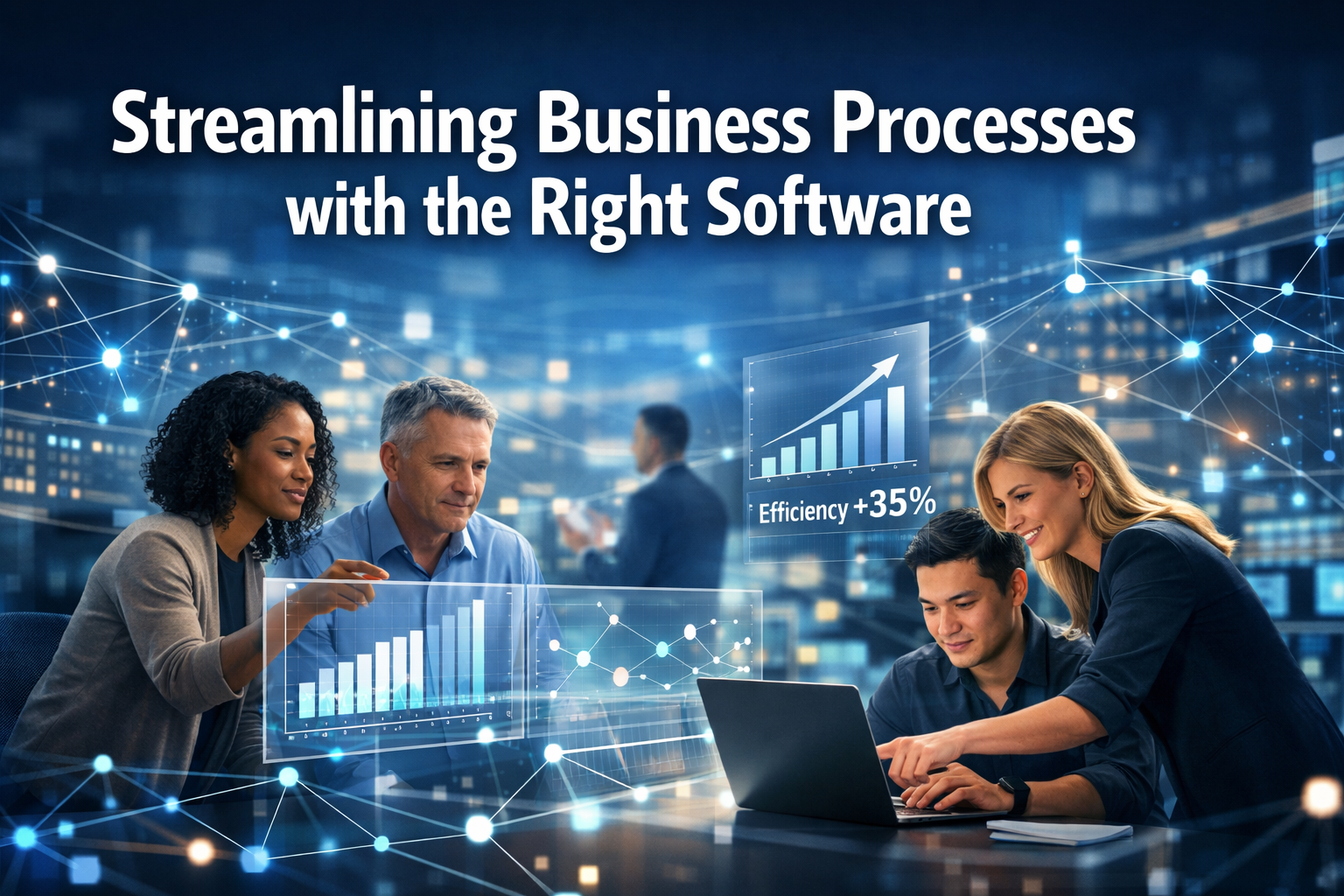
Streamlining Business Processes with the Right Software in 2026
In today’s fast-evolving business landscape, simply operating is no longer enough; true innovation lies in mastering efficiency. Streamlining business processes is a monumental step towards achieving this, transforming inefficient operations into disciplined, high-performing systems. By simplifying or eliminating repetitive tasks, businesses can significantly improve workflow, cultivate an unparalleled company culture, and ultimately foster a healthy work environment that boosts employee retention and productivity.
The essence of modern business streamlining often revolves around leveraging cutting-edge technology – from advanced hardware to sophisticated software solutions. These tools empower employees to automate tedious tasks, freeing them to focus on critical areas like creativity, self-sufficiency, and advanced organizational skills. However, the journey to streamlining your business operations isn’t always smooth sailing. Challenges such as a lack of access to best practices, whether in terms of knowledge or networking, can arise. For international organizations, navigating language barriers adds another layer of complexity. Yet, with a strategic mindset and the right approach, harnessing software solutions can transform these challenges into opportunities for success. This article will guide you through the essential strategies for effectively streamlining business processes in 2026.
Key Takeaways
Automation is Non-Negotiable: Embrace software solutions to automate repetitive tasks in areas like time tracking, accounting, and inventory management, significantly boosting efficiency and cost savings.
Strategic Scaling is Crucial: Develop a clear scaling strategy that aligns with company goals, leveraging technology investments and realistic milestones to support sustainable growth.
Data Analytics Drives Decisions: Integrate data analytics tools to gain deep insights into market trends, customer behavior, and operational inefficiencies, enabling data-backed decision-making.
Prioritize Communication & Customer Focus: Implement software for improved internal communication and use AI-powered tools to understand and serve customers better, fostering strong relationships and a customer-centric culture.
Evaluate Outsourcing Opportunities: Strategically outsource non-core functions to save costs, access global talent, and mitigate risks, focusing internal resources on core competencies.
Managing Automated Processes to Enhance Efficiency
Automation is experiencing unprecedented demand across various industries in 2026, particularly within sectors like healthcare, manufacturing, and logistics. The ability to track and monitor diverse tasks with unparalleled ease, coupled with superior information storage and leverage capabilities, makes automation a cornerstone of modern business. Whether the need is for accurate time recording, meticulous expense tracking, or seamless employee onboarding, specialized software offers a comprehensive solution. For instance, platforms like Timesheet Portal can consolidate project management and billing processes, simplifying complex operations into a single, cohesive system.
Timesheet Portal
A specialized software solution designed to simplify project and billing processes. It facilitates accurate time tracking, expense management, and employee onboarding, consolidating these functions in one place for enhanced efficiency.
Beyond these foundational applications, the scope for introducing automation extends into numerous other sectors, including accounting, inventory management, and client scheduling. By automating these areas, businesses can realize substantial savings in both time and money. The philosophy here is clear: automate as many processes as possible, provided they do not infringe upon employment security or compromise the authenticity of human-centric work. This approach not only enhances the overall efficiency of operating processes but also allows human capital to be redirected towards more creative and strategic endeavors. Effectively, streamlining business processes through automation empowers organizations to do more with less, optimizing resource allocation and driving innovation.
Learning to Scale Services for Sustainable Growth
The journey of streamlining business processes isn’t always linear; growth inevitably introduces new challenges and opportunities. Therefore, a critical component of successful streamlining involves analyzing your company’s growth trajectory and developing robust strategies for scaling. This requires a comprehensive evaluation of several interconnected elements: your overarching company goals, the intricacies of your internal processes, and the size and capabilities of your team members. A well-defined scaling strategy considers these factors to ensure growth is not just rapid, but also sustainable and controlled.
Key elements to consider when approaching your scaling strategy include:
Finding a way to increase sales to maximize profit;
Investing in technology to minimise manual administrative tasks;
Having realistic goals when setting monthly or quarterly milestones;
Understanding and leveraging your company’s offering;
It is crucial to find your organization’s optimal pace. Scaling too rapidly or losing focus due to inexperience can lead to prioritizing immediate gains over long-term strategic objectives. Therefore, a measured, deliberate approach is advisable, allowing you to build a solid foundation that supports enduring success and effectively streamlining business processes for future expansion.
Adapting Data Analytics to Business Needs
In 2026, a world increasingly dominated by technological advancements, adopting robust data analytics tools and services within your company is no longer optional—it’s crucial. Proper data analytics provides invaluable insights into your target markets, enabling your business to identify emerging trends and subtle patterns in customer behaviors. This granular understanding allows for the agile adaptation of products and services, ensuring they remain relevant and competitive.
More importantly, data analytics significantly enhances your firm’s decision-making capabilities. By providing valuable insights into operational inefficiencies and the effectiveness of marketing campaigns, data empowers leaders to make informed choices. This minimizes the risk of falling behind market trends and prevents overspending on new product development or ineffective initiatives. By leveraging data effectively, businesses can proactively identify and mitigate risks, optimize resource allocation, and ensure that every strategic move is backed by concrete evidence. This makes data analytics an indispensable tool for streamlining business processes and achieving sustained success.
“Data analytics acts as the compass for modern businesses, guiding them through complex market conditions and illuminating the path to operational excellence and customer satisfaction.”
Effective communication is the lifeblood of a productive organization. It not only builds stable relationships and fosters creativity within balanced environments but also plays a critical role in preventing or mitigating conflicts—a responsibility leaders and entrepreneurs must approach with diligence. In 2026, leveraging software solutions can significantly enhance this vital aspect of business operations.
Modern communication software can gather essential data to help identify individuals’ conflict styles and triggers, allowing for more targeted interventions. Furthermore, these systems can facilitate advanced feedback processes. Regular, constructive feedback is paramount, providing employees a safe space to express their thoughts and feelings openly, free from the fear of negative repercussions. An online software system often serves as the ideal platform for establishing such a secure and transparent channel for communication. By promoting clear, open, and consistent dialogue, organizations can create a more cohesive, engaged, and ultimately more productive workforce, thereby effectively streamlining business processes related to team collaboration and employee well-being.
Centralized access to company policies, FAQs, training materials
Focusing on the Customer
While the internal mechanics of streamlining business processes are crucial, it’s paramount never to lose sight of the client—the most important stakeholder in any enterprise. Cultivating a customer-focused culture is highly advisable, particularly for burgeoning businesses aiming to expand their customer base and audience reach. This ethos should permeate every aspect of your operations, guiding decisions from product development to service delivery.
While encouraging internal collaboration and leveraging employee feedback are vital for a strong organizational foundation, software and technology play an increasingly significant role in meeting customer needs, regardless of their global location. In 2026, artificial intelligence (AI) is proving incredibly useful in this domain. AI can predict customer satisfaction trends, offering proactive insights into potential issues or opportunities. Chatbots powered by AI can welcome customers, provide instant support, and answer common queries around the clock. Moreover, implementing demo request forms, often integrated with CRM software, provides genuine insight into customer interest in your products and services. By embracing these technological advancements, businesses can enhance the customer experience, build stronger relationships, and ensure that their streamlining efforts directly translate into superior customer satisfaction and loyalty.
Determining When to Outsourcing Your Business
In the dynamic business environment of 2026, strategic outsourcing has become a vital tool for organizations looking to optimize costs and tap into a global talent pool for expansion. Outsourcing provides access to specialized expertise that might not be available in-house and can significantly help mitigate security risks by leveraging external specialists. Therefore, a careful analysis of which functions can be effectively outsourced is a crucial strategic decision.
The research process for identifying suitable outsourcing partners is paramount. It requires diligent vetting of contractors, looking for compelling portfolios, strong references, and a proven track record of high work standards. A wide array of business areas are amenable to outsourcing, ranging from accounting and content writing to website design and bookkeeping. The key is to pinpoint the areas within your organization that stand to benefit most from external expertise, whether it’s due to a lack of internal resources, a need for specialized skills, or a desire to reduce operational overhead. By strategically outsourcing non-core functions, businesses can effectively streamlining business processes, allowing internal teams to focus on core competencies and strategic growth initiatives.
What Are the Challenges of Streamlining Your Business Operations?
While the benefits of streamlining business processes are clear, the implementation is often far from straightforward. The path to operational efficiency is fraught with various challenges that require careful navigation and strategic foresight.
For instance, automating processes, while incredibly beneficial, can be time-consuming in its initial setup and demands specific skills and competencies from your team to effectively acquire and leverage new technologies. This often necessitates significant investment in training and development. Furthermore, for companies operating across global headquarters, language barriers can pose substantial challenges, hindering effective communication and collaboration, and making it difficult for employees to integrate and find balance within a unified work environment.
Finally, a pervasive challenge is the lack of visibility across all operational processes. It is easy to lose focus in one critical area while overly concentrating on another, which can be detrimental to overall growth and efficiency. This is precisely where leveraging technology and sophisticated software operations becomes indispensable. These tools provide a comprehensive, bird’s-eye view of the company’s pain points and benefits, offering critical insights that might otherwise be missed. Moreover, advanced software solutions ensure that crucial aspects like security and compliance, which are among the most important considerations for any firm in 2026, are never overlooked. Addressing these challenges head-on is essential for any successful streamlining business processes initiative.
Is Your Business Operating Well?
Companies rarely progress in a perfectly linear fashion; periodic assessments and adjustments are often necessary to regain balance and optimize profitability. This often means businesses must proactively streamlining business processes to enhance efficiency and maintain a competitive edge. The key lies in identifying and implementing the right software solutions that can automate repetitive tasks, mitigate operational challenges, and foster sustainable growth.
Finding appropriate tech solutions for scaling operations, leveraging advanced data analytics for informed decision-making, and enhancing internal and external communication are all essential steps toward cultivating a robust, customer-focused company culture. Simultaneously, these technological interventions are crucial for overcoming common obstacles such as language barriers, time-consuming manual processes, and a lack of organizational visibility. By embracing a strategic approach to software integration, businesses can proactively address their pain points, capitalize on opportunities, and ensure they are well-positioned for sustained success in 2026 and beyond.
Conclusion
In the dynamic business landscape of 2026, streamlining business processes is not merely an operational improvement; it’s a strategic imperative for innovation, growth, and sustained competitive advantage. By embracing the right software solutions, businesses can transition from inefficient, manual operations to highly disciplined, automated workflows that free up human capital for creative and strategic endeavors. From automating mundane tasks with tools like Timesheet Portal to leveraging sophisticated data analytics for informed decision-making and fostering better communication, technology is the cornerstone of modern efficiency.
The journey involves understanding the nuances of scaling for growth, prioritizing a customer-centric approach, and strategically evaluating outsourcing opportunities. While challenges like technological adoption, language barriers in global operations, and maintaining visibility across processes exist, they can be effectively overcome through thoughtful integration of software. By continuously assessing operational health and proactively adopting cutting-edge tools, businesses can ensure they remain agile, resilient, and poised for prosperity. The future belongs to those who intelligently harness technology to simplify complexities and maximize potential.
Actionable Next Steps:
Conduct a Process Audit: Identify repetitive, time-consuming, or error-prone processes within your organization.
Research Software Solutions: Explore specific software applications tailored to automate identified areas (e.g., project management, accounting, CRM, HR platforms).
Pilot and Implement: Start with a pilot program for a chosen software solution in a small team before scaling company-wide.
Invest in Training: Ensure your team receives adequate training to maximize the benefits of new software and processes.
Monitor and Optimize: Regularly review the effectiveness of streamlined processes and software, making adjustments as needed for continuous improvement.
Frequently Asked Questions about Streamlining Business Processes
What does “streamlining business processes” mean?
Streamlining business processes refers to the act of analyzing and improving existing workflows to make them more efficient, cost-effective, and productive. It often involves eliminating unnecessary steps, automating tasks, and optimizing resource allocation.
Why is software important for streamlining business processes?
Software provides the tools for automation, data analysis, enhanced communication, and centralized management. It helps reduce manual effort, minimize human error, gain insights into performance, and foster collaboration across teams, which are all critical for effective streamlining.
What are common areas where businesses can use software to streamline?
Common areas include time tracking, expense management, accounting, inventory management, customer relationship management (CRM), project management, HR and onboarding, and internal communications.
How can data analytics software help in streamlining?
Data analytics software helps businesses gather, process, and analyze large volumes of data. This provides insights into operational bottlenecks, customer behavior, and market trends, allowing for data-driven decisions that optimize processes and resource allocation.
What are the main challenges when streamlining business processes?
Key challenges include the initial time and skill investment for automation, potential resistance to change from employees, managing language barriers in international operations, and maintaining overall visibility across numerous processes.
Questions & Answers from Readers
Question: “Our small business struggles with invoicing and payroll. What’s the first step to using software for this?”
Answer: For invoicing and payroll, the first step is to identify specific software solutions designed for small business accounting and payroll. Look for platforms that integrate both functions to avoid data silos. Cloud-based solutions are often ideal for accessibility and ease of use. Once identified, compare features, pricing, and ensure they meet your local compliance requirements.
Question: “We have an international team, and communication is a bottleneck. Any specific software recommendations?”
Answer: For international teams, focus on integrated communication suites that offer video conferencing, instant messaging, and robust file sharing. Platforms like Microsoft Teams, Slack, or Google Workspace are popular. Consider features like real-time translation (if available), meeting recording, and organized channels for different projects or regions. Also, prioritize tools with strong security features.
Marcin Wieclaw, the founder and administrator of PC Site since 2019, is a dedicated technology writer and enthusiast. With a passion for the latest developments in the tech world, Marcin has crafted PC Site into a trusted resource for technology insights. His expertise and commitment to demystifying complex technology topics have made the website a favored destination for both tech aficionados and professionals seeking to stay informed.