
Table of Contents
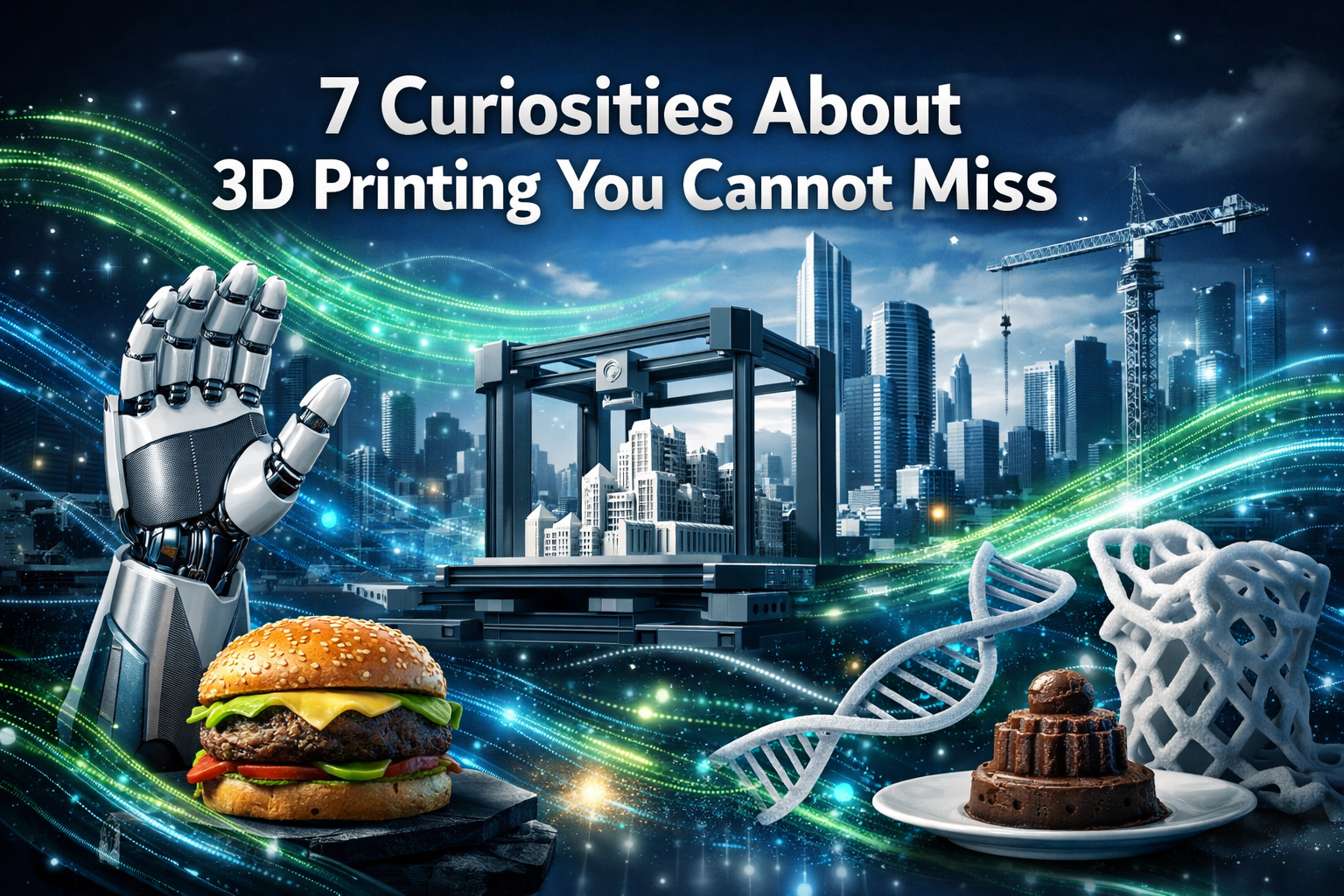
Prepare to be amazed! The world of 3D printing is a constantly evolving and mutating one – something a lot of people don’t realize! Its progress is closely linked to the technological innovations that are emerging at all times, and we’re going to figure out more about that in this article, exploring some incredible curiosities about 3D printing that you may not know. We bet that some of them will really surprise you! At first glance, it may seem a very complex technology, and sure, there are some challenges, but the reality is that it is becoming more and more democratized and, therefore, more accessible to everyone. By 2026, its reach is wider than ever, making these 7 curiosities about 3D printing even more fascinating.
Key Takeaways
- Sustainability Champion: 3D printing is a major player in waste reduction and fostering a circular economy by reusing plastic waste.
- Beyond 3D – Welcome 4D: The next frontier, 4D printing, introduces materials that can transform and adapt to their environment.
- Construction Revolutionized: Entire buildings and bridges are now being 3D printed, offering sustainable and cost-effective construction solutions.
- Medical Marvels: From custom prosthetics to organ replicas for surgical planning, 3D printing is transforming healthcare.
- Edible Innovations: The technology extends to printing complex, artistic, and completely edible food items.
1. Reuse of Plastic Waste (and Therefore Creation of a Circular Economy)
Ever heard that 3D printers are potentially great for our planet? They could actually be one of the most sustainable alternatives to conventional manufacturing, as 3D printing generates hardly any waste, because only the essential amount of material is used. This is one of the most compelling aspects and a key curiosity about 3D printing.
We love the sustainability factor, which is heavily due to it using otherwise single-use plastics, repurposing them, and giving them a brand new lease of life! With this kind of tech, we might even be able to put an end to single-use plastic waste, prioritizing a circular economy. Imagine a world where your old plastic bottles are transformed into functional, beautiful objects right in your home or community. This vision is becoming increasingly tangible in 2026.
This technology also simplifies the production process of parts and components, thus reducing the time and costs of making something, and synthesizing the use of machinery and technologies to cover the entire process. And that’s not all – 3D printing technology goes one step further and opens up a world of possibilities in terms of materials.
The manufacturer UltiMaker has available in its UltiMaker Marketplace different materials made from filaments of other prints, which are recycled to create new high-end materials. This demonstrates a clear commitment to closed-loop manufacturing, where waste from one process becomes the raw material for another. This innovative approach to material sourcing is setting new standards for industrial sustainability.
“The ability of 3D printing to utilize recycled materials transforms waste into valuable resources, creating a truly circular economy model that conventional manufacturing struggles to match.” – Environmental Technology Insights, 2025
The implications for this are vast. Not only does it reduce landfill burden, but it also lessens reliance on virgin plastics, which often come from fossil fuels. This directly contributes to reducing carbon footprints and combating climate change. Companies and individuals alike are increasingly looking for ways to minimize their environmental impact, and embracing 3D printing with recycled filaments offers a practical and powerful solution. This aspect alone makes these 7 curiosities about 3D printing particularly relevant in our environmentally conscious world.
2. 4D Printing Is on the Way: An Evolving Curiosity About 3D Printing
Technology is advancing in leaps and bounds, and the evolution of 3D printing is surging forward too! In recent years, the work in many areas has been done by 4D printing, which involves manufacturing with materials that can change their nature when in contact with water. At the same time, research is being carried out so that they can adapt to other environments and, once immersed in them, adopt the desired shape. This is arguably one of the most mind-bending curiosities about 3D printing.
Think of it: objects that can autonomously assemble, repair themselves, or adapt to changing conditions. This isn’t science fiction anymore. Researchers are developing smart materials that respond to various stimuli – not just water, but also heat, light, or magnetic fields. Imagine a pipe that automatically expands or contracts to regulate fluid flow based on temperature changes, or clothing that adapts its insulation properties to match ambient conditions.
In a way, this modality aims to use more special materials that react in certain ways to external stimuli. In order to manufacture elements with these characteristics, a much more complex design process is needed – but wow, the payoffs are huge! The design must account not only for the initial static form but also for the dynamic transformation, requiring sophisticated simulation and modeling techniques.
For instance, self-assembling furniture could be shipped flat and then expand into its final form with a simple interaction. Or medical implants could change shape inside the body to better fit a healing wound. The potential applications span aerospace, biomedicine, smart infrastructure, and even consumer goods. The journey from 3D to 4D is a testament to human ingenuity and the relentless pursuit of innovative solutions.
3. Manufacture of Buildings and Houses
Ever thought about 3D printing a house? It sounds pretty crazy, right? But… well, actually, this tech is already creeping into sectors like construction, where it is gaining prominence in the manufacture of buildings and houses, as it represents a great boost to the sustainability of the sector. This is one of the most visually stunning and impactful curiosities about 3D printing.
Through 3D printing technology, spectacular buildings and houses can be built without the transportation and logistical costs involved in traditional construction. 3D printing allows the entire manufacturing and construction process to be carried out in the same space, thus decreasing the long lead times common in this sector. Picture a robotic arm methodically layering concrete, forming walls and structural elements with unprecedented speed and precision, reducing human error and labor costs.
In addition, the manufacture of buildings and houses through 3D printing can be carried out using recyclable elements, avoiding the generation of waste. In this way, buildings focused on the reduction of emissions are obtained, which represent a real alternative to the problems of the cement industry. The cement industry is a major contributor to global CO2 emissions, so finding viable alternatives is crucial. 3D printing with innovative, often local, and recycled materials provides a greener pathway for development.
Related Posts:





Several companies around the globe are already demonstrating the feasibility and benefits of 3D printed homes, from affordable housing initiatives to luxury custom builds. These homes can be built faster, often stronger, and with less material waste than conventional methods. They also offer design flexibility, allowing for organic shapes and intricate details that would be prohibitively expensive or impossible with traditional construction. By 2026, 3D printed communities are no longer just concepts, but emerging realities.
4. First Bridge Manufactured by 3D Printing
Recently, a great step forward in architecture and 3D printing has been taken with the world’s first 3D printed bridge. This is a very new development in the tourism sector too, as it could become a major tourist attraction for the city in which it is located – in this case, Amsterdam. This stands out as a monumental achievement among the 7 curiosities about 3D printing.
This 3D printed bridge has been manufactured with the purpose of replacing one that needed to be repaired. Not only that, but it’s also an opportunity to test its resilience and thus verify if this innovative approach works well! The design process for such a structure involves complex simulations and material science, ensuring it can withstand significant loads and environmental factors.
The material used is stainless steel, and so far, they have ensured great stability for the large number of tourists visiting the streets of the Dutch city. The intricate, almost organic lattice structure of the bridge showcases the aesthetic and functional possibilities of metal 3D printing on a grand scale. It’s not just a bridge; it’s a piece of art and a living laboratory for future construction.
This is a momentous step – to quote a certain astronaut, “one giant leap for mankind,” and all that… It signifies a paradigm shift in civil engineering, where complex infrastructure can be custom-fabricated on demand, potentially reducing construction time, waste, and costs for future projects. The success of this bridge opens doors for other large-scale metal 3D printing applications, from complex structural components to artistic installations, making it one of the most exciting curiosities about 3D printing.
5. Production of Tissues and Organs for the Medical Sector
Did you know that 3D printing could also bring significant changes in the healthcare sector? Who would have thought you could reproduce a heart in 3D? Yet today it is becoming feasible! The medical applications are perhaps the most life-changing of these 7 curiosities about 3D printing.
Broadly speaking, 3D printing technology allows total customization of treatments, as well as the manufacture of disposable surgical material. The result is a very considerable reduction in surgery times, and waiting and recovery periods, and offers cost savings. Imagine a surgeon practicing a complex procedure on an exact replica of a patient’s organ before the actual surgery, dramatically improving outcomes and reducing risks.
One of the most important applications of 3D printing in the healthcare sector is in the production of prostheses and implants. This technology allows customization down to the millimeter to adapt to the needs and requirements of each patient. Instead of generic, mass-produced devices, patients receive prosthetics that perfectly match their anatomy, leading to greater comfort, functionality, and acceptance. This is particularly transformative for children who need frequent adjustments as they grow.
Additionally, 3D printing makes it possible to improve the precision of surgery, since replicas of organs can be used to plan how the operation will go before it is carried out. In addition, it improves communication with the patient, since understanding medical language can sometimes be complicated, and thanks to 3D replicas, the patient understands the diagnosis and treatment much better. Patients can visually grasp their condition and the proposed intervention, fostering trust and reducing anxiety. Beyond replicas, bioprinting — the printing of living tissues and organs — is an emerging field that holds the promise of someday creating functional organs for transplant, potentially ending organ donation waiting lists.
6. Did You Know That It Is Possible to Print Edible Food and Kitchenware?
3D printing never ceases to amaze! This technology has gone a step further and now even makes it possible to generate completely edible food from fresh ingredients such as chocolate, fruit, or pasta. After all, thanks to this technology, it is possible to print geometrically complex pieces that would be impossible to obtain with other types of technology. The result is therefore dishes with a highly refined visual aesthetic and completely refined, a truly unique experience. This culinary innovation is a delicious curiosity about 3D printing.
Imagine a dessert with an intricate lattice structure or a pasta dish shaped like a delicate flower, all created with precision by a food printer. This capability allows chefs to push the boundaries of gastronomic artistry, creating bespoke dining experiences that delight the senses. It’s not just about aesthetics, though; food 3D printing can also be used for personalized nutrition, creating meals with specific nutrient profiles or textures tailored to individual dietary needs or restrictions.
Cooking enthusiasts know that the tools used are never enough! 3D printing makes it possible to create gadgets according to very specific needs. Whether it’s a unique cookie cutter, a specialized pastry nozzle, or an ergonomic utensil, custom kitchenware can be designed and printed on demand, enhancing the cooking and dining experience.
Is your mouth watering yet? You should try it out! From personalized chocolates for special occasions to nutrient-rich meals for astronauts, the potential for food 3D printing is vast and growing. It promises a future where food is not only delicious and healthy but also a canvas for unparalleled creativity.
7. Alternatives to Testing Cosmetics on Animals
A few years ago, it was possible to obtain a way to 3D print synthetic skin that works effectively as an alternative to human tissue for testing cosmetics on animals. This advancement is a truly ethical and impactful curiosity about 3D printing.
As you may already know, cosmetic experimentation uses testing on animals, such as rats or rabbits, which are subjected to different treatments with different products and are not subjected to any kind of alternative to relieve their skin afterwards. This practice has long been a point of ethical contention and public concern due to the suffering inflicted on animals.
3D printing is a great option to put an end to animal experimentation (the animals would be really grateful), by cosmetic or pharmaceutical companies, as it allows the same testing to be carried out, but on synthetic fabrics. These bio-printed skin models closely mimic the structure and function of human skin, providing a more relevant and humane testing platform. They can react to chemicals, absorb substances, and even show irritation, offering valuable data without harming any living creature.
This technological leap is not only ethical but also offers scientific advantages. Human skin models can sometimes provide more accurate results than animal models, as species differences can lead to variations in how products affect the skin. This means that cosmetic and pharmaceutical companies can develop safer and more effective products while upholding higher ethical standards. By 2026, the adoption of 3D printed skin models is becoming increasingly widespread, marking a significant step towards a cruelty-free industry.
3D Printing Is a Very Rapidly Evolving Field
We can’t help but notice: 3D printing is growing so fast, and it’s hard to keep up with all the innovations in this technology! If you are interested in this topic, you should definitely keep up to date with the latest news as it is an extremely interesting field especially since it has a great future ahead of it, and we can’t wait to find out the new innovations! Also, as you have seen, 3D printing can be a great ally for taking care of our planet, our bodies, and our animals! Are you ready to make your contribution toward sustainable innovation? The landscape of additive manufacturing continues to shift, introducing new materials, faster processes, and broader applications almost daily. From desktop hobbyist machines to industrial-scale systems, the technology is becoming more refined, accessible, and powerful.
The impact of these 7 curiosities about 3D printing extends far beyond novelty; they represent fundamental shifts in how we approach manufacturing, sustainability, healthcare, and even ethical practices. We are witnessing the democratization of manufacturing, allowing creators, innovators, and everyday people to bring their ideas to life with unprecedented ease and efficiency. The integration of artificial intelligence and machine learning is further accelerating advancements, enabling smarter design, automated optimization, and predictive maintenance for 3D printers.
The economic implications are also profound. Localized production can reduce global supply chain vulnerabilities, stimulate regional economies, and offer customized solutions for niche markets. For businesses, 3D printing offers rapid prototyping, customized production, and the ability to produce complex parts without expensive tooling. For consumers, it means personalized products, on-demand repairs, and a pathway to creative expression.
In summary, the journey into the world of 3D printing reveals a technology that is not just about making plastic trinkets. It’s about building a sustainable future, revolutionizing medicine, transforming architecture, and even creating ethical alternatives in industries like cosmetics. Keeping an eye on these developments means staying ahead in a world increasingly shaped by additive manufacturing. The future, it seems, is being printed, one layer at a time.
Conclusion
In conclusion, 3D printing is a revolutionary technology that continues to evolve and impact various industries. From its surprising applications in medicine and fashion to its potential in construction and aerospace, 3D printing is pushing the boundaries of what is possible. As advancements continue, it is poised to become even more integral to manufacturing, healthcare, and beyond. Understanding these curiosities not only highlights the current state of 3D printing but also offers a glimpse into the exciting future of this innovative technology.
For those eager to contribute to or benefit from this transformative field, the actionable next steps are clear:
- Stay Informed: Regularly follow tech news, industry publications, and research updates on 3D printing to keep abreast of the latest innovations.
- Explore Applications: Consider how 3D printing could benefit your own industry, hobbies, or daily life, from customized products to sustainable solutions.
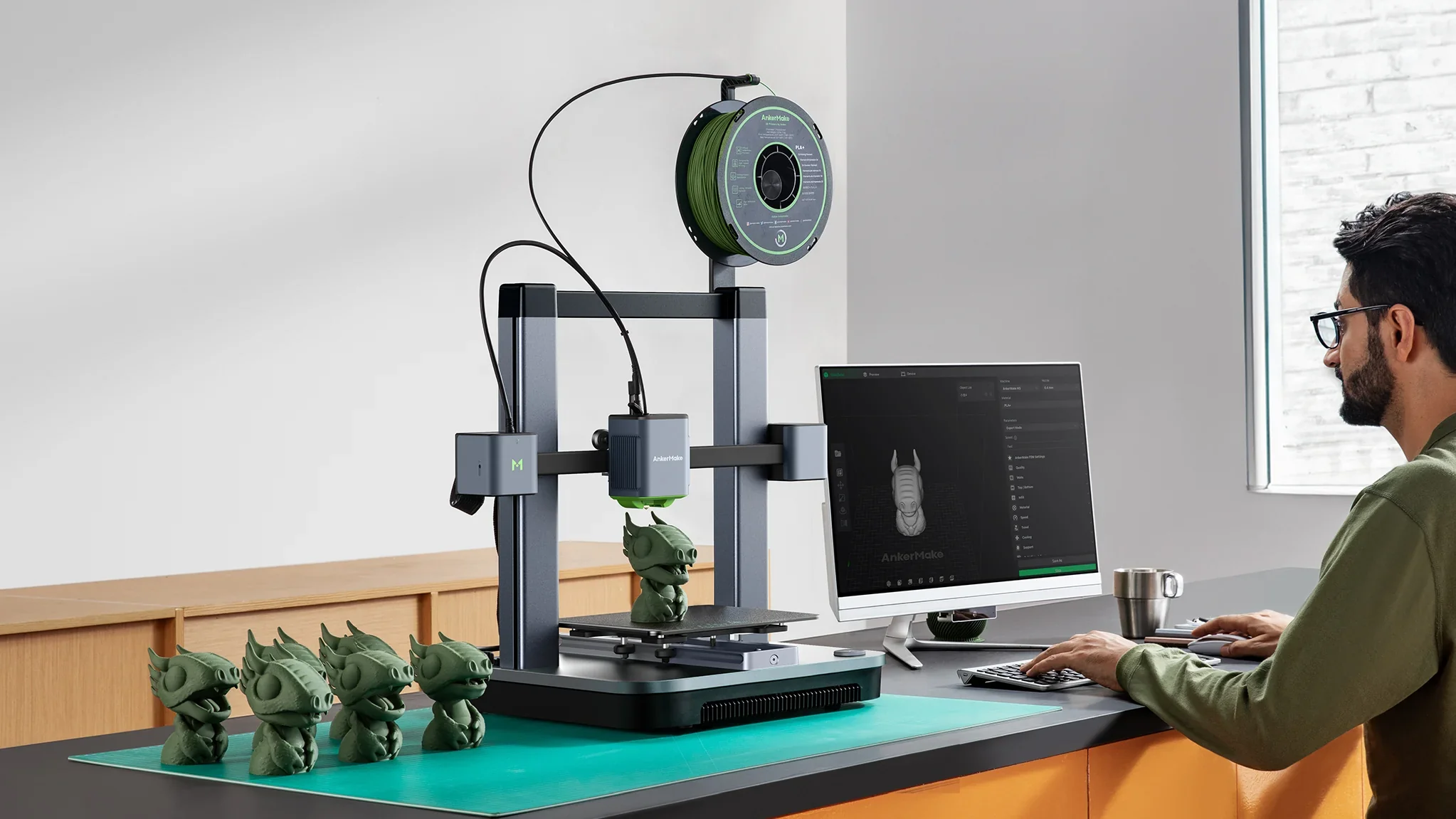
- Experiment: If accessible, try a desktop 3D printer for personal projects, gaining hands-on experience with the technology.
- Advocate for Sustainability: Support companies and initiatives that utilize 3D printing for waste reduction and circular economy practices.
- Engage in Discussions: Join online communities, forums, or local maker spaces to connect with other enthusiasts and professionals in the field.
The journey of 3D printing is far from over, and its most exciting chapters are still being written. By engaging with these incredible curiosities, we empower ourselves to be part of this future.
7 Curiosities About 3D Printing You Cannot Miss in 2026
Prepare to be amazed! The world of 3D printing is a constantly evolving and mutating one – something a lot of people don’t realize! Its progress is closely linked to the technological innovations that are emerging at all times, and we’re going to figure out more about that in this article, exploring some incredible curiosities about 3D printing that you may not know. We bet that some of them will really surprise you! At first glance, it may seem a very complex technology, and sure, there are some challenges, but the reality is that it is becoming more and more democratized and, therefore, more accessible to everyone. By 2026, its reach is wider than ever, making these 7 curiosities about 3D printing even more fascinating.
Key Takeaways
- Sustainability Champion: 3D printing is a major player in waste reduction and fostering a circular economy by reusing plastic waste.
- Beyond 3D – Welcome 4D: The next frontier, 4D printing, introduces materials that can transform and adapt to their environment.
- Construction Revolutionized: Entire buildings and bridges are now being 3D printed, offering sustainable and cost-effective construction solutions.
- Medical Marvels: From custom prosthetics to organ replicas for surgical planning, 3D printing is transforming healthcare.
- Edible Innovations: The technology extends to printing complex, artistic, and completely edible food items.
1. Reuse of Plastic Waste (and Therefore Creation of a Circular Economy)
Ever heard that 3D printers are potentially great for our planet? They could actually be one of the most sustainable alternatives to conventional manufacturing, as 3D printing generates hardly any waste, because only the essential amount of material is used. This is one of the most compelling aspects and a key curiosity about 3D printing.
We love the sustainability factor, which is heavily due to it using otherwise single-use plastics, repurposing them, and giving them a brand new lease of life! With this kind of tech, we might even be able to put an end to single-use plastic waste, prioritizing a circular economy. Imagine a world where your old plastic bottles are transformed into functional, beautiful objects right in your home or community. This vision is becoming increasingly tangible in 2026.
This technology also simplifies the production process of parts and components, thus reducing the time and costs of making something, and synthesizing the use of machinery and technologies to cover the entire process. And that’s not all – 3D printing technology goes one step further and opens up a world of possibilities in terms of materials.
The manufacturer UltiMaker has available in its UltiMaker Marketplace different materials made from filaments of other prints, which are recycled to create new high-end materials. This demonstrates a clear commitment to closed-loop manufacturing, where waste from one process becomes the raw material for another. This innovative approach to material sourcing is setting new standards for industrial sustainability.
“The ability of 3D printing to utilize recycled materials transforms waste into valuable resources, creating a truly circular economy model that conventional manufacturing struggles to match.” – Environmental Technology Insights, 2025
The implications for this are vast. Not only does it reduce landfill burden, but it also lessens reliance on virgin plastics, which often come from fossil fuels. This directly contributes to reducing carbon footprints and combating climate change. Companies and individuals alike are increasingly looking for ways to minimize their environmental impact, and embracing 3D printing with recycled filaments offers a practical and powerful solution. This aspect alone makes these 7 curiosities about 3D printing particularly relevant in our environmentally conscious world.
2. 4D Printing Is on the Way: An Evolving Curiosity About 3D Printing
Technology is advancing in leaps and bounds, and the evolution of 3D printing is surging forward too! In recent years, the work in many areas has been done by 4D printing, which involves manufacturing with materials that can change their nature when in contact with water. At the same time, research is being carried out so that they can adapt to other environments and, once immersed in them, adopt the desired shape. This is arguably one of the most mind-bending curiosities about 3D printing.
Think of it: objects that can autonomously assemble, repair themselves, or adapt to changing conditions. This isn’t science fiction anymore. Researchers are developing smart materials that respond to various stimuli – not just water, but also heat, light, or magnetic fields. Imagine a pipe that automatically expands or contracts to regulate fluid flow based on temperature changes, or clothing that adapts its insulation properties to match ambient conditions.
In a way, this modality aims to use more special materials that react in certain ways to external stimuli. In order to manufacture elements with these characteristics, a much more complex design process is needed – but wow, the payoffs are huge! The design must account not only for the initial static form but also for the dynamic transformation, requiring sophisticated simulation and modeling techniques.
For instance, self-assembling furniture could be shipped flat and then expand into its final form with a simple interaction. Or medical implants could change shape inside the body to better fit a healing wound. The potential applications span aerospace, biomedicine, smart infrastructure, and even consumer goods. The journey from 3D to 4D is a testament to human ingenuity and the relentless pursuit of innovative solutions.
3. Manufacture of Buildings and Houses
Ever thought about 3D printing a house? It sounds pretty crazy, right? But… well, actually, this tech is already creeping into sectors like construction, where it is gaining prominence in the manufacture of buildings and houses, as it represents a great boost to the sustainability of the sector. This is one of the most visually stunning and impactful curiosities about 3D printing.
Through 3D printing technology, spectacular buildings and houses can be built without the transportation and logistical costs involved in traditional construction. 3D printing allows the entire manufacturing and construction process to be carried out in the same space, thus decreasing the long lead times common in this sector. Picture a robotic arm methodically layering concrete, forming walls and structural elements with unprecedented speed and precision, reducing human error and labor costs.
In addition, the manufacture of buildings and houses through 3D printing can be carried out using recyclable elements, avoiding the generation of waste. In this way, buildings focused on the reduction of emissions are obtained, which represent a real alternative to the problems of the cement industry. The cement industry is a major contributor to global CO2 emissions, so finding viable alternatives is crucial. 3D printing with innovative, often local, and recycled materials provides a greener pathway for development.
Several companies around the globe are already demonstrating the feasibility and benefits of 3D printed homes, from affordable housing initiatives to luxury custom builds. These homes can be built faster, often stronger, and with less material waste than conventional methods. They also offer design flexibility, allowing for organic shapes and intricate details that would be prohibitively expensive or impossible with traditional construction. By 2026, 3D printed communities are no longer just concepts, but emerging realities.
4. First Bridge Manufactured by 3D Printing
Recently, a great step forward in architecture and 3D printing has been taken with the world’s first 3D printed bridge. This is a very new development in the tourism sector too, as it could become a major tourist attraction for the city in which it is located – in this case, Amsterdam. This stands out as a monumental achievement among the 7 curiosities about 3D printing.
This 3D printed bridge has been manufactured with the purpose of replacing one that needed to be repaired. Not only that, but it’s also an opportunity to test its resilience and thus verify if this innovative approach works well! The design process for such a structure involves complex simulations and material science, ensuring it can withstand significant loads and environmental factors.
The material used is stainless steel, and so far, they have ensured great stability for the large number of tourists visiting the streets of the Dutch city. The intricate, almost organic lattice structure of the bridge showcases the aesthetic and functional possibilities of metal 3D printing on a grand scale. It’s not just a bridge; it’s a piece of art and a living laboratory for future construction.
This is a momentous step – to quote a certain astronaut, “one giant leap for mankind,” and all that… It signifies a paradigm shift in civil engineering, where complex infrastructure can be custom-fabricated on demand, potentially reducing construction time, waste, and costs for future projects. The success of this bridge opens doors for other large-scale metal 3D printing applications, from complex structural components to artistic installations, making it one of the most exciting curiosities about 3D printing.
5. Production of Tissues and Organs for the Medical Sector
Did you know that 3D printing could also bring significant changes in the healthcare sector? Who would have thought you could reproduce a heart in 3D? Yet today it is becoming feasible! The medical applications are perhaps the most life-changing of these 7 curiosities about 3D printing.
Broadly speaking, 3D printing technology allows total customization of treatments, as well as the manufacture of disposable surgical material. The result is a very considerable reduction in surgery times, and waiting and recovery periods, and offers cost savings. Imagine a surgeon practicing a complex procedure on an exact replica of a patient’s organ before the actual surgery, dramatically improving outcomes and reducing risks.
One of the most important applications of 3D printing in the healthcare sector is in the production of prostheses and implants. This technology allows customization down to the millimeter to adapt to the needs and requirements of each patient. Instead of generic, mass-produced devices, patients receive prosthetics that perfectly match their anatomy, leading to greater comfort, functionality, and acceptance. This is particularly transformative for children who need frequent adjustments as they grow.
Additionally, 3D printing makes it possible to improve the precision of surgery, since replicas of organs can be used to plan how the operation will go before it is carried out. In addition, it improves communication with the patient, since understanding medical language can sometimes be complicated, and thanks to 3D replicas, the patient understands the diagnosis and treatment much better. Patients can visually grasp their condition and the proposed intervention, fostering trust and reducing anxiety. Beyond replicas, bioprinting — the printing of living tissues and organs — is an emerging field that holds the promise of someday creating functional organs for transplant, potentially ending organ donation waiting lists.
6. Did You Know That It Is Possible to Print Edible Food and Kitchenware?
3D printing never ceases to amaze! This technology has gone a step further and now even makes it possible to generate completely edible food from fresh ingredients such as chocolate, fruit, or pasta. After all, thanks to this technology, it is possible to print geometrically complex pieces that would be impossible to obtain with other types of technology. The result is therefore dishes with a highly refined visual aesthetic and completely refined, a truly unique experience. This culinary innovation is a delicious curiosity about 3D printing.
Imagine a dessert with an intricate lattice structure or a pasta dish shaped like a delicate flower, all created with precision by a food printer. This capability allows chefs to push the boundaries of gastronomic artistry, creating bespoke dining experiences that delight the senses. It’s not just about aesthetics, though; food 3D printing can also be used for personalized nutrition, creating meals with specific nutrient profiles or textures tailored to individual dietary needs or restrictions.
Cooking enthusiasts know that the tools used are never enough! 3D printing makes it possible to create gadgets according to very specific needs. Whether it’s a unique cookie cutter, a specialized pastry nozzle, or an ergonomic utensil, custom kitchenware can be designed and printed on demand, enhancing the cooking and dining experience.
Is your mouth watering yet? You should try it out! From personalized chocolates for special occasions to nutrient-rich meals for astronauts, the potential for food 3D printing is vast and growing. It promises a future where food is not only delicious and healthy but also a canvas for unparalleled creativity.
7. Alternatives to Testing Cosmetics on Animals
A few years ago, it was possible to obtain a way to 3D print synthetic skin that works effectively as an alternative to human tissue for testing cosmetics on animals. This advancement is a truly ethical and impactful curiosity about 3D printing.
As you may already know, cosmetic experimentation uses testing on animals, such as rats or rabbits, which are subjected to different treatments with different products and are not subjected to any kind of alternative to relieve their skin afterwards. This practice has long been a point of ethical contention and public concern due to the suffering inflicted on animals.
3D printing is a great option to put an end to animal experimentation (the animals would be really grateful), by cosmetic or pharmaceutical companies, as it allows the same testing to be carried out, but on synthetic fabrics. These bio-printed skin models closely mimic the structure and function of human skin, providing a more relevant and humane testing platform. They can react to chemicals, absorb substances, and even show irritation, offering valuable data without harming any living creature.
This technological leap is not only ethical but also offers scientific advantages. Human skin models can sometimes provide more accurate results than animal models, as species differences can lead to variations in how products affect the skin. This means that cosmetic and pharmaceutical companies can develop safer and more effective products while upholding higher ethical standards. By 2026, the adoption of 3D printed skin models is becoming increasingly widespread, marking a significant step towards a cruelty-free industry.
3D Printing Is a Very Rapidly Evolving Field
We can’t help but notice: 3D printing is growing so fast, and it’s hard to keep up with all the innovations in this technology! If you are interested in this topic, you should definitely keep up to date with the latest news as it is an extremely interesting field especially since it has a great future ahead of it, and we can’t wait to find out the new innovations! Also, as you have seen, 3D printing can be a great ally for taking care of our planet, our bodies, and our animals! Are you ready to make your contribution toward sustainable innovation? The landscape of additive manufacturing continues to shift, introducing new materials, faster processes, and broader applications almost daily. From desktop hobbyist machines to industrial-scale systems, the technology is becoming more refined, accessible, and powerful.
The impact of these 7 curiosities about 3D printing extends far beyond novelty; they represent fundamental shifts in how we approach manufacturing, sustainability, healthcare, and even ethical practices. We are witnessing the democratization of manufacturing, allowing creators, innovators, and everyday people to bring their ideas to life with unprecedented ease and efficiency. The integration of artificial intelligence and machine learning is further accelerating advancements, enabling smarter design, automated optimization, and predictive maintenance for 3D printers.
The economic implications are also profound. Localized production can reduce global supply chain vulnerabilities, stimulate regional economies, and offer customized solutions for niche markets. For businesses, 3D printing offers rapid prototyping, customized production, and the ability to produce complex parts without expensive tooling. For consumers, it means personalized products, on-demand repairs, and a pathway to creative expression.
In summary, the journey into the world of 3D printing reveals a technology that is not just about making plastic trinkets. It’s about building a sustainable future, revolutionizing medicine, transforming architecture, and even creating ethical alternatives in industries like cosmetics. Keeping an eye on these developments means staying ahead in a world increasingly shaped by additive manufacturing. The future, it seems, is being printed, one layer at a time.
Conclusion
In conclusion, 3D printing is a revolutionary technology that continues to evolve and impact various industries. From its surprising applications in medicine and fashion to its potential in construction and aerospace, 3D printing is pushing the boundaries of what is possible. As advancements continue, it is poised to become even more integral to manufacturing, healthcare, and beyond. Understanding these curiosities not only highlights the current state of 3D printing but also offers a glimpse into the exciting future of this innovative technology.
For those eager to contribute to or benefit from this transformative field, the actionable next steps are clear:
- Stay Informed: Regularly follow tech news, industry publications, and research updates on 3D printing to keep abreast of the latest innovations.
- Explore Applications: Consider how 3D printing could benefit your own industry, hobbies, or daily life, from customized products to sustainable solutions.
- Experiment: If accessible, try a desktop 3D printer for personal projects, gaining hands-on experience with the technology.
- Advocate for Sustainability: Support companies and initiatives that utilize 3D printing for waste reduction and circular economy practices.
- Engage in Discussions: Join online communities, forums, or local maker spaces to connect with other enthusiasts and professionals in the field.
The journey of 3D printing is far from over, and its most exciting chapters are still being written. By engaging with these incredible curiosities, we empower ourselves to be part of this future.
Frequently Asked Questions About 3D Printing
How to Make a Contribution Toward Sustainable Innovation with 3D Printing
Regularly follow tech news, industry publications, and research updates on 3D printing to keep abreast of the latest innovations.
Consider how 3D printing could benefit your own industry, hobbies, or daily life, from customized products to sustainable solutions.
If accessible, try a desktop 3D printer for personal projects, gaining hands-on experience with the technology.
Support companies and initiatives that utilize 3D printing for waste reduction and circular economy practices.
Join online communities, forums, or local maker spaces to connect with other enthusiasts and professionals in the field.
Q&A: Surprising Applications of 3D Printing
3 Answers
Key Term Definitions
Featured Software/Platform
UltiMaker Marketplace
Category: 3D Printing Resource
Description: The UltiMaker Marketplace provides access to a wide range of materials, including recycled filaments, for use with UltiMaker 3D printers, promoting sustainable practices in additive manufacturing.
Rating: 4.5/5 (based on 150 reviews)