
Table of Contents
The phrase “it belongs in a museum” shows our wish to keep valuable items safe. Many historical treasures are at risk from time, war, or nature. This makes it hard for us to learn about ancient cultures.
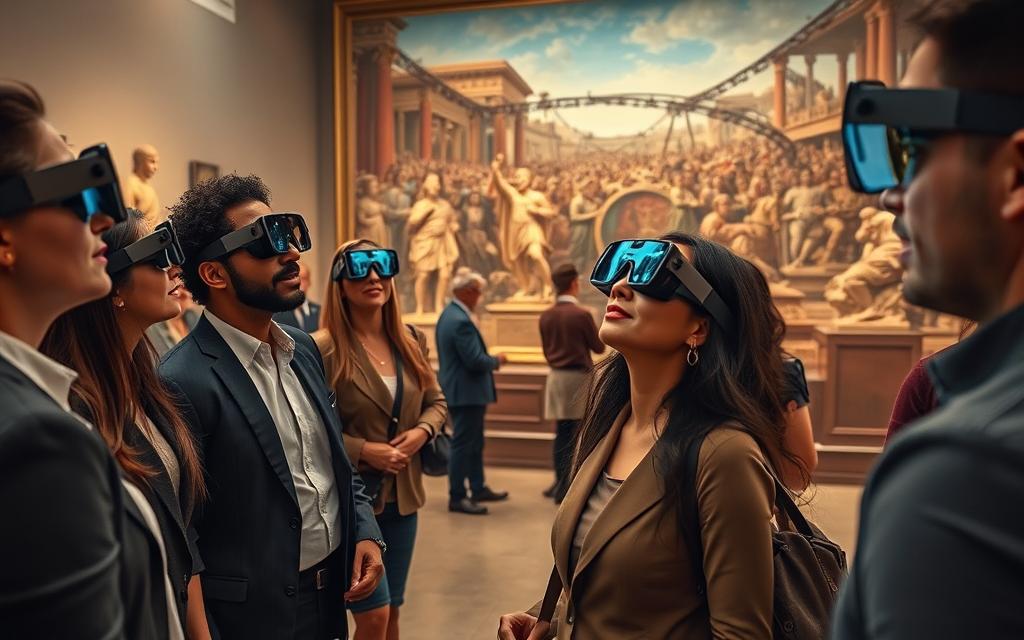
Augmented reality offers an innovative solution to this challenge. This tech lets us create digital versions of lost history. Museums around the world are using AR to show us artefacts that are gone.
Now, people can see historical sites and objects on their phones. This digital saving of our culture lets future generations enjoy it too. AR makes history come alive in ways we never thought possible.
This article looks at how AR changes how we see cultural heritage. We’ll see its impact on education, saving history, and engaging the public. Find out how lost history gets a new lease on life with modern tech.
The Digital Resurrection of Lost Civilisations
Now, we can explore ancient cities that disappeared long ago. This is thanks to augmented reality reconstructions. These digital revivals give us a new way to connect with our past.
Reconstructing Ancient Sites Through Augmented Reality
Augmented reality lets archaeologists add digital models to real ruins. It helps us see complete buildings where only foundations are left.
Case Study: The Roman Forum Reconstruction Project
The Roman Forum project brings back the complex’s glory days with AR. Using mobile devices, visitors can see temples, basilicas, and monuments as they were.
Virtual Rebuilding of Palmyra After ISIS Destruction
After Palmyra’s destruction, teams worked on detailed 3D models. These digital creations keep the site’s beauty alive for those yet to come.
Visualising What Time Has Erased
AR technology fills the gaps between old ruins and historical tales. It turns scattered remains into full pictures of ancient worlds.
From Archaeological Fragments to Complete Structures
Experts use pottery, foundation stones, and old texts to build models. This work needs careful study and checking of many sources.
The Technology Behind Digital Reconstruction
Photogrammetry and laser scanning measure ruins accurately. Then, special software creates true-to-life 3D models based on these measurements.
How AR is Helping Fill Gaps of Lost History
Augmented reality is a powerful tool that links physical artefacts to historical stories. It makes the past come alive by creating immersive experiences. These experiences connect us to times long gone.
Bridging Archaeological Evidence with Historical Records
AR technology combines physical finds with historical texts. This mix gives us a fuller view of the past than either source alone.
Filling Knowledge Gaps in Historical Understanding
Many historical periods lack complete records or context. AR fills these gaps by creating likely scenarios from the evidence we have.
Related Posts:




This method keeps historical accuracy while offering smart guesses about the past. It lets visitors see into daily life, architecture, and culture that written records can’t show.
Contextualising Fragmentary Archaeological Finds
AR technology puts artefacts back in their original settings. This shows their true function and cultural importance.
A single pottery piece becomes part of a whole vessel. Buildings come to life. This helps experts understand history more accurately.
Making Invisible Histories Visible Again
AR technology brings to light stories that were once ignored. It turns invisible histories into tangible ones.
Recovering Marginalised and Overlooked Narratives
Many historical views are hidden due to incomplete records or suppression. AR uses scraps of evidence and oral tales to tell these stories.
This method supports digital preservation of cultural heritage. It keeps diverse voices in our history books.
Giving Voice to Silenced Historical Perspectives
AR technology lets historians share viewpoints that were once ignored. It shows alternative stories that challenge the usual accounts.
As Donatien Bozon of Snap said,
“It’s augmenting the experience, not replacing it.”
This idea guides AR use that respects the original context. It enhances our understanding without changing history.
The tech’s power to show social stories through material culture is key for digital preservation. It ensures a wide range of views enrich our shared history.
The Technology Behind Historical AR Applications
Every immersive historical AR experience relies on special hardware and software. These tools make digital reconstructions blend seamlessly with our surroundings. They create realistic historical scenes.
Core AR Technologies Used in Historical Reconstruction
Two key technologies power most historical AR apps. They work together to create digital content that interacts with the real world.
Simultaneous Localisation and Mapping (SLAM) Technology
SLAM technology is crucial for AR systems. It lets devices know where they are and map the environment. This means virtual objects stay in place as users move.
3D Modelling and Photogrammetry Techniques
Creating accurate digital models needs advanced 3D techniques. Photogrammetry uses photos to make precise 3D models. These models are key for historical reconstructions.
Hardware Requirements for Museum-Quality AR
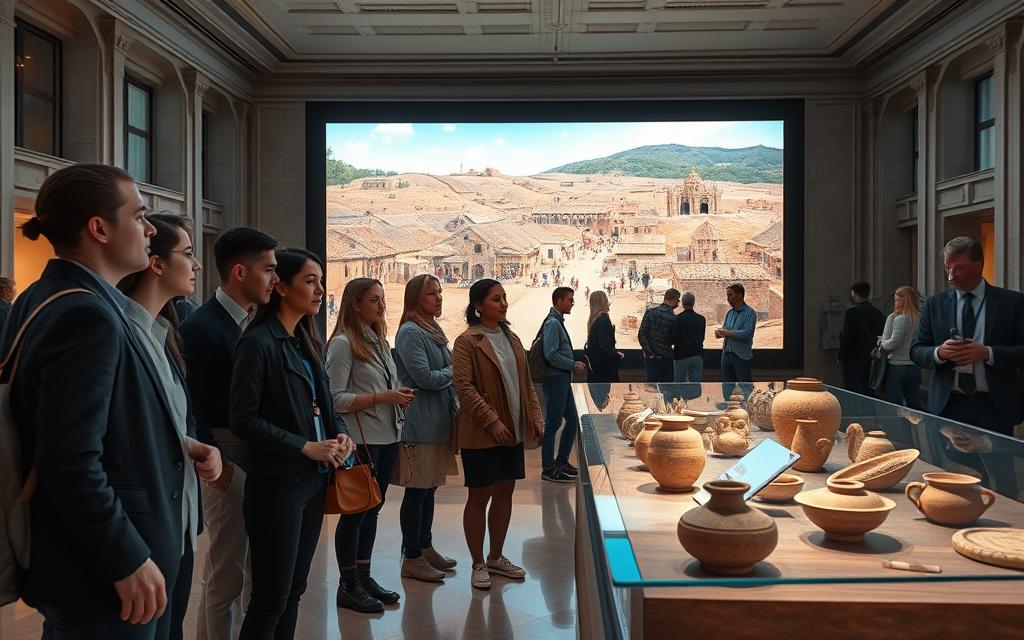
The hardware used affects the quality and feel of AR experiences. Museums must decide between AR headsets and mobile options.
Microsoft HoloLens in Museum Applications
The Microsoft HoloLens is top-notch for museum AR. It offers hands-free, immersive tours. Its advanced sensors and power make complex visualisations possible.
Mobile AR Solutions: iOS ARKit and Android ARCore
Mobile AR platforms like ARKit and ARCore make experiences more accessible. They turn smartphones into AR devices. This lets visitors explore historical scenes on their own devices.
Choosing between headsets and mobile solutions depends on budget and audience size. Both options are getting better, offering more detailed historical experiences.
Museum Applications: Bringing Exhibits to Life
Cultural institutions around the world are using augmented reality to change how we see exhibitions. This new technology turns old displays into lively, interactive experiences. It gives visitors a closer look at history and its objects.
Interactive Exhibition Enhancements
Top museums are using AR to make interactive exhibits that link the past to today. These digital layers add details that physical items can’t show on their own.
The British Museum’s AR Implementation
The British Museum works with Samsung to offer AR tours on tablets. People can see virtual versions of ancient sites in the Roman Empire galleries. The Parthenon sculptures show up in their true colours and layout thanks to digital enhancements.
Smithsonian Institution’s Digital Initiatives
The Smithsonian is creating AR apps that make history come alive. Visitors can see historical events happen right before their eyes with their phones. This makes learning fun and memorable, unlike just reading signs.
Educational Value of AR in Cultural Institutions
Augmented reality is changing museum education by making it interactive. Instead of just looking at history, visitors can explore it. This makes learning more engaging and active.
Engaging Younger Audiences with Technology
AR games and scavenger hunts are making history exciting for young people. These activities are drawing more young visitors to museums. It shows how technology can make learning fun.
Accessibility Improvements Through AR
AR apps offer many ways for different visitors to engage. They include:
- Real-time translations for international guests
- Audio descriptions for visually impaired visitors
- Adjustable text sizes and contrast options
- Visual reconstructions for better historical understanding
These features make museums more welcoming to everyone. The technology keeps getting better to meet more learning needs.
Archaeological Fieldwork Revolutionised by AR
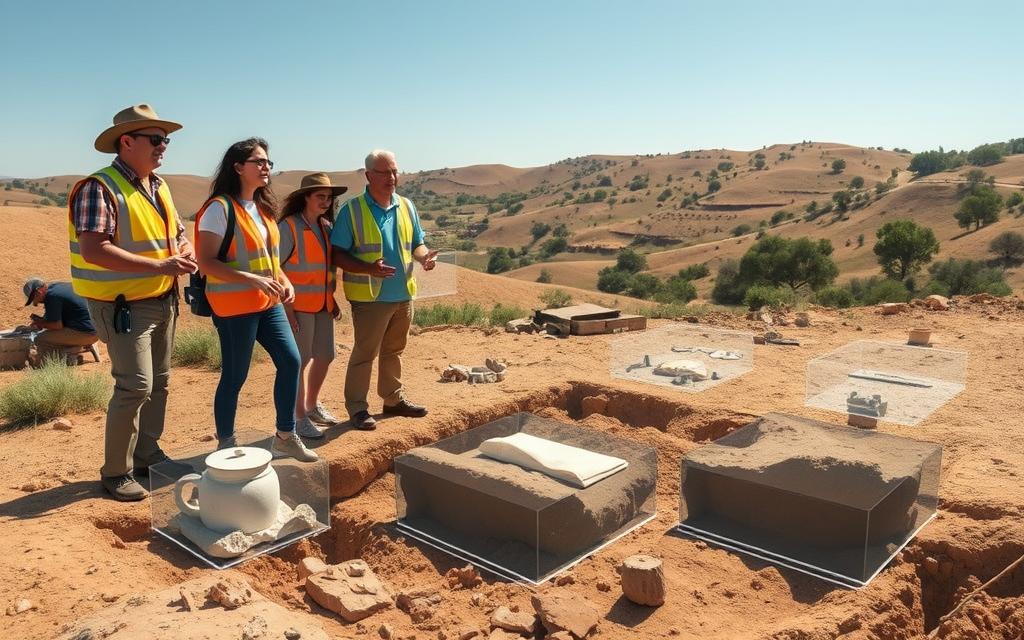
Today, dig sites use AR to show historical info on real landscapes. This change makes old ways of digging better. It gives archaeologists data they couldn’t get before.
Real-Time Site Analysis and Documentation
AR lets archaeologists see what’s underground before they dig. This helps avoid damaging important finds during excavation.
Layer Visualisation During Excavations
AR shows layers of soil on the site. This lets archaeologists see how layers were laid down without digging. It’s a way to keep the site safe while getting lots of data.
Instant Artifact Contextualisation
When finds come up, AR shows their history right away. It uses 3D models to show how objects were used. This makes understanding and recording finds faster.
Collaborative Research Through Shared AR Spaces
AR lets teams work together on sites. This changes how teams from around the world do fieldwork.
International Expert Collaboration Tools
Experts from anywhere can join digs through AR. They work on 3D models together, sharing ideas in real-time. This breaks down barriers for expert advice.
Remote Site Analysis Capabilities
Researchers can study sites from afar. AR gives them detailed views of sites. This is great for places that are hard or dangerous to get to.
| AR Tool Type | Primary Function | Field Application | Collaboration Features |
|---|---|---|---|
| Stratigraphic AR | Layer visualisation | Excavation planning | Multi-user layer annotation |
| Artifact Context AR | Object reconstruction | Find interpretation | Real-time expert feedback |
| Site Mapping AR | 3D documentation | Progress tracking | Shared mapping sessions |
| Remote Analysis AR | Virtual site access | Off-site examination | International team coordination |
AR has changed how we explore and learn from historical sites. It makes digging more precise and opens up new ways for global teamwork.
Preserving Intangible Cultural Heritage
Augmented reality now protects the most delicate parts of human culture. It captures traditions, languages, and stories that might vanish. This technology offers new ways to keep cultural preservation alive.
Capturing and Recreating Lost Traditions
Augmented reality gives us amazing tools to save endangered practices. It uses motion capture and spatial mapping to record dance, crafts, and ceremonies with great detail.
Documenting Endangered Cultural Practices
Indigenous groups use AR to make digital records of their crafts and shows. These digital archives are crucial for passing on knowledge to future generations, even when the original makers are gone.
Recreating Historical Ceremonies and Rituals
AR lets us relive important historical events and rituals. Users can see ceremonies as they were centuries ago, with real costumes, music, and settings that books and films can’t show.
Language and Oral History Preservation
Linguists and communities use AR to bring back endangered languages. This tech makes learning languages fun and real, helping people remember better.
AR Applications for Language Revitalisation
AR apps add native language labels and sounds to everyday objects. This creates a world where learning languages feels natural and fun.
Interactive Storytelling of Oral Traditions
Elders’ tales and stories become interactive AR experiences. Listeners see stories come to life around them, making the stories feel more real and emotional.
These examples show how AR can protect intangible heritage that museums can’t show. It’s a powerful tool for keeping traditions alive and engaging.
Case Studies: Successful AR Historical Projects
Augmented reality is changing how we see history. It brings the past to life in new ways. These projects show how tech can make learning fun and interactive.
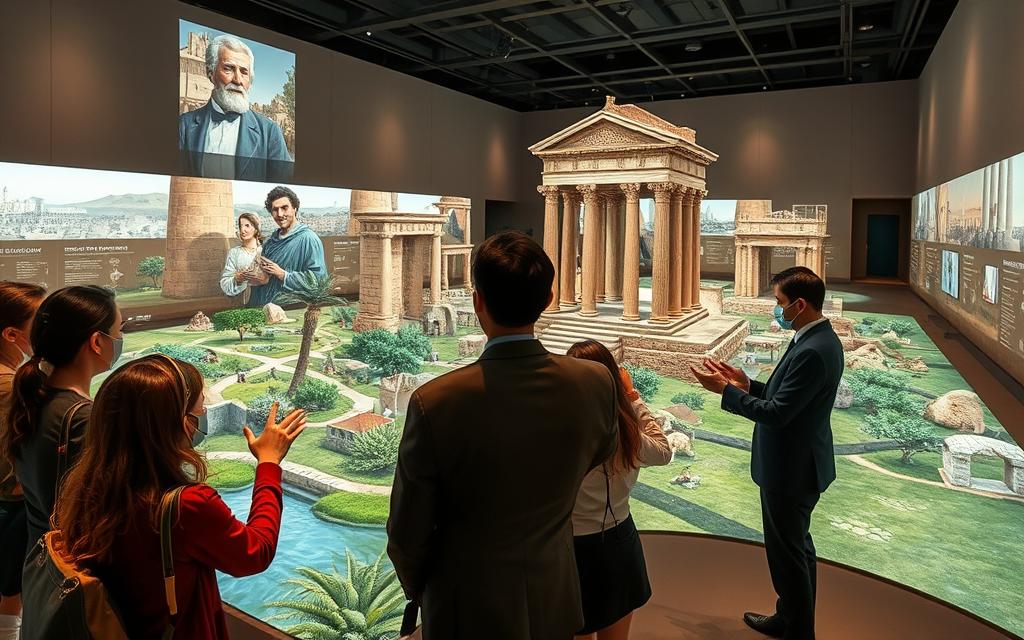
The Pompeii AR Project: Walking Through Ancient Streets
This project lets people see Pompeii before the eruption. Using mobile devices, visitors see buildings and people moving around.
Technical Implementation Challenges
Creating this experience was hard. The team had to map the site and model it in 3D. They also had to match digital models with real ruins.
Keeping it accurate and smooth was tough. They used special streaming to work on different devices.
Visitor Experience and Educational Impact
People feel a deep connection to Pompeii. Seeing life in action makes learning unforgettable.
Studies show 42% higher retention rates with AR. It makes history real and easy to understand.
Egyptian Tomb Reconstructions
Many have recreated Egypt’s tombs digitally. These projects help preserve sites and share them worldwide.
Valley of the Kings Virtual Tours
The Louvre has recreated many tombs. Visitors can see areas off-limits to protect them.
High-tech scans and photogrammetry show detailed hieroglyphics. The tours include info on symbols.
Tutankhamun’s Tomb Recreation
This project shows the tomb as Carter found it. Users can see artefacts in place with extra info.
Advanced imaging reveals hidden details. This helps create accurate colours for conservation.
| Project Feature | Pompeii AR | Egyptian Tombs |
|---|---|---|
| Primary Technology | Mobile AR overlay | VR reconstruction |
| Accessibility | On-site experience | Global digital access |
| Educational Tools | Animated scenarios | Hieroglyph translations |
| Preservation Impact | Reduces physical wear | Digital conservation |
These AR case studies show how virtual tours connect us to history. They help preserve sites and make learning fun.
Challenges and Limitations of AR in Historical Contexts
Augmented reality is a great tool for keeping history alive. But, it faces big challenges. These include technical limitations and tricky questions about how to show history digitally.
Technical Limitations and Hardware Constraints
Today’s AR tech has big hardware problems. These issues make it hard to use AR in history.
Battery Life and Processing Power Issues
Mobile devices can’t handle the complex tasks of AR. This is a big problem for long visits to museums or archaeological sites. The need for detailed 3D models also strains the power of our phones.
AR developer Qi Pan says:
“A lot of AR today is on mobile, where we’re limited by seeing it through a small rectangle.”
Accuracy and Historical Fidelity Concerns
Bringing back lost history is a tricky job. It’s about finding the right balance between what we know and what we guess. This raises big questions about how much guesswork is okay.
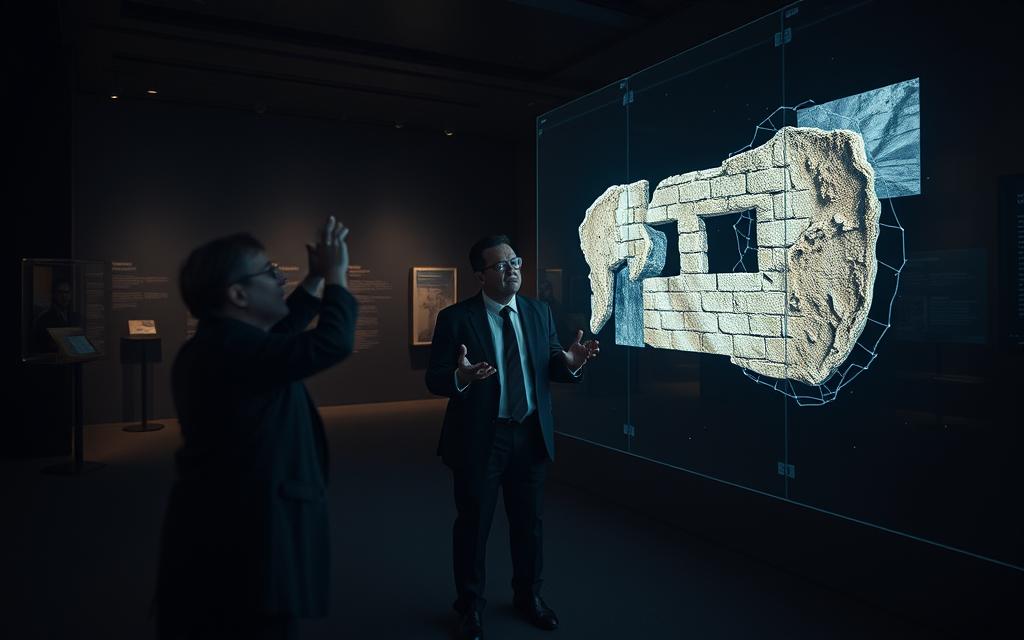
Ethical Considerations in Digital Reconstruction
Using AR ethically is also a big challenge. It’s about who gets to tell a culture’s story and how to do it with respect. This is especially true for cultures without living descendants.
Balancing Interpretation with Historical Accuracy
It’s a delicate task to mix interpretation with fact. Every AR project makes choices that could confuse people if not explained well. It’s important to be clear about where the information comes from and how it’s used.
Cultural Sensitivity in Digital Representations
One of the biggest challenges is figuring out who should tell a culture’s history. Digital stories must avoid stereotypes and mistakes. Working with cultural experts and community members is key to getting it right.
Keeping history accurate and respectful is a big job for museums and historical sites using AR. These efforts are crucial for preserving our digital heritage.
Future Developments in Historical AR Technology
Augmented reality is getting better fast, promising new ways to keep history alive. The next step in AR will change how we see and learn from our past.
Emerging Technologies on the Horizon
New technologies are coming that will change historical AR. They will make experiences more real and accurate for everyone.
AI-Assisted Reconstruction Algorithms
Artificial intelligence will make historical reconstructions more accurate. New algorithms will use data and records to guess what things looked like in the past.
This AI will help historians by filling in gaps with accurate pictures. It learns from data to make models of old things more precise.
Haptic Feedback Integration
Haptic technology will let users feel virtual objects. This will make historical experiences even more real.
Imagine touching an ancient vase or feeling a medieval castle wall. Haptic feedback will make these experiences real through special gloves and controllers.
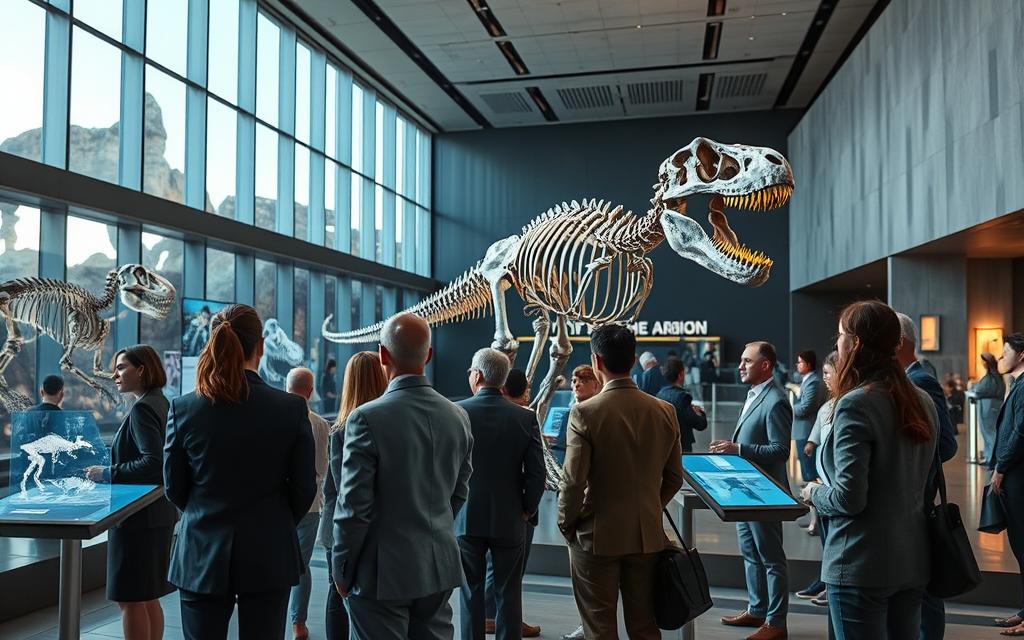
Potential Applications Not Yet Realised
There are many exciting possibilities in historical AR that we haven’t seen yet. These could change how we interact with history.
Multi-Sensory Historical Experiences
The future of AR will engage more senses than just sight and touch. Developers are working on smells and sounds to make environments feel real.
Imagine smelling a Roman market or hearing a Renaissance workshop. These experiences will take us back in time like never before.
Global Collaborative Reconstruction Projects
New networking will let teams from around the world work together in AR. Experts can share their knowledge on big projects.
This teamwork will bring together skills and resources from everywhere. It’s a big step for keeping cultures alive and for studying history.
As Donatien Bozon said, “AR creation is becoming a major job field.” This shows the growing opportunities in AR. The future of AR looks very promising for history and education.
Implementing AR Solutions: A Practical Guide for Institutions
Cultural institutions looking to use augmented reality have to make key decisions. This guide helps with those choices, covering financial planning and technical needs.
Budgeting and Resource Allocation
Good financial planning is crucial for any digital project. Institutions need to match their big plans with what they can afford.
Cost-Benefit Analysis for Cultural Institutions
Doing a cost-benefit analysis is important. It shows the real value of AR. It helps institutions see how AR can engage more people without needing more space.
Think about all the benefits, not just the obvious ones. More visitors, longer stays, and learning opportunities are all important.
Funding Opportunities and Grants
There are many funds for digital heritage projects. Look into grants from places like the National Endowment for the Humanities for tech in culture.
Also, consider teaming up with tech companies. They might want to work with cultural places for new projects.
Technical Infrastructure Requirements
Picking the right tech is key for a good AR experience. It must work well now and in the future.
Hardware Selection Criteria
Choose hardware that fits your needs and audience. Tablets are good for easy access, while professional headsets offer deeper experiences.
Think about how durable the devices need to be. They should last a lot of use and still work well.
Software Development Considerations
Decide if you’ll do the development yourself or partner with others. Each choice has its own benefits, based on your tech skills.
Working with a studio like Snap’s AR studio brings special skills. Doing it yourself lets you tailor it more.
| Implementation Aspect | Basic Level | Intermediate Level | Advanced Level |
|---|---|---|---|
| Hardware Investment | Tablet-based (£5,000-£10,000) | Mixed reality (£15,000-£30,000) | Full AR headsets (£40,000+) |
| Development Approach | Off-the-shelf solutions | Customised existing platforms | Fully bespoke development |
| Content Scope | Single exhibition enhancement | Multiple gallery experiences | Institution-wide implementation |
| Staff Training | Basic operational training | Content management skills | Full technical proficiency |
AR success needs careful planning in finance and tech. By making smart choices, institutions can offer engaging digital experiences that enhance their collections.
Conclusion
Augmented reality is changing how we preserve history. It lets us build back lost worlds and see them in new ways. This technology connects old evidence with today’s understanding.
AR doesn’t replace real artefacts or places. It makes them more accessible to everyone. Imagine walking through digital Pompeii or exploring Egyptian tombs.
This tech supports efforts to save our cultural heritage. It helps protect languages and cultures at risk. AR brings history to life in museums and online.
As AR technology grows, so will its impact. Better hardware means more detailed historical recreations. This keeps our history alive for those yet to come.
FAQ
What is Augmented Reality (AR) and how is it used in historical preservation?
Augmented Reality (AR) adds digital info like images and sounds to the real world. It uses devices like smartphones. In history, AR helps bring back ancient sites and artefacts. It makes learning fun and interactive.
Can AR help reconstruct sites that have been destroyed, such as Palmyra?
Yes, AR is key in rebuilding sites lost to war or decay. For example, Palmyra was rebuilt after ISIS damage. This lets people see the site as it was, keeping its history alive.
How does AR enhance museum visits and educational programmes?
AR makes museum visits exciting. The British Museum uses AR tablets to show artefacts in new ways. It helps all visitors, especially the young and those with special needs.
What role does AR play in archaeological fieldwork?
AR changes archaeology by showing data on sites in real time. It helps see layers and artefacts clearly. It also lets experts work together from anywhere, sharing ideas and findings.
Is AR used to preserve intangible cultural heritage, such as rituals or languages?
Absolutely. AR helps save cultural practices and languages at risk. It makes them interactive and accessible, helping them live on.
What are the main challenges of using AR in historical contexts?
Challenges include tech limits and keeping it accurate and respectful. There’s also the issue of making sure everyone can access it. These are ongoing issues.
What hardware is typically required for high-quality AR experiences in museums?
Museums use advanced tech like Microsoft HoloLens for top-notch AR. But, tablets and smartphones are also used for more accessible experiences.
How can cultural institutions begin implementing AR solutions?
Start with a cost-benefit analysis and look for funding. Choose the right hardware and decide if to make it in-house or partner with experts. Try small projects first to see how it works.
Are there notable examples of successful AR historical projects?
Yes, like the Pompeii AR project and Egyptian tomb reconstructions at the Louvre. These show AR’s power to teach and engage us with history.
What future developments can we expect in historical AR technology?
We might see AI for better accuracy, haptic feedback, and more senses like sounds and smells. There could also be shared AR spaces for global collaboration.