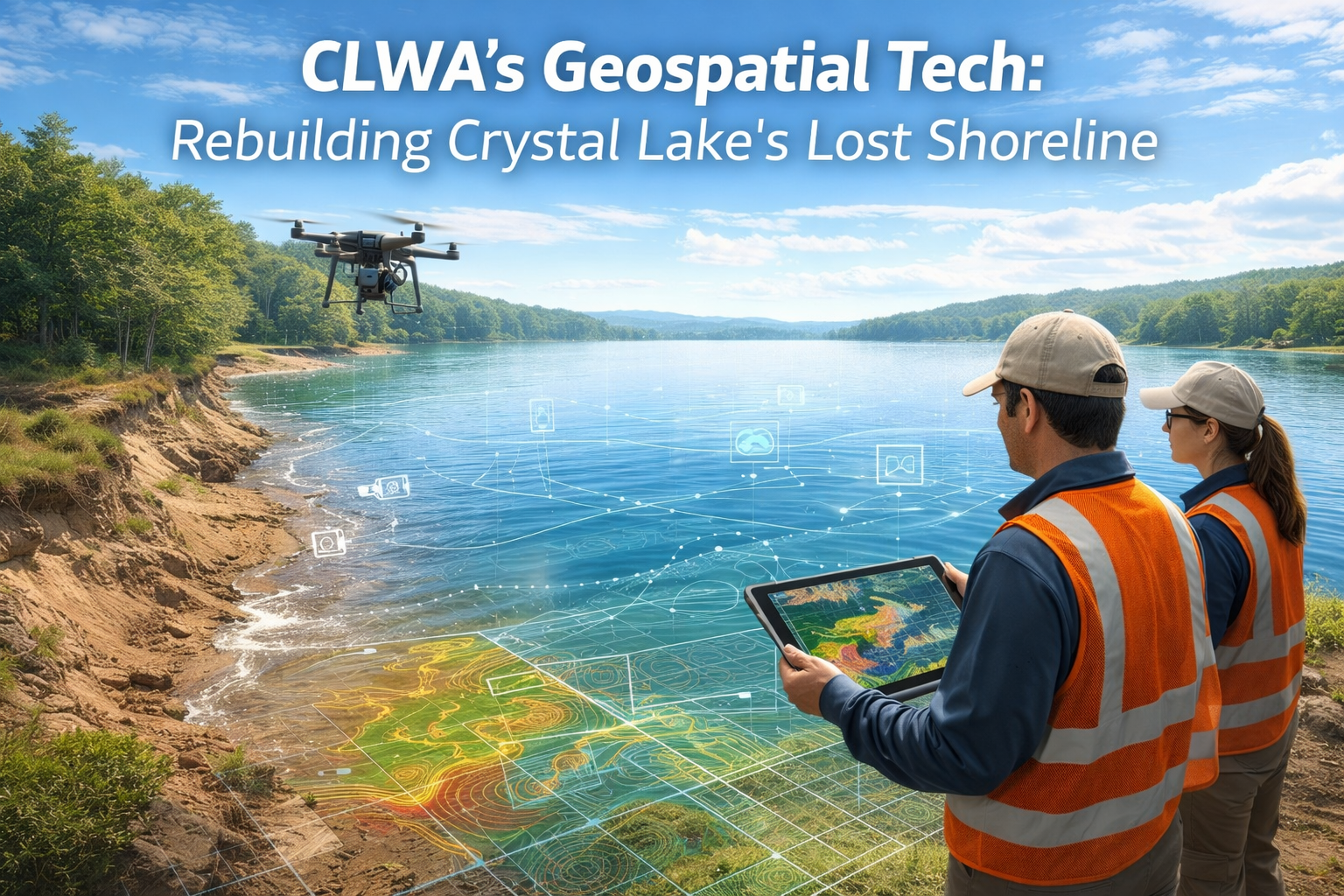
The Crystal Lake & Watershed Association (CLWA) is leveraging cutting-edge geospatial technologies to understand and address historical changes to Crystal Lake.
LIDAR and 3D modeling will digitally reconstruct the pre-1873 shoreline, revealing the original contours of Crystal Lake before human intervention.
This reconstruction directly addresses the “Tragedy” of the 1873 channel project, which dramatically lowered the lake’s water level.
The project aims to serve as a powerful educational tool and inform future-focused conservation efforts for Crystal Lake.
Understanding the past is crucial for effective stewardship and preserving Crystal Lake’s pristine beauty for generations to come.
Imagine looking upon a landscape, not as it is today, but as it once was, shaped by nature’s hand before human intervention. For Crystal Lake, this vision is becoming a reality. The Crystal Lake & Watershed Association (CLWA) is embarking on an ambitious and vital initiative in 2026: utilizing state-of-the-art geospatial technology to digitally reconstruct the pre-1873 shoreline of Crystal Lake. This endeavor is more than just a historical exercise; it’s a powerful tool for education, conservation, and understanding the enduring legacy of a pivotal moment in our watershed’s history.
The Echoes of 1873: Crystal Lake’s Defining “Tragedy”
To truly appreciate the significance of this project, we must journey back to 1873, a year that forever altered the face of Crystal Lake. This year marked what is famously known as “The Tragedy of Crystal Lake” [1]. An ambitious, albeit misguided, attempt was made to connect Crystal Lake with Lake Michigan via a navigable channel. The goal was economic prosperity, but the outcome was an unforeseen ecological shift.
Historical marker in downtown Beulah commemorating the 1873 event.
(Credit: Dr. David G. Penney, History & Images of Benzie County)
Instead of a stable connection, the project resulted in a catastrophic lowering of Crystal Lake’s water level. Estimates suggest the lake dropped by approximately 20 feet, exposing vast stretches of previously submerged land. This dramatic change reshaped the shoreline, impacted aquatic habitats, and forever altered the natural hydrology of the area. While this exposed land facilitated the development of resort areas and communities like Beulah, it came at the cost of a pristine natural heritage.
“The sun has set, and o’er the quiet lake
His light still lingers, reluctant to depart.
The darkening hills draw close, and over all
Peace reigns, but discontent still fills my heart.”
— Walter F. Case, 1895, reflecting on the enduring impact of the 1873 event.
For generations, the memory of the original Crystal Lake has been passed down through stories and historical accounts. Now, with the advent of advanced geospatial technologies, CLWA has the unprecedented opportunity to bridge this historical gap and bring the past vividly into the present.
Geospatial Technology: Our Window to the Past
CLWA’s commitment to understanding and preserving Crystal Lake leads us to embrace innovative technologies. Geospatial technology, encompassing tools like LIDAR and 3D modeling, offers a precise and scientific method to uncover the historical landscape of our beloved lake.
What is LIDAR and Why is it Essential for Crystal Lake?
At the heart of our reconstruction effort is LIDAR (Light Detection and Ranging) technology. This sophisticated remote sensing method uses pulsed laser light to measure distances to the Earth’s surface. Think of it as creating a highly detailed, 3D point cloud of the terrain, capturing elevation with incredible accuracy.
LIDAR
A remote sensing technology that uses laser pulses to measure distances and create high-resolution 3D models of ground elevation and surface features. Essential for detailed topographical mapping.
For Crystal Lake, modern LIDAR data provides an invaluable baseline of the current topography of the entire watershed. This includes areas that were once part of the lakebed but are now exposed, as well as the surrounding hills and valleys. By comparing this ultra-precise modern data with historical records, we can begin to deduce the original contours of the land and, crucially, the pre-1873 shoreline.
3D Modeling: Bringing the Lost Shoreline to Life
Once the LIDAR data is processed and integrated with historical information, 3D modeling comes into play. This technology allows us to transform raw data points into realistic, interactive visual representations of the past. We can literally sculpt the landscape of Crystal Lake as it was over a century and a half ago.
Digital Elevation Model (DEM) of the Crystal Lake Watershed, illustrating complex glacial landscape.
(Credit: Dr. Timothy Fisher, The University of Toledo)
Imagine virtual flyovers showing the expansive original shoreline, the submerged features now exposed, and the dramatic drop in water level. These 3D models will not just be static images but dynamic, explorable environments, allowing residents, students, and visitors to truly immerse themselves in the historical landscape of Crystal Lake.
The Reconstruction Process: How CLWA Will Rebuild the Past
The digital reconstruction of Crystal Lake’s pre-1873 shoreline is a meticulous, multi-step process that combines historical research with cutting-edge technology. Our team at CLWA, alongside expert partners, will undertake the following key phases:
Historical Data Acquisition & Digitization: We will delve into archives, collecting all available historical survey maps, such as the General Land Office (G.L.O.) Plat Maps from 1838-39 [2], early geological surveys, and written accounts that describe Crystal Lake prior to the 1873 project. These valuable documents will be digitized and geo-referenced, accurately aligning them with modern coordinates.
LIDAR Data Collection & Processing: High-resolution LIDAR data will be acquired for the entire Crystal Lake watershed. This data provides precise ground elevation, even beneath dense vegetation, creating a bare-earth digital elevation model (DEM). This forms our accurate “current” picture.
Establishing the Pre-1873 Water Level: This is a critical step. By cross-referencing historical markers [1], survey notes, and topographical clues from the digitized 1838 maps, we will precisely determine the historical elevation of Crystal Lake’s surface before the lowering. This elevation will become the “fill line” for our digital model.
Geographic Information System (GIS) Analysis: Using GIS software, we will overlay the historical maps with the modern LIDAR-derived DEM. This allows us to perform spatial analysis, comparing the documented features of the old lake with the current landscape and accurately mapping the areas that were exposed.
3D Digital Elevation Model (DEM) Reconstruction: Based on the established historical water level and GIS analysis, a new 3D DEM will be created. This model will digitally “raise” the water level of Crystal Lake back to its pre-1873 state, revealing its original shoreline and submerged topography.
Visualization and Interactive Tools: The final 3D model will be used to generate compelling visualizations, including interactive maps, animated simulations, and potentially virtual reality experiences. These tools will allow the public to explore the lost shoreline and understand the magnitude of the historical change.
The CLWA Mission: Education and Future-Focused Conservation
This geospatial initiative is not merely an academic exercise; it’s a vital tool deeply integrated into CLWA’s core mission. Our goals extend beyond just seeing the past; we aim to learn from it to better protect Crystal Lake for generations to come.
An Unparalleled Educational Resource
The digitally reconstructed shoreline will be an unparalleled educational resource. Imagine local students and community members able to virtually walk along the old shoreline, identifying areas that are now dry land but were once under crystal-clear waters. This provides a tangible, impactful lesson on:
Environmental Impact: Visually demonstrating the profound effects of human intervention on a natural ecosystem.
Historical Context: Connecting modern development and land use with historical events, offering a deeper understanding of our region’s evolution.
Geological Processes: Illustrating how the landscape was naturally formed and how the lake was originally part of a larger glacial system until separated by sand dunes [3].
Water Stewardship: Fostering a greater appreciation for Crystal Lake’s unique hydrology and the importance of responsible water management.
We plan to integrate these interactive models into our outreach programs, school visits, and public presentations throughout 2026 and beyond, making the history of Crystal Lake accessible and engaging for all ages.
Informing Future Conservation Strategies for Crystal Lake
Understanding the original contours and characteristics of Crystal Lake offers invaluable insights for contemporary conservation. By seeing the natural state, we can better assess:
Ecosystem Restoration Potential: Identifying areas where natural habitats may have been lost or altered and exploring potential restoration projects.
Water Quality & Runoff: Gaining a historical perspective on natural drainage patterns and how they compare to current runoff, helping to pinpoint sources of pollution or erosion.
Shoreline Management: Informing best practices for current shoreline development and protection, emphasizing ecological sensitivity.
Climate Change Preparedness: Providing a historical baseline for studying long-term changes in lake levels and water systems, which is crucial for adapting to future climate challenges.
The data and visualizations derived from this project will empower CLWA to develop more informed, science-based conservation strategies, ensuring that the remarkable clarity and health of Crystal Lake are sustained.
Historical Context and Supporting Data for Crystal Lake
The history of Crystal Lake is rich and complex, intertwined with geological forces and human endeavors. The geospatial reconstruction effort draws upon a wealth of existing historical and scientific data, bolstering its accuracy and impact.
Early Surveys: G.L.O. Plat Maps of Benzie County, 1838-39
Our project leans heavily on the meticulous work of early surveyors like the Burt brothers, Alvin and Austin, who surveyed the southern two-thirds of present Benzie County in 1838-39 [2]. These General Land Office (G.L.O.) Plat Maps provide critical snapshots of the landscape before significant settlement and, crucially, before the 1873 event. These maps often noted topography, forest growths, soil types, and water bodies, offering direct evidence of Crystal Lake’s original footprint, then referred to as “Cap Lake” or “Carp Lake.”
Composite of 1838-9 Survey Maps, showing “Cap Lake” (Crystal Lake’s former name).
(Source: Bentley Historical Library, The University of Michigan)
These historical maps are digitized by the Michigan Geographic Data Library (MDNR) [4], providing an accessible foundation for our modern geospatial analysis.
The Hydrology of Crystal Lake and Lake Michigan
Crystal Lake’s unique hydrological position, more than twenty feet higher than nearby Lake Michigan, is a crucial aspect of its identity. Understanding its drainage patterns and historical connection (or separation) from the Great Lakes system is fundamental to our reconstruction [5].
Hydrology of the Great Lakes water system.
(Source: “The Great Lakes – An Environmental Atlas and Resource Book”, 1995)
This elevation difference was a key factor in the attempt to create the 1873 channel, and it continues to shape the ecological interactions between Crystal Lake and its larger neighbor.
Modern Views: Aerial and Satellite Imagery of Crystal Lake
Beyond historical data, contemporary aerial and satellite imagery provides crucial context. Digital ortho-quadrangles (DOQ) from the Michigan Department of Natural Resources and satellite views from sources like TerraServer (U.S. Geological Survey) offer detailed pictures of Crystal Lake as it exists today [6], [7]. These images allow us to see the “big picture” of our watershed and to pinpoint current features that might correlate with historical landforms.
Digital Ortho-Quadrangle of Benzie County (1998).
(Source: MDNR)
Satellite view of Crystal Lake area (TerraServer, 1998).
(Source: USGS)
These various data sources, both historical and contemporary, form the bedrock upon which CLWA’s geospatial reconstruction of Crystal Lake will be built in 2026.
The Broader Context: Crystal Lake Within the Benzie County Watershed
The importance of Crystal Lake is best understood within its larger geographical and ecological context. It is a crown jewel of Benzie County, itself a unique region in Northwest Lower Michigan.
Benzie County and Its Inland Lakes
Benzie County may be the smallest of Michigan’s 83 counties in land area, but it boasts a significant total water area and an impressive number of inland lakes [8]. Crystal Lake is undoubtedly the largest and most prominent of these, but its health is interconnected with the wider aquatic network of the county.
DNR Map of Crystal Lake (1935).
(Source: Michigan Department of Natural Resources)
The Crystal Lake watershed itself is a remarkably contained system, with the lake’s surface comprising approximately 35% of the total watershed (land + water) [9]. This high land-to-water ratio underscores the importance of surrounding land use practices on the lake’s water quality and ecological integrity.
Neighboring Watersheds and Glacial Landforms
The Crystal Lake watershed is nestled between other significant riverine watersheds – the Platte River to the north and the Betsie River to the south [10]. This geographical positioning highlights the intricate hydrological connections across the region, despite Crystal Lake’s enclosed nature.
Map of Benzie County Watersheds, showing Crystal Lake between Platte and Betsie Rivers.
(Source: GIS Map for CLWF by NWMCOG)
The entire landscape of Northern Lower Michigan, including the Crystal Lake area, is a legacy of extensive glaciations during the Pleistocene epoch. These glacial advances and retreats carved out the Great Lakes basin and shaped the complex hill ridges and valleys that define our watershed [11]. The digital elevation model (DEM) prepared by Dr. Timothy Fisher beautifully illustrates this complex glacial landscape, showing the spillover points, tributaries, and historical outlets that once characterized Crystal Lake’s dynamic past [12].
Landforms of Northern Lower Michigan, including Crystal Lake Watershed.
(Source: Bruce Knapp, NRCS, 2004)
Understanding these deep geological roots provides essential context for the changes wrought by the 1873 “Tragedy” and reinforces the critical role of organizations like CLWA in long-term watershed health. In 2026, we are not just looking at a lake; we are studying a living, evolving landscape with a profound history.
Embracing the Future: Stewardship and Community Engagement in 2026
As CLWA moves forward with its geospatial technology initiative in 2026, the emphasis remains firmly on community and stewardship. This project is for everyone who cherishes Crystal Lake – residents, visitors, educators, and future generations.
Interactive Experiences and Public Outreach
Once the digital reconstruction is complete, CLWA plans to roll out various public outreach programs:
Online Interactive Maps: A dedicated section on the CLWA website will host interactive maps and 3D models of the pre-1873 Crystal Lake, allowing anyone with an internet connection to explore the lost shoreline.
Educational Workshops: We will host workshops for schools and community groups, demonstrating the technology and the historical impact on the lake. Hands-on activities will make the science and history come alive.
Virtual Reality Demos: Exploring the possibility of developing VR experiences that transport users directly to the 1873 Crystal Lake, offering an immersive educational journey.
Interpretive Signage: Deploying new interpretive signs at key historical points around Crystal Lake, featuring QR codes linking to the digital reconstruction and historical information.
Our goal is to foster a renewed sense of wonder and responsibility for Crystal Lake’s environment. By visualizing the past, we hope to inspire stronger conservation ethics for the future.
A Call to Action for Crystal Lake Stewards
The success of this and all CLWA initiatives depends on the continued engagement of the community. Here’s how you can be a part of Crystal Lake’s future in 2026:
Become a Member: Your membership directly supports CLWA’s research, education, and conservation efforts.
Volunteer: Contribute your time and skills to water quality monitoring, educational events, or research projects.
Stay Informed: Follow CLWA’s updates on the geospatial reconstruction project and other initiatives. Attend public meetings and workshops.
Practice Responsible Stewardship: Implement lake-friendly practices on your property, from managing stormwater runoff to maintaining natural shorelines.
Share the Story: Help spread awareness about the importance of Crystal Lake’s history and its ongoing conservation needs.
The geospatial reconstruction project is a testament to CLWA’s forward-thinking approach to conservation. By merging historical reverence with technological innovation, we are setting a new standard for watershed management and community engagement. The Crystal Lake of 2026 benefits from the lessons of 1873, guiding us towards a more sustainable and vibrant future.
Conclusion: Preserving Crystal Lake’s Legacy for 2026 and Beyond
The journey to digitally reconstruct Crystal Lake’s pre-1873 shoreline using LIDAR and 3D modeling is a powerful testament to the Crystal Lake & Watershed Association’s unwavering commitment to environmental stewardship and historical preservation. By unveiling the lost contours of our beloved lake, we gain more than just a historical curiosity; we acquire a profound understanding of ecological change, the enduring impact of human actions, and the irreplaceable value of pristine natural environments.
In 2026, this pioneering project will transform our relationship with Crystal Lake. It will serve as a dynamic educational platform, visually compelling and historically accurate, to teach present and future generations about responsible resource management. It will also equip CLWA with unprecedented data to refine and inform our conservation strategies, ensuring that every decision is rooted in a deep appreciation for the lake’s natural heritage.
The “Tragedy” of 1873 reminds us that even well-intentioned actions can have lasting consequences. Through the innovative application of geospatial technology, CLWA is turning this historical lesson into a proactive step towards a more sustainable future for Crystal Lake. We invite everyone to join us in this exciting endeavor, contributing to the knowledge, protection, and appreciation of this extraordinary natural treasure. Together, we can ensure that the legacy of Crystal Lake, both past and present, thrives for all time.
References
Case, Walter F. (1922). The Tragedy of Crystal Lake / By a Survivor. J.W. Saunders, Beulah, MI.
Michigan Geographic Data Library, MDNR. (1838-39). G.L.O. Plat Maps of Benzie County. View online
Crystal Lake & Watershed Association. (n.d.). History of the Crystal Lake Watershed. clwa.us/about_watershed.htm
NWMCOG GIS Map for CLWF. (n.d.). Benzie County Watersheds. [Referenced image: CLWFwatershedareas50c.jpg]
Paleontology Portal. (n.d.). Paleontology and Geology of Michigan. paleoportal.org
Fisher, Dr. Timothy. (n.d.). Digital Elevation Model of the Crystal Lake Watershed. The University of Toledo. [Referenced image: CLWA_USGS_CL_DEM_85s.jpg]
Marcin Wieclaw, the founder and administrator of PC Site since 2019, is a dedicated technology writer and enthusiast. With a passion for the latest developments in the tech world, Marcin has crafted PC Site into a trusted resource for technology insights. His expertise and commitment to demystifying complex technology topics have made the website a favored destination for both tech aficionados and professionals seeking to stay informed.