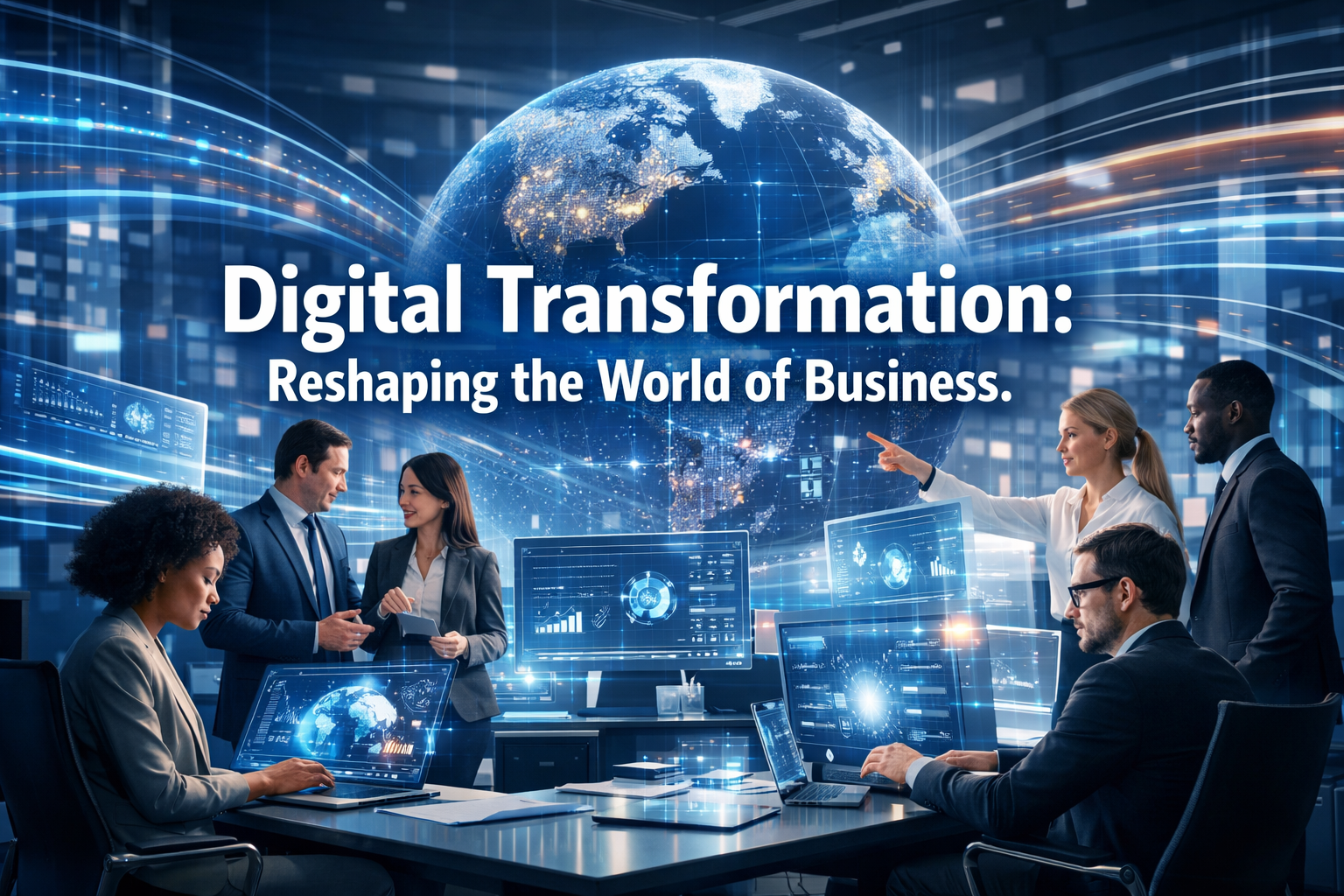
In an era defined by rapid technological advancement, businesses globally are undergoing an unprecedented metamorphosis. This isn’t just about adopting new software; it’s a fundamental reimagining of operations, strategies, and customer interactions. Welcome to the age of Digital Transformation: Reshaping the World of Business. This profound shift is more than a trend; it’s a critical imperative for survival and growth in 2026 and beyond. Organizations that embrace this journey are not just keeping pace; they’re setting the pace, unlocking new efficiencies, fostering innovation, and delivering unparalleled value to their customers.
Key Takeaways
Holistic Approach: Digital transformation extends beyond technology, encompassing strategy, culture, and processes.
Customer-Centricity: Enhancing customer experience is a primary driver and outcome of successful digital initiatives.
Operational Efficiency: Automation and data analytics streamline operations, leading to significant cost savings and agility.
Workforce Evolution: Reskilling and upskilling the workforce is crucial for navigating new digital tools and methodologies.
Future-Proofing: Embracing emerging technologies and sustainability ensures long-term competitiveness and relevance.
Understanding Digital Transformation: Reshaping the World of Business.
Digital transformation is the strategic adoption of digital technology to fundamentally change how an organization operates and delivers value to its customers. It’s not merely about digitizing existing analog processes; it involves a comprehensive overhaul of an organization’s culture, operations, and customer engagement models. In 2026, this concept has become more critical than ever, influencing everything from supply chain management to marketing strategies.
Think of it as an enterprise-wide evolution, driven by the desire to leverage digital capabilities for improved performance, enhanced customer satisfaction, and competitive advantage. This transformation touches every facet of a business, making it more agile, data-driven, and resilient.
Defining Digital Transformation
At its core, digital transformation involves integrating digital technology into all areas of a business, leading to fundamental changes in how businesses operate and how they deliver value to customers. This process forces organizations to rethink old operating models and experiment with new ones (Westerman et al., 2014). It means shedding outdated practices and embracing innovative digital tools to streamline processes, improve decision-making, and create richer customer experiences.
Why Digital Transformation Matters in 2026
In today’s dynamic marketplace, the reasons to embrace digital transformation are compelling:
Competitive Advantage: Businesses that digitally transform are better positioned to outmaneuver competitors, offering superior products and services.
Enhanced Customer Experience: Modern customers expect seamless, personalized, and instant interactions. Digital tools enable businesses to meet these expectations, building stronger relationships.
Operational Efficiency: Automation, AI, and cloud computing reduce manual effort, minimize errors, and optimize resource allocation, leading to significant cost savings and faster delivery times.
Innovation and Growth: Digital transformation fosters a culture of innovation, enabling businesses to develop new products, services, and business models.
Data-Driven Decisions: Access to real-time data and advanced analytics empowers organizations to make informed, strategic decisions.
Resilience and Agility: The ability to adapt quickly to market changes and unforeseen disruptions has become a non-negotiable requirement. Digital infrastructure provides this flexibility.
The Pillars of Digital Transformation
Successful digital transformation rests on several foundational pillars, each critical for a comprehensive and effective overhaul of business operations.
1. Customer Experience (CX) Transformation
At the heart of any successful digital transformation initiative is a relentless focus on the customer. This involves leveraging digital technologies to create seamless, personalized, and engaging customer journeys across all touchpoints.
“In 2026, customer experience is no longer a differentiator; it’s the standard. Digital transformation empowers businesses to not just meet, but anticipate customer needs.”
Personalized Interactions: Using data analytics and AI to tailor offerings and communications to individual customer preferences.
Omnichannel Engagement: Providing consistent and seamless experiences whether customers interact via website, mobile app, social media, or in-person.
Self-Service Options: Empowering customers with digital tools to find information, resolve issues, and manage their accounts independently.
Feedback Loops: Implementing digital channels for real-time customer feedback to continuously improve services.
2. Operational Agility and Efficiency
Digital transformation enables businesses to streamline their internal processes, reduce manual efforts, and accelerate decision-making through automation and data-driven insights.
Process Automation: Implementing Robotic Process Automation (RPA) and AI to automate repetitive, rule-based tasks, freeing human employees for more strategic work.
Cloud Computing: Migrating to cloud infrastructure for scalability, flexibility, and reduced IT overhead.
Data Analytics and AI: Utilizing big data, machine learning, and artificial intelligence to gain actionable insights, predict trends, and optimize operations.
Supply Chain Optimization: Enhancing visibility, traceability, and efficiency across the entire supply chain using IoT and blockchain technologies.
3. Cultural Shift and Workforce Transformation
Technology alone cannot drive transformation. A significant cultural shift, coupled with an empowered and skilled workforce, is paramount. This involves fostering a mindset of continuous learning, collaboration, and innovation.
Leadership Buy-in: Strong commitment from leadership is essential to champion change and allocate necessary resources.
Employee Engagement: Involving employees in the transformation process, soliciting their feedback, and addressing their concerns.
Upskilling and Reskilling: Providing training programs to equip employees with the new digital skills required for evolving roles.
Agile Methodologies: Adopting agile and DevOps practices to promote faster iteration, flexibility, and cross-functional collaboration.
4. Innovation of Products, Services, and Business Models
Digital transformation opens doors to creating entirely new value propositions, disrupting traditional industries, and fostering unprecedented growth.
New Digital Products: Developing applications, platforms, and software-as-a-service (SaaS) offerings.
Data-Driven Services: Creating services that leverage collected data to provide unique insights or personalized recommendations.
Subscription Models: Shifting from one-time sales to recurring revenue models.
Platform Ecosystems: Building digital platforms that connect various stakeholders, creating network effects and new revenue streams.
Challenges and Pitfalls in Digital Transformation
While the rewards of digital transformation are substantial, the journey is often fraught with challenges. Recognizing these obstacles is the first step toward overcoming them.
1. Resistance to Change
Perhaps the most significant hurdle is human resistance. Employees may be comfortable with existing processes and wary of new technologies.
Overcoming Resistance: Clear communication, involving employees in the planning process, and demonstrating the benefits of new systems are crucial. Change management strategies are vital here (Kotter, 1996).
2. Lack of a Clear Strategy
Many organizations embark on digital initiatives without a coherent, overarching strategy, leading to fragmented efforts and wasted resources.
Strategic Alignment: A well-defined roadmap aligning digital initiatives with business goals is essential. This includes clear objectives, measurable KPIs, and a phased implementation plan.
3. Skill Gaps
The rapid evolution of technology often outpaces the existing skill sets within an organization.
Talent Development: Investing in comprehensive training programs, partnering with educational institutions, and strategically hiring new talent are necessary to bridge these gaps.
4. Cybersecurity Concerns
As businesses become more digitized, they also become more vulnerable to cyber threats. Protecting sensitive data and maintaining trust are paramount.
Robust Security Measures: Implementing strong cybersecurity protocols, regular security audits, and employee training on best practices are non-negotiable.
5. Integration Complexities
Many businesses operate with a mix of legacy systems and new technologies, leading to integration complexities. A seamless integration is crucial for the smooth functioning of digital operations.
By acknowledging these challenges and proactively seeking solutions, businesses can better prepare for the hurdles that come with digital transformation. This proactive approach not only mitigates risks but also paves the way for a smoother transformation journey. For more in-depth insights on overcoming these challenges, you may find this article on 11 Critical Digital Transformation Challenges to Overcome particularly useful.
Phased Integration: Adopting a phased approach to integration, utilizing APIs, and investing in scalable cloud solutions can mitigate these challenges.
Measuring the Success of Digital Transformation
To ensure that digital transformation efforts are yielding tangible results, businesses must establish clear metrics and continuously monitor their progress. This goes beyond simply tracking technology adoption; it’s about evaluating the impact on business outcomes.
Workforce Engagement Metrics
Positive changes in workforce engagement often accompany successful tech-driven initiatives. Regular employee surveys and performance analytics are useful tools for gauging this aspect.
Employee Satisfaction Scores: Tracking changes in job satisfaction and sentiment related to new tools and processes.
Productivity Gains: Measuring improvements in efficiency, task completion rates, and output per employee.
Retention Rates: Observing how digital initiatives influence employee loyalty and reduce turnover.
Skill Adoption: Assessing the rate at which employees adopt new digital skills and technologies.
Financial Performance Indicators
The ultimate measure of the effectiveness of any business strategy is its financial impact. Monitoring ROI and revenue growth is essential for understanding the fiscal viability of your tech-driven initiatives.
Return on Investment (ROI): Calculating the direct financial benefits against the cost of digital transformation projects.
Revenue Growth: Analyzing how digital initiatives contribute to new revenue streams or increased sales from existing products/services.
Cost Reduction: Quantifying savings achieved through automation, cloud migration, and optimized operations.
Profit Margins: Observing improvements in overall profitability due to enhanced efficiency and increased revenue.
Customer Experience Metrics
Since customer experience is a core pillar, its improvement is a key indicator of successful digital transformation.
Net Promoter Score (NPS): Measuring customer loyalty and willingness to recommend services.
Customer Satisfaction (CSAT): Directly surveying customers about their satisfaction with specific interactions or services.
Customer Lifetime Value (CLTV): Assessing the long-term revenue generated from a customer relationship.
Churn Rate: Monitoring the rate at which customers discontinue using services.
Resolution Time: Tracking how quickly customer issues are resolved through digital channels.
Operational Efficiency Metrics
These metrics gauge how well digital tools are improving internal processes and resource utilization.
Process Cycle Time: Measuring the time taken to complete a specific business process before and after digital intervention.
Error Rates: Quantifying the reduction in human errors due to automation.
Resource Utilization: Assessing how effectively IT infrastructure and personnel are being used.
Time to Market: Tracking the speed at which new products or services are introduced to the market.
As technology continues to evolve, so will the scope and impact of digital transformation. This section aims to provide a glimpse into what the future might hold.
Integration of Emerging Technologies
Technologies like quantum computing, augmented reality, and 5G are set to take digital transformation to new heights. Their integration into existing business models will be a trend to watch.
Quantum Computing: While still nascent, quantum computing promises to solve complex problems currently beyond traditional computers, revolutionizing fields like drug discovery, financial modeling, and materials science.
Augmented Reality (AR) & Virtual Reality (VR): These technologies will transform training, remote collaboration, product design, and customer engagement, offering immersive digital experiences.
5G Connectivity: The ultra-fast and low-latency capabilities of 5G will unlock new possibilities for IoT devices, real-time data processing, and seamless cloud interactions, especially in edge computing scenarios.
Blockchain and Distributed Ledger Technology (DLT): Beyond cryptocurrencies, blockchain will enhance supply chain transparency, secure digital identities, and facilitate secure data sharing.
Sustainability and Digital Transformation
As the world becomes more conscious of environmental issues, sustainability will become a significant focus. Digital transformation efforts will increasingly include sustainability metrics and goals.
Green IT: Optimizing data centers, using energy-efficient hardware, and leveraging cloud services to reduce carbon footprint.
Sustainable Supply Chains: Using digital tools to track emissions, manage waste, and ensure ethical sourcing throughout the supply chain.
Circular Economy Models: Digital platforms facilitating product longevity, repair, reuse, and recycling.
Smart Energy Management: IoT and AI-driven systems to optimize energy consumption in buildings and industrial processes.
Globalization and Localization
The global reach of digital platforms will continue to grow, but there will also be a focus on localization, tailoring digital experiences to local cultures and regulations.
Hyper-Personalization: Digital tools will enable businesses to deliver hyper-localized content, services, and pricing based on geographic and cultural nuances.
Regulatory Compliance: Businesses will need advanced digital solutions to navigate complex international data privacy laws (e.g., GDPR) and other regulations.
Global Talent Pools: Digital transformation facilitates access to a global workforce, enabling businesses to leverage diverse skills and perspectives remotely.
Ethical and Social Implications
As digital transformation progresses, its ethical and social implications will come under scrutiny. Businesses will need to address issues like data privacy, job displacement due to automation, and digital inequality.
Responsible AI: Developing and deploying AI systems ethically, ensuring fairness, transparency, and accountability.
Data Governance: Implementing robust frameworks for data collection, usage, and protection to safeguard individual privacy.
Reskilling Initiatives: Proactive programs to retrain workers whose jobs are impacted by automation, ensuring a just transition.
Bridging the Digital Divide: Efforts to ensure equitable access to digital technologies and skills across all demographics, preventing exacerbation of inequalities.
By adding these sections, we delve deeper into the intricacies of digital transformation, providing a more rounded view of its complexities and future prospects.
Conclusion: The Transformative Journey Ahead
As we’ve navigated through the complexities of this topic, it’s evident that digital transformation is not just a fleeting trend but a fundamental shift that businesses must embrace to remain competitive. From understanding its key pillars to overcoming challenges and measuring success, this guide aims to provide a comprehensive roadmap for any organization embarking on this transformative journey.
In a rapidly evolving business landscape, the ability to adapt and innovate is more crucial than ever. This guide serves as a valuable resource for those looking to understand and implement the changes that come with this significant shift in business operations.
The journey of Digital Transformation: Reshaping the World of Business. is continuous, demanding constant vigilance, learning, and adaptation. Organizations that commit to this path, fostering a culture of innovation and embracing new technologies, will not only survive but thrive, creating sustainable value for customers, employees, and stakeholders long into the future. Embrace the change, equip your teams, and strategically leverage digital tools to sculpt a resilient and prosperous future for your enterprise.
Thank you for joining us on this exploration. We hope it has provided you with valuable insights and a clearer understanding of what lies ahead in the ever-changing world of business.
References
Kotter, J. P. (1996). Leading Change. Harvard Business Review Press.
Westerman, G., Bonnet, D., & McAfee, A. (2014). Leading Digital: Turning Technology into Business Transformation. Harvard Business Review Press.
Frequently Asked Questions about Digital Transformation
What is Digital Transformation?
Digital transformation is the strategic adoption of digital technology to fundamentally change how an organization operates and delivers value to its customers, encompassing an overhaul of culture, operations, and customer engagement models.
Why is Digital Transformation important in 2026?
In 2026, Digital Transformation is crucial for competitive advantage, enhanced customer experience, operational efficiency, fostering innovation, enabling data-driven decisions, and building organizational resilience and agility in a dynamic marketplace.
What are the main pillars of Digital Transformation?
The main pillars include Customer Experience (CX) Transformation, Operational Agility and Efficiency, Cultural Shift and Workforce Transformation, and Innovation of Products, Services, and Business Models.
What are common challenges in Digital Transformation?
Common challenges include resistance to change, lack of a clear strategy, skill gaps within the workforce, cybersecurity concerns, and complexities in integrating new systems with legacy infrastructure.
How can the success of Digital Transformation be measured?
Success can be measured through various metrics such as Workforce Engagement (employee satisfaction, productivity), Financial Performance (ROI, revenue growth, cost reduction), Customer Experience (NPS, CSAT, CLTV), and Operational Efficiency (process cycle time, error rates).
How to Implement a Successful Digital Transformation
1
Define a Clear Strategy
Establish a comprehensive digital transformation roadmap with clear objectives, measurable KPIs, and a phased implementation plan aligned with overall business goals. Ensure strong leadership buy-in.
2
Prioritize Customer Experience
Focus on leveraging digital technologies to create seamless, personalized, and engaging customer journeys across all touchpoints, from initial contact to post-purchase support.
3
Optimize Operations with Technology
Implement automation (RPA, AI), migrate to cloud computing, and utilize data analytics to streamline internal processes, reduce manual efforts, and enhance decision-making.
4
Foster a Culture of Innovation
Cultivate an organizational culture that embraces continuous learning, collaboration, and experimentation. Provide robust training and reskilling programs for employees to adapt to new digital tools and roles.
5
Secure Your Digital Assets
Implement robust cybersecurity protocols, conduct regular security audits, and provide ongoing employee training on best practices to protect sensitive data and maintain trust in your digital infrastructure.
6
Continuously Monitor and Adapt
Establish clear metrics (e.g., ROI, NPS, employee satisfaction) to continuously monitor the progress and impact of your digital initiatives. Be prepared to iterate and adapt your strategy based on performance data and market changes.
Key Digital Transformation Terms Defined
Digital Transformation
The strategic adoption of digital technology to fundamentally change how an organization operates and delivers value to its customers, encompassing an overhaul of culture, operations, and customer engagement models.
Customer Experience (CX) Transformation
Leveraging digital technologies to create seamless, personalized, and engaging customer journeys across all touchpoints, enhancing satisfaction and loyalty.
Operational Agility
The ability of an organization to rapidly adapt to changes in the market, customer demands, and technological advancements, often achieved through process automation and data-driven insights.
Workforce Transformation
The process of upskilling and reskilling employees, fostering a culture of continuous learning, and adapting organizational structures to embrace new digital tools and methodologies.
Cloud Computing
The delivery of on-demand computing services—including servers, storage, databases, networking, software, analytics, and intelligence—over the Internet (“the cloud”) to offer faster innovation, flexible resources, and economies of scale.
Artificial Intelligence (AI)
The simulation of human intelligence processes by machines, especially computer systems, including learning, reasoning, and self-correction, used to automate tasks and provide insights.
Robotic Process Automation (RPA)
A technology that allows anyone to configure computer software, or a “robot,” to emulate and integrate the actions of a human interacting within digital systems to execute a business process.
Net Promoter Score (NPS)
A widely used market research metric that typically takes the form of a single-question survey, asking customers how likely they are to recommend a company’s product or service to others.
Internet of Things (IoT)
A network of physical objects—”things”—that are embedded with sensors, software, and other technologies for the purpose of connecting and exchanging data with other devices and systems over the internet.
Marcin Wieclaw, the founder and administrator of PC Site since 2019, is a dedicated technology writer and enthusiast. With a passion for the latest developments in the tech world, Marcin has crafted PC Site into a trusted resource for technology insights. His expertise and commitment to demystifying complex technology topics have made the website a favored destination for both tech aficionados and professionals seeking to stay informed.