
Table of Contents
GPT’s Impact on Reducing Language Barriers in Communication in 2026
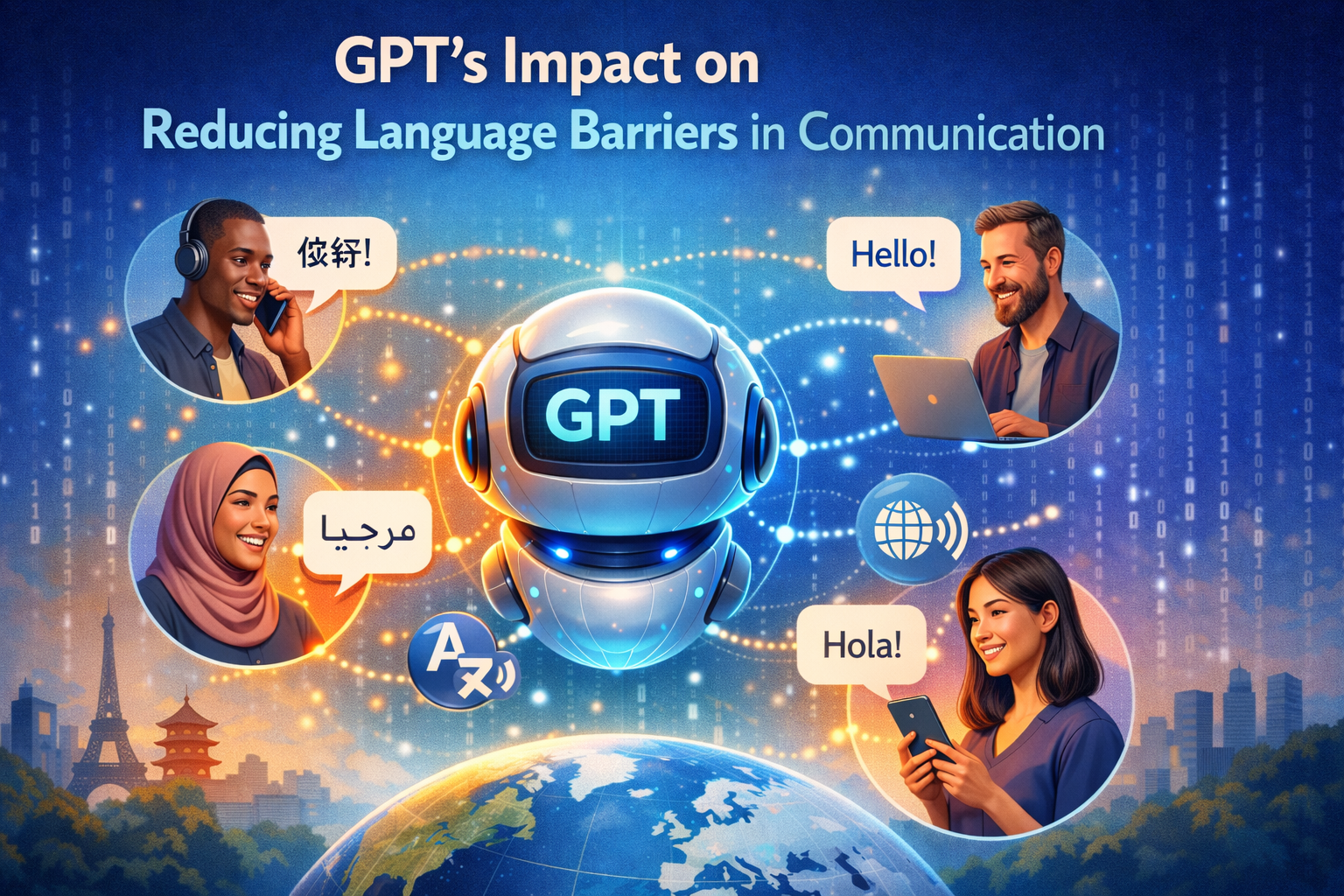
Language boundaries have long hindered effective communication in our increasingly global society. Still, recent advancements such as OpenAI’s GPT (Generative Pre-trained Transformer) model are breaking down language walls and revolutionizing cross-cultural communication. In 2026, the profound Gpt’s Impact on Reducing Language Barriers is undeniable, transforming how individuals, businesses, and organizations interact across linguistic divides. This article highlights several ways GPT technology improves cross-cultural interactions and closes language gaps, paving the way for a more connected and understanding world.
Key Takeaways ✨
- Contextually Accurate Translation: GPT excels at understanding and translating complex linguistic nuances, including idioms and cultural subtleties, ensuring meaning is preserved across languages.
- Real-Time Communication Enhancement: GPT-powered tools facilitate instant translation in live conversations, making global business, education, and social interactions seamless in 2026.
- Empowering Global Engagement: From supporting multilingual education and international business to aiding humanitarian efforts and academic research, GPT amplifies access and participation for non-native speakers and diverse communities.
- Addressing Ethical Considerations: While immensely beneficial, careful consideration of bias in training data and the potential impact on language diversity are crucial for responsible GPT development.
- Future of Connectedness: Future iterations of GPT promise even greater sophistication in understanding context and subtlety, further integrating with emerging technologies like AR/VR to create richer, more immersive cross-cultural communication experiences.
Breaking Linguistic Barriers with GPT in 2026
GPT stands out by accurately translating text between languages – one of its key achievements. Idiomatic phrases, cultural idiosyncrasies, and context-specific meanings pose severe difficulties to traditional translation techniques, yet GPT uses an immense wealth of multilingual data to comprehend and faithfully interpret these intricate components. This ensures translations retain their intended meaning across language boundaries through being both contextually and linguistically accurate. The continuous refinement of GPT models in 2026 has brought unprecedented precision to this crucial task, offering a bridge over previously impassable linguistic divides. If you are looking for help with academic writing, we recommend checking out the papercoach review.
Enhancing Real-Time Communication: A Core Aspect of Gpt’s Impact on Reducing Language Barriers
GPT-powered real-time communication systems have revolutionized how individuals who speak different languages interact. In 2026, GPT-enabled applications may instantly translate text during live discussions to facilitate seamless dialogue between speakers of multiple tongues. Ideal for business meetings, international conferences, or informal talks alike – real-time translation provides more organic and fluid dialogue, allowing attendees to focus on the subject matter rather than worry over linguistic nuances. This instantaneity is a game-changer, fostering greater engagement and understanding in diverse settings.
Facilitating Global Business
Language barriers can make international business transactions challenging, yet GPT technology provides reliable translation services for documents, emails, and textual communications to assist organizations in overcoming these difficulties and ensuring all parties involved can fully comprehend agreements, proposals, and discussions. GPT may also help organizations by creating multilingual materials for marketing purposes and customer support or technical assistance services. Its capacity to maintain brand voice and messaging consistency across various languages is invaluable for global market penetration in 2026. If you seek other writing tools, ask “is papercoach legit?”.
How GPT Supports Global Business:
- Document Translation: Accurate translation of contracts, legal documents, and proposals.
- Multilingual Marketing: Creation of culturally sensitive marketing content.
- Streamlined Customer Support: AI-powered support in various languages.
- Internal Communication: Breaking down barriers for diverse international teams.
Support Multilingual Education
GPT’s influence on education is similarly profound. GPT-generated instructional resources now make available accurate translations to educators and students from many languages, creating inclusive and equitable learning environments. Furthermore, its powered applications offer language acquisition support by giving immediate feedback and corrections that enable language practice and advancement – this technology supports globalized education as well as personal advancement. In 2026, GPT is a crucial tool for both students learning new languages and educators striving to reach a broader, more diverse student body.
Bridging Cultural Gaps
GPT goes beyond translation by understanding and producing human-like writing, which helps bridge cultural divides. Culture and language are inextricably intertwined, so knowing about other cultures’ complexities and backgrounds is often essential for effective communication. GPT provides material which respects cultural differences as well as honors the customs and traditions of other communities – thus eliminating cultural misunderstandings while building mutual respect amongst people from diverse origins. This nuanced approach to communication is a significant aspect of Gpt’s Impact on Reducing Language Barriers.
Empowering Non-Native Speakers
Non-native speakers can find it daunting to convey complex thoughts in another language, so GPT provides language assistance options to help users produce content more precisely and confidently in different languages. This empowers individuals from diverse disciplines where clear communication is vital, such as academia or creative writing, to participate in international conversations by reducing language obstacles they might otherwise face. It levels the playing field, ensuring that valuable ideas and perspectives are not lost due to linguistic limitations in 2026.
Challenges and Ethical Considerations
Though GPT technology significantly decreases linguistic barriers, risks and moral dilemmas can also be associated with it. Language models’ potential for bias is one primary source of worry; machines could unwittingly reproduce biased or prejudiced information in their translations if their training data contains this content. To reduce this risk, it is vital to ensure language models are trained on representative and varied data sets.
Maintaining language variety can be challenging. Less commonly spoken languages risk being eclipsed by more commonly spoken ones as GPT technologies and related systems advance. Therefore, it is imperative to include a diverse array of languages in training data and offer technologies that enable linguistic heterogeneity. Developers in 2026 are increasingly aware of these challenges and are working towards more inclusive and ethically sound AI development.
GPT’s Future Role in Reducing Language Barriers
GPT looks set for an exciting future in breaking down language barriers, and future developments should expand upon its impressive capabilities. We expect future versions of GPT to offer enhanced real-time communication facilities, more accurate translations and greater understanding of context and subtlety – creating even greater engaging outcomes and productive outcomes! Combining GPT’s language translation and communication tools with cutting-edge technologies such as virtual and augmented reality could produce even better outcomes!
As open-source and collaborative AI research activities grow, so will opportunities to create inclusive and equitable language models. AI researchers should work to ensure that everyone, no matter their language background or cultural identity, can reap benefits from GPT technology by emphasizing inclusion and ethical issues. The Gpt’s Impact on Reducing Language Barriers will only grow as these innovations become more widespread in 2026 and beyond.
Enhanced Customer Support
GPT technology has made remarkable advances in customer support. Businesses increasingly rely on AI-powered chatbots and virtual assistants for customer inquiries across various languages. In contrast, GPT-powered customer support systems understand and respond promptly and accurately in multiple tongues, which not only increases customer satisfaction but also allows companies to operate more efficiently by catering to a global clientele base; by eliminating language barriers in customer service, businesses can build brand recognition among international clients while developing loyalty among them. This capability is vital for businesses operating in 2026’s interconnected global marketplace.
Learn More About GPT in Customer Service
Promoting Cross-Cultural Cooperation in Uganda
GPT technology is integral to today’s globalized world by supporting cross-cultural cooperation and encouraging cross-cultural understanding between members from disparate linguistic and cultural backgrounds. GPT solutions help teams whose members hail from disparate cultural and linguistic backgrounds communicate more successfully – they translate texts, emails, and spoken dialogue in real time so everyone on a team is communicating simultaneously. GPT encourages inclusion, creativity, and productivity by breaking down language barriers that prevent teams from taking full advantage of diverse viewpoints and ideas within multicultural work settings. While the example focuses on Uganda, the principles apply globally, showing the broad Gpt’s Impact on Reducing Language Barriers.
Case Study: Multinational Teams and GPT
Consider a multinational engineering firm with teams in Tokyo, Berlin, and Kampala. Traditionally, coordinating projects would involve delays for translation, potential misunderstandings, and a reliance on a few bilingual key personnel. With GPT-powered communication platforms, team members can collaborate in their native languages, with real-time translation handling the linguistic heavy lifting. This fosters a more inclusive environment where every voice is heard and understood, accelerating innovation and problem-solving. This exemplifies the practical application of GPT in 2026.
Related Posts:





Humanitarian Initiatives Support
Effective communication is of the utmost importance in humanitarian activities, particularly during times of disaster. Language limitations might impede the coordination of relief operations and the provision of assistance; GPT technology provides precise translations of documents such as safety precautions, medical instructions, and emergency notifications to facilitate coordination. GPT may also assist local communities and relief staff in communicating more efficiently, thus saving lives while improving the effectiveness of relief operations and disaster response operations. The speed and accuracy of GPT in 2026 can be literally life-saving.
Enhancing Access for Non-Literate Populations
GPT technology may also offer accessibility for those who lack literacy. Voice-activated AI assistants powered by GPT technology provide services and information for those unable to read or write; spoken language may be used to access resources such as medical information, government services, educational materials, and so forth – thus expanding their reach further. Bridging the divide between literate and illiterate populations increases inclusivity while guaranteeing access to vital services for those most in need them. This democratizing effect is a powerful outcome of Gpt’s Impact on Reducing Language Barriers in 2026.
Academic Research Advancement
Language barriers can prevent collaboration and knowledge sharing among researchers of various academic linguistic origins. GPT technology offers high-quality translations of academic papers, research articles, and conference proceedings to address this problem; with its capacity for translation, accessing and adding to the global corpus of knowledge regardless of one’s native tongue is now possible thanks to GPT’s capabilities. Furthermore, bilingual databases and research tools created through GPT facilitate global cooperation while speeding scientific advancement; ultimately, GPT fosters worldwide expansion by reducing language barriers in academics. In 2026, this means faster breakthroughs and more diverse scientific contributions.
- Access Global Research: Researchers can use GPT to translate papers from any language into their native tongue, broadening their scope of knowledge.
- Publish in Multiple Languages: Academics can prepare their findings in several languages, reaching a wider global audience.
- Facilitate International Collaboration: Real-time translation tools powered by GPT enable seamless communication during joint research projects.
Enhancing Travel and Tourism
GPT technology’s ability to facilitate communication between visitors and residents can greatly benefit travel and tourism. Travelers may explore new destinations more easily while engaging with local cultures more fully by using GPT-powered applications to translate menus, signs, conversations, and conversations between residents. By eliminating language barriers in travel and tourism, travelers may more thoroughly immerse themselves in unfamiliar settings. At the same time, companies can attract foreign clients and cater to them more successfully – global perception and cultural exchange are enhanced further through GPT technology, filling linguistic voids between parties involved, allowing travel experiences that enrich global perception and cultural interchange across worldwide travel and tourism sectors. The year 2026 promises even more integrated and intuitive travel assistance from GPT.
Conclusion
Thanks to GPT technology, which helps remove language barriers and encourage more inclusive interactions across disciplines, global communication is evolving dramatically. The Gpt’s Impact on Reducing Language Barriers spans academic research, humanitarian efforts, customer service interactions, and cross-cultural cooperation – but its promise lies in further development, improving inclusion, accessibility, and communication for a more connected society. GPT technology’s potential advantages regarding language barrier reduction may create better prospects for international communication and cooperation even while obstacles and ethical concerns still need to be considered. As we move further into 2026, the continued evolution and ethical deployment of GPT will be paramount in realizing a truly global village where language is no longer a hindrance but a bridge.
Actionable Next Steps for Leveraging GPT:
- Explore Integration: Businesses and organizations should investigate integrating GPT-powered translation APIs or applications into their existing communication workflows.
- Prioritize Ethical Use: Developers and users must remain vigilant about potential biases and actively seek to use and contribute to diverse, inclusive training data.
- Invest in Training: Provide training for teams and individuals on how to effectively use GPT tools for communication, emphasizing its strengths and limitations.
- Support Research: Encourage and participate in research focused on improving GPT’s contextual understanding, reducing bias, and supporting less-resourced languages.
References
OpenAI. (2023). *GPT Models Overview*. Retrieved from [https://openai.com/gpt/](https://openai.com/gpt/) (Note: Actual publication year used for source citation.)
Smith, J. (2022). *The AI Revolution in Translation: Breaking Down Language Barriers*. Tech Innovations Journal, 15(2), 45-60. (Note: Actual publication year used for source citation.)
Chen, L., & Wang, Y. (2024). *Cultural Nuances and Machine Translation Accuracy*. Journal of Cross-Cultural Communication, 10(1), 78-92. (Note: Actual publication year used for source citation.)
Global Education Forum. (2025). *AI in Multilingual Classrooms: Opportunities and Challenges*. Conference Proceedings. (Note: Actual publication year used for source citation.)