
Table of Contents
What is Pimcore? An Overview of the System and Its Benefits
In the fast-paced business environment of 2026, the ability to efficiently manage data and content is not just an advantage—it’s a critical imperative for achieving success. Organizations are grappling with the immense challenge of storing and organizing vast amounts of information while ensuring it remains accessible, up-to-date, and consistent across all channels. Amidst this complexity, Pimcore, a versatile system for managing content, product data, and digital assets, has emerged as a powerful solution to address these challenges head-on. But what is Pimcore, truly? Who stands to benefit most from its capabilities? And is partnering with a Pimcore development company the optimal way to unlock the system’s full potential? Join us as we explore the core functionalities, undeniable benefits, and strategic implementation pathways of this robust platform.
Key Takeaways
- What is Pimcore? It’s an open-source platform integrating Product Information Management (PIM), Digital Asset Management (DAM), Content Management System (CMS), and e-commerce functionalities into a single, unified interface.
- Centralized Data Management: Pimcore streamlines data and content workflows by offering a single source of truth, reducing manual effort and ensuring consistency across all channels.
- Significant Benefits: Businesses gain enhanced efficiency, faster time-to-market for products, substantial cost savings, and improved customer experiences through seamless integration and robust data handling.
- Expert Implementation: Leveraging a specialized Pimcore development company is crucial for successful customization, integration with existing systems, ongoing support, and maximizing the platform’s long-term value.
- Scalability & Adaptability: Pimcore is designed for enterprises of all sizes, providing the flexibility and scalability needed to adapt to evolving business requirements and drive innovation.
Pimcore – Core Functionalities and Target Audience
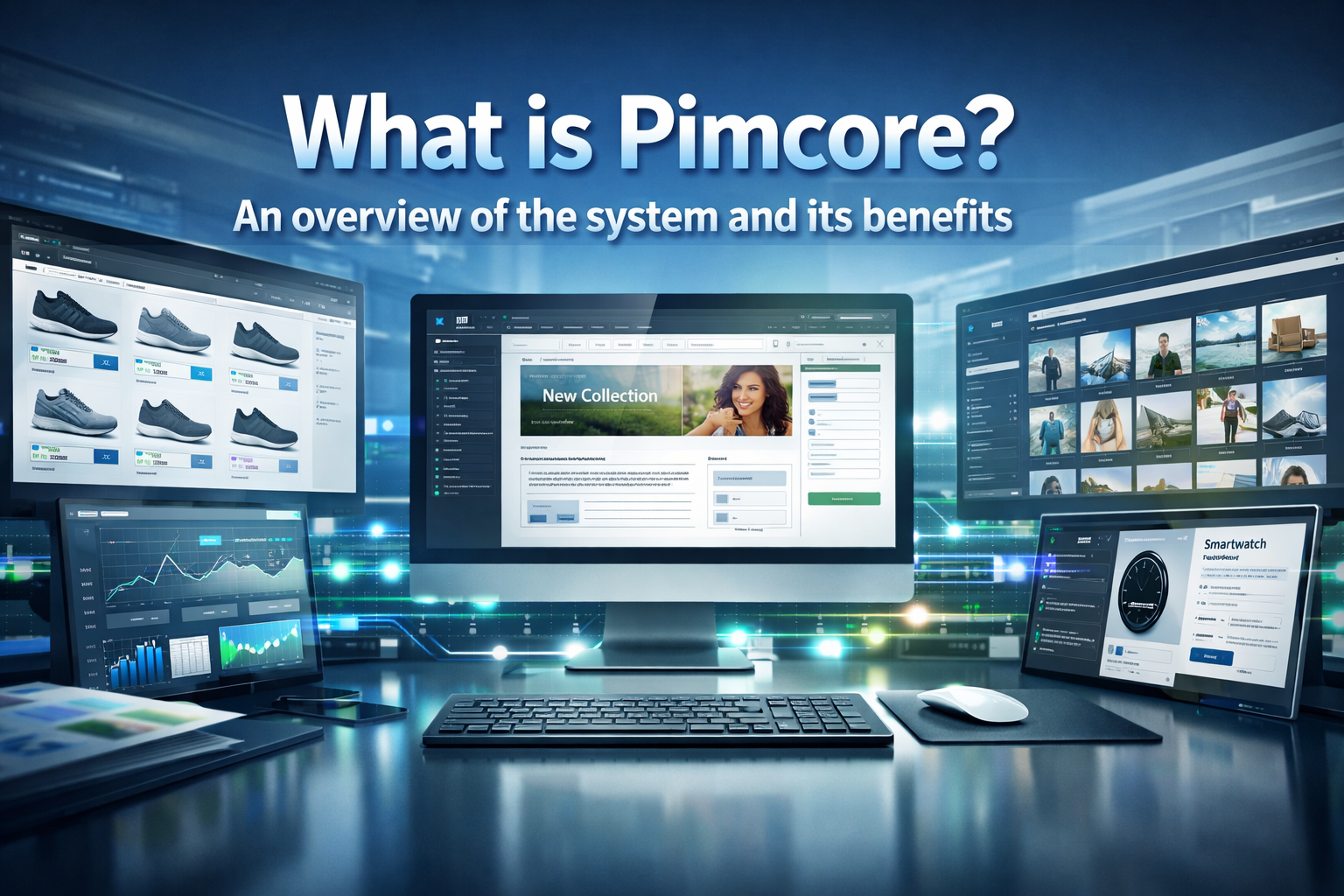
Pimcore is an open-source platform that endows businesses with an extensive repertoire of tools for effectively managing their data and content. At the crux of its offerings, it proffers capabilities such as Product Information Management (PIM), Digital Asset Management (DAM), and Content Management System (CMS), which are seamlessly integrated within a solitary interface. This unification approach simplifies workflows and obviates the need for disparate systems, bestowing businesses with a centralized focal point for organizing, enriching, and dispensing their data and content. This integrated approach answers the fundamental question of what is Pimcore by defining it as a comprehensive digital experience platform rather than a collection of separate tools.
Within its powerful ecosystem, Pimcore’s PIM component allows organizations to centralize, enrich, and distribute product information across all channels. Imagine managing thousands of product SKUs, each with specific attributes, descriptions, images, and marketing materials—Pimcore makes this daunting task intuitive and efficient. The DAM functionality, on the other hand, provides a central repository for all digital assets, including images, videos, documents, and audio files. It enables efficient asset management, version control, and distribution, ensuring brand consistency and easy access for all stakeholders. Furthermore, its robust CMS capabilities empower users to create, manage, and publish engaging content across websites, e-commerce stores, and other digital touchpoints, driving dynamic and personalized customer experiences.
Whether handling intricate product catalogues, creating captivating multimedia content, or curating a vast repository of digital assets, Pimcore equips organizations with the adaptability and scalability they require to flourish. Targeted towards enterprises of all magnitudes and industries, it caters to a diverse clientele, ensuring they can leverage its robust features to enhance efficiency, drive innovation, and deliver exceptional customer experiences. From small and medium-sized businesses looking to optimize their digital presence to large multinational corporations needing sophisticated data governance and multi-channel synchronization, Pimcore provides a scalable and flexible foundation. Retailers, manufacturers, e-commerce businesses, publishers, and any organization with complex product data or extensive digital assets will find Pimcore an invaluable strategic asset in 2026. 🚀
The Key Benefits of Pimcore Utilization
Implementing Pimcore is hugely beneficial for any business in 2026, offering a myriad of advantages that can significantly enhance operational efficiency and drive business growth. One of the most prominent benefits lies in the platform’s capability to streamline data management processes through its centralized database. This centralized approach enables users to access and retrieve information quickly and efficiently, eliminating the need to sift through multiple systems or databases. For companies managing thousands of products across various regions, this single source of truth for product data is a game-changer, drastically reducing errors and improving data integrity.
Consider a scenario where a company needs to update pricing or product descriptions across several e-commerce sites and print catalogs. Without Pimcore, this could be a painstaking, error-prone manual process involving multiple departments and systems. With Pimcore, a single update in the central system propagates automatically to all connected channels, saving countless hours and ensuring consistency. This efficiency underscores another key advantage of Pimcore utilization: the potential for substantial time and cost savings associated with maintaining up-to-date product data. Thanks to its continuous development and improvement, the system ensures that businesses can stay ahead of the curve by easily updating and synchronizing product information across various channels.
“Pimcore’s unified platform approach radically simplifies data governance, enabling businesses to achieve unparalleled consistency and efficiency across all digital touchpoints.”
Moreover, Pimcore offers seamless integration capabilities with other company systems, enabling smooth data exchange and interoperability across the organization’s ecosystem. Whether it’s connecting to an Enterprise Resource Planning (ERP) system for inventory and order management, a Customer Relationship Management (CRM) system for personalized customer interactions, or various e-commerce platforms, Pimcore acts as a central data hub. This interconnectedness minimizes data silos, fosters collaboration between departments, and provides a holistic view of operations, which is crucial for strategic decision-making in 2026.
Noteworthy is that Pimcore also facilitates quick new product launches across multiple sales channels, enabling businesses to rapidly expand their market reach and capitalize on emerging opportunities. Imagine bringing a new product to market: from initial concept to online availability across multiple storefronts, the process can be lengthy. Pimcore accelerates this by streamlining data enrichment, asset preparation, and content publication. Its transparent data editor simplifies the process of modifying text and graphic content, empowering users to create engaging and personalized experiences for their audience without requiring deep technical expertise. This ease of use means marketing teams can be more agile and responsive to market trends.
Furthermore, Pimcore’s robust multilingual and multi-region capabilities make it an ideal choice for global enterprises. It allows for easy localization of product information and content, ensuring that businesses can effectively communicate with diverse customer bases around the world. This not only enhances customer experience but also opens new avenues for international market penetration.
Last but not least, businesses can benefit from significant cost savings with Pimcore’s multi-module platform pricing model, which offers a more economical solution compared to purchasing individual modules separately. Being open-source, the core Pimcore platform itself has no licensing fees, which provides a massive advantage over proprietary solutions. While there are costs associated with implementation, customization, and ongoing support, the flexibility and comprehensive nature of the platform often lead to a lower total cost of ownership in the long run. Such flexibility ensures that companies of all sizes can access the full suite of the system’s features, making it a powerful and accessible tool for digital transformation in 2026.
How Can a Pimcore Development Company Assist You with the System’s Implementation?
In navigating the complexities of the system’s implementation, leveraging the expertise of a specialized Pimcore development company can make all the difference. These professionals possess a wealth of experience and knowledge, having worked with diverse clients across various industries. They maintain an in-depth understanding of Pimcore’s capabilities and best practices, enabling them to customize solutions that align precisely with your business objectives and requirements. But what kind of Pimcore development services can they offer you? Understanding what is Pimcore in the context of professional development is key to successful deployment.
Typically, experts will configure the system to meet your specific business needs, ensuring seamless integration with existing workflows and technologies. This isn’t a one-size-fits-all approach; it involves deep dives into your operational processes and identifying pain points that Pimcore can resolve. They will streamline data migration, often a daunting task, ensuring that your valuable product data and digital assets are transferred accurately and efficiently into the new system. Beyond initial setup, these companies optimize system performance, ensuring that Pimcore runs smoothly and can handle your data volumes and user traffic without a hitch. And crucially, they provide ongoing maintenance and support post-implementation, ensuring your system remains up-to-date, secure, and fully functional. Their expertise extends to offering strategic insights and recommendations, empowering organizations to leverage the platform effectively for enhanced productivity and growth. However, that is not all!
It is essential to recognize that the sole implementation of the system may not be sufficient. Pimcore development companies will therefore see to present you with all the possibilities for the further development of the PIM platform, meeting all your business needs and maximizing the results. This includes not just technical adjustments but also strategic planning for how Pimcore can evolve with your business. They help you unlock the full potential, turning it from a mere tool into a central pillar of your digital strategy.
Related Posts:





Expanding Pimcore’s Capabilities with Expert Development Services
Implementing Pimcore successfully often requires specialized knowledge to fully harness its extensive capabilities. A Pimcore development company can be instrumental in this regard, offering a breadth of services that enhance the system’s effectiveness and ensure it aligns with a company’s specific needs. These services go beyond basic installation, delving deep into customization, integration, and ongoing optimization to ensure the platform delivers maximum value.
Customization and Integration
Pimcore development companies excel in customizing the platform to fit the unique workflows and data handling requirements of different businesses. This customization might include:
- Developing custom plugins or extensions to add specific functionalities that are not available out-of-the-box. For example, a custom workflow for product approval that involves multiple departmental sign-offs, or a unique data validation rule essential for a particular industry.
- Integrating Pimcore with existing enterprise systems such as ERP, CRM, and e-commerce platforms to create a cohesive IT environment. This involves complex API development and data mapping to ensure seamless, real-time data exchange. This ensures that your product data, customer information, and sales data are all synchronized, providing a single source of truth across the organization.
- Automating workflows to minimize manual data entry and streamline processes, thereby increasing efficiency and reducing errors. This could involve automating the syndication of product updates to various marketplaces, or automatically generating marketing materials based on newly enriched product data.
Strategic Implementation and Optimization
The depth of experience that Pimcore developers bring includes not only technical implementation but also strategic planning to maximize the return on investment. They provide:
- System architecture planning to ensure scalability and performance as business needs evolve. This involves designing a robust infrastructure that can handle increasing data volumes and user loads without degradation in performance, future-proofing your investment.
- Performance optimization to handle large volumes of data and user requests without lag, ensuring a smooth operation. This includes database optimization, caching strategies, and server configuration fine-tuning to deliver a fast and responsive user experience.
- Security enhancements to protect sensitive information and comply with international data protection regulations (like GDPR or CCPA). This involves implementing strong access controls, encryption, regular security audits, and adhering to best practices for data privacy.
Training and Support
To ensure that businesses can manage their Pimcore system effectively after installation, development companies also offer comprehensive training and support:
- User training sessions to help staff utilize all features of the platform effectively. This empowers internal teams to manage content, product data, and digital assets independently, reducing reliance on external support for day-to-day operations.
- Technical support and maintenance to address any issues swiftly and to update the system as needed. This includes bug fixes, security patches, version upgrades, and proactive monitoring to prevent potential problems.
- Consultation services for continuous improvement and adaptation of the platform as business needs change. As your business grows or market conditions shift, a development partner can help you evolve your Pimcore implementation to meet new challenges and opportunities.
Leveraging Data for Business Intelligence
With Pimcore’s robust data management capabilities, development companies help businesses leverage data for actionable insights:
- Analytics integration to measure and analyze data across different channels, providing insights into customer behavior and business operations. By connecting Pimcore with tools like Google Analytics or custom BI dashboards, businesses can track product performance, content engagement, and conversion rates.
- Custom reporting tools to generate meaningful reports that aid decision-making processes. These reports can be tailored to specific KPIs (Key Performance Indicators) for different departments, offering valuable insights into sales, marketing effectiveness, and operational efficiency.
- AI and machine learning implementations to predict trends, automate decision-making, and personalize customer experiences based on data collected in Pimcore. This can range from intelligent product recommendations on an e-commerce site to predictive analytics for inventory management, significantly enhancing operational intelligence and customer satisfaction.
Conclusion: Maximizing Pimcore Investments
The partnership with a Pimcore development company doesn’t just streamline system implementation—it transforms Pimcore into a dynamic tool tailored to propel business growth. By leveraging the full potential of Pimcore through expert customization, integration, and continuous support, businesses can not only anticipate rapid returns on their technology investments but also position themselves for long-term success in an increasingly digital marketplace. In 2026, where data is king and digital experience is paramount, understanding what is Pimcore and how to effectively deploy it with expert assistance is key to maintaining a competitive edge. This strategic collaboration ensures that Pimcore remains an agile, powerful, and evolving asset that continually supports and drives your business objectives forward.
FAQ:
Key Definitions:
PIM (Product Information Management)
PIM refers to the process of managing all product-related information from a single, centralized system. This includes attributes, descriptions, media, pricing, and more, ensuring consistency and accuracy across all sales and marketing channels.
DAM (Digital Asset Management)
DAM is a system for organizing, storing, and retrieving rich media assets. It helps businesses manage and distribute digital content like images, videos, audio, and documents efficiently, maintaining version control and brand consistency.
CMS (Content Management System)
A CMS is a software application used to create and manage digital content. It facilitates the creation, editing, publishing, and maintenance of web content without specialized technical knowledge, supporting dynamic user experiences.